


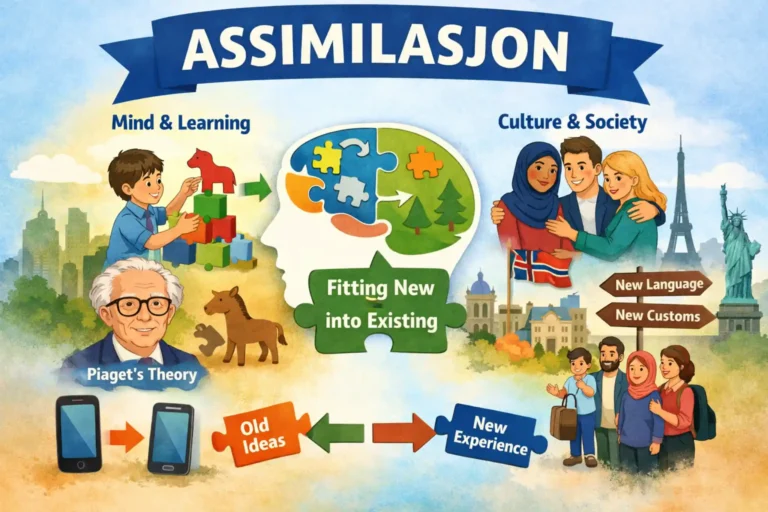
When people come across the Norwegian word “assimilasjon”, they often sense that it is related to the English word “assimilation,” but the full meaning can still feel unclear. The idea shows up in psychology, education, and discussions about culture and migration, so understanding it can help you better interpret how minds grow and how societies change. In everyday life, assimilasjon explains how we take in new experiences, how children build knowledge step by step, and how people adapt to new cultural environments while trying to keep their sense of self.
Understanding the Word “Assimilasjon”
The word assimilasjon comes from the same roots as the English “assimilation” and generally refers to a process of taking something new and fitting it into something that already exists. In mental life, it means adding new information to what we already think and believe. In social and cultural life, it means people from one background begin to act more like people from another, often dominant, group. In both cases, the core idea is similar: something new is absorbed into an existing structure instead of replacing it.
Assimilasjon as a Mental Process
In psychology, assimilasjon is usually described as a cognitive process. When you meet new information, you try to make sense of it by connecting it to ideas you already have in your mind. For example, if you already understand what a “restaurant” is, and you visit a new type of restaurant, you still recognize it as a restaurant because you are using your existing mental picture. Psychologists describe this as taking new experiences and building them into existing mental frameworks or schemas.
This way of thinking has an important benefit: it makes learning faster and smoother. You do not have to start from zero every time something new happens. Instead, you constantly compare new situations to what you already know. Modern articles on mental health and learning note that this kind of process can support creativity, confidence, and resilience, because it allows a person to use past understanding as a base while continuing to develop.
Piaget’s View: Assimilasjon and Child Development
The concept of assimilasjon became famous through the work of Jean Piaget, a Swiss psychologist who studied how children think and learn. In his view, children are not passive receivers of facts; they are active builders of understanding. Assimilasjon is one of the ways they do this. Whenever a child encounters something new, they first try to make it fit into mental patterns they already have. If a child knows what a dog is, they might see a wolf and call it a “dog” because that is the closest idea they hold in mind.
Piaget described this process as using an existing schema without changing it. Children rely heavily on assimilasjon in early stages of development because it is easier to reuse a familiar mental pattern than to build a completely new one. Over time, as they face situations that do not fit those patterns, they are pushed to adjust or create new schemas. This is where his second concept, akkomodasjon, enters the picture.
Assimilasjon and Akkomodasjon: Two Sides of Learning
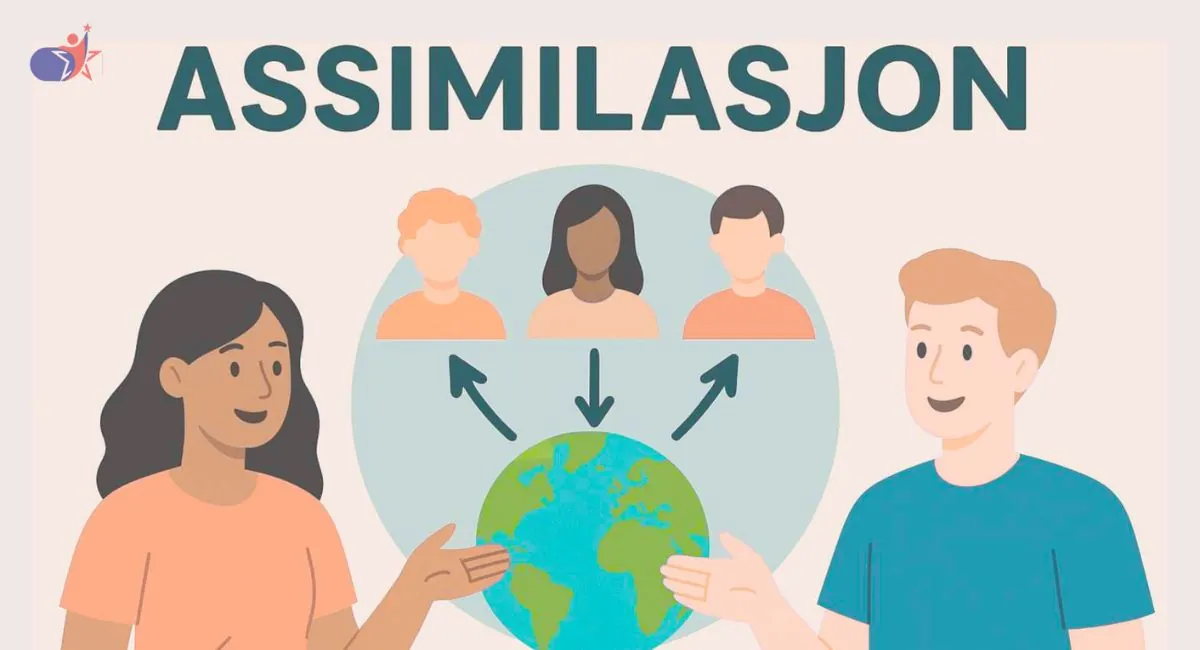
To fully understand assimilasjon in Piaget’s theory, it helps to place it next to akkomodasjon. Both are part of how humans adapt their thinking. Assimilasjon means bending the new to fit the old; akkomodasjon means changing the old to handle the new. In simple terms, you can think of them like this:
-
Assimilasjon: “This reminds me of what I already know, so I will treat it as part of that.”
-
Akkomodasjon: “This does not fit what I know, so I need to change my understanding.”
-
Balance: Healthy learning uses both, switching between them as needed.
When a child calls every four-legged animal a “dog,” they are using assimilasjon, stretching the meaning of “dog” to cover cats, sheep, or goats. When they finally realize that cats are not dogs and adjust their mental categories, they are using akkomodasjon. Adults do the same thing, just with more complex topics such as politics, technology, or relationships.
Cultural Assimilasjon: Adapting to a New Society
Outside of psychology, the word assimilasjon is often used in discussions about culture, migration, and identity. Cultural assimilasjon describes what happens when people from a minority group begin to take on the language, customs, and values of a majority group. Over time, they might start speaking the dominant language at home, celebrating its holidays, or following its social rules more closely. Social scientists describe this as a process in which one group begins to resemble another, often the more powerful group.
This process can happen in many ways. Sometimes it is voluntary, driven by the hope of better jobs, safety, or a sense of belonging. People may feel that adapting to the majority culture is the easiest way to succeed. In other cases, it can be forced or heavily pressured, where people feel they have no real choice because their language, clothing, or traditions are discriminated against. Modern writing on diversity and inclusion points out that cultural assimilasjon is closely tied to power and can lead to deep questions about fairness and respect.
Everyday Real-Life Examples of Assimilasjon
You do not have to be a psychologist or social scientist to observe assimilasjon. It appears in everyday experiences all the time. Imagine someone moving from a small town to a large city. At first, they might feel overwhelmed by public transportation, crowded streets, and fast-paced lifestyles. Over time, they start to understand how the subway works, where to shop, and how people behave on the street. They are taking new experiences and fitting them into their growing mental map of “how life in the city works,” which is a form of assimilasjon.
Another example is learning new technology. When a person already knows how to use one smartphone brand, switching to a different brand becomes easier because they compare menus, gestures, and settings to what they already understand. They may press a button expecting it to act like a familiar command from their previous phone. This is their mind using assimilasjon to speed up learning. Only when the new system behaves in a totally different way do they need to adjust their understanding more deeply, moving toward akkomodasjon.
Assimilasjon in Social Identity and Belonging
Assimilasjon also plays a role in how people see themselves in groups. When someone joins a new workplace, they quickly pick up on dress styles, communication habits, and unwritten rules. By slowly adopting these patterns, they begin to feel like a “real” member of the team. This is similar to cultural assimilasjon, just on a smaller scale. It can bring comfort and a sense of inclusion, but it can also create tension if a person feels they must hide important parts of who they are in order to fit in.
Studies of immigrant communities show a similar mixture of gain and loss. On one side, cultural assimilasjon can open doors to education, employment, and social networks in the new country. On the other side, it can weaken ties to the original language, traditions, or religious practices over generations. Families sometimes debate how much to adapt: parents may want children to keep the home culture, while the children may push for deeper assimilasjon to avoid feeling different among their peers.
Benefits of Assimilasjon for Learning and Adaptation

From a mental perspective, assimilasjon has clear advantages. It allows people to reuse what they already know, making learning more efficient. Teachers often rely on this by connecting new topics to familiar ones, such as linking a lesson about fractions to everyday tasks like cutting a pizza or sharing a cake. When a student can say “this is like something I already understand,” they are using assimilasjon to create a bridge between old and new ideas. Educational researchers highlight that this process is part of how students build strong, connected understanding instead of isolated facts.
In daily life, this process supports quicker decision-making. If you have previously dealt with a stressful situation, you can handle a similar situation better the next time because your mind is drawing on earlier patterns. In therapy and coaching, helping people recognize how they interpret new events through old beliefs can also be a powerful step toward change. Understanding assimilasjon reminds us that we are rarely starting from zero; we are constantly building on what is already in place.
Risks and Limits of Assimilasjon
Even though assimilasjon is helpful, it has limits and risks. When a person tries too hard to fit new experiences into old patterns, they may ignore important differences. In thinking, this can lead to stereotypes or misunderstandings. For example, if someone has a negative experience with one group of people and then assumes all similar people are the same, they are misusing assimilasjon instead of revising their beliefs.
In the cultural sense, strong pressure toward assimilasjon can be harmful. When a community is expected to give up its language, clothing, music, and beliefs in order to be accepted, the result can be a loss of heritage and emotional pain. Researchers have linked forced cultural assimilasjon to mental health struggles, social isolation, and conflicts between generations. Balancing adaptation to a new environment with respect for one’s original identity is therefore a delicate and important task.
Using Awareness of Assimilasjon in Daily Life
Knowing how assimilasjon works can help you in practical ways. You can notice when you are automatically fitting new experiences into old beliefs and ask yourself whether those beliefs still serve you. In learning, you can look for connections between fresh topics and things you already understand, which makes study sessions less intimidating. In cultural situations, being aware of assimilasjon can make you more patient with yourself or others who are adapting to new environments, while also staying sensitive to the value of diversity and personal identity.
Final Thoughts
Assimilasjon is more than a technical term from psychology or sociology. It describes a basic pattern in human life: we are always trying to make sense of what is new by relating it to what we already know. In the mind, this supports growth and learning; in culture, it explains how people adjust to new surroundings and communities. At the same time, it must be balanced with the willingness to change our patterns when they no longer match reality and with respect for different ways of living. Understanding assimilasjon gives you a clearer picture of how people learn, adapt, and search for belonging in a changing world.
Frequently Asked Questions (FAQs)
What does “assimilasjon” mean in simple terms?
It means taking something new and fitting it into something that already exists, like adding new ideas to beliefs you already hold or adapting to a new culture by using your past experience.
How is assimilasjon used in psychology?
In psychology, it describes how people use existing mental frameworks, called schemas, to interpret new information instead of creating a completely new way of thinking each time.
What is the difference between assimilasjon and akkomodasjon?
Assimilasjon adjusts the new experience to fit old ideas, while akkomodasjon changes your ideas themselves when the new experience does not fit what you thought before.
How did Piaget describe assimilasjon?
Piaget saw it as one of two key processes in child development, where children apply existing schemas to new situations as they explore and make sense of the world around them.
Can assimilasjon be seen in everyday learning?
Yes, it appears whenever you say “this new thing is like something I already know,” such as understanding a new app by comparing it to one you have used before.
What is cultural assimilasjon?
Cultural assimilasjon happens when people from one cultural background gradually adopt the language, customs, and values of another, usually dominant, group in society.
Is cultural assimilasjon always negative?
Not always; it can help people access opportunities and feel included, but it can become harmful when it is forced or when it demands giving up important parts of identity.
How does assimilasjon affect identity?
As people adapt to new groups or cultures, they may feel more accepted, but they can also struggle with a sense of loss if they feel pressured to hide or change their background.
Why is assimilasjon important in education?
Teachers use it to link new topics to familiar ideas, helping students understand and remember information more easily by connecting it to what they already know.
Can assimilasjon lead to misunderstandings?
Yes, if someone tries too hard to fit new experiences into old beliefs, they may overlook differences and form unfair judgments or stereotypes.
How can I balance assimilasjon and akkomodasjon in my thinking?
You can start by noticing when you are forcing new situations into old patterns and be open to adjusting those patterns when they no longer match what you see.
How does understanding assimilasjon help in a multicultural world?
It reminds you that adaptation is natural but also that respecting different traditions and experiences is essential, so people can grow and connect without losing who they are.
FOR MORE : INSIDE FAME
