


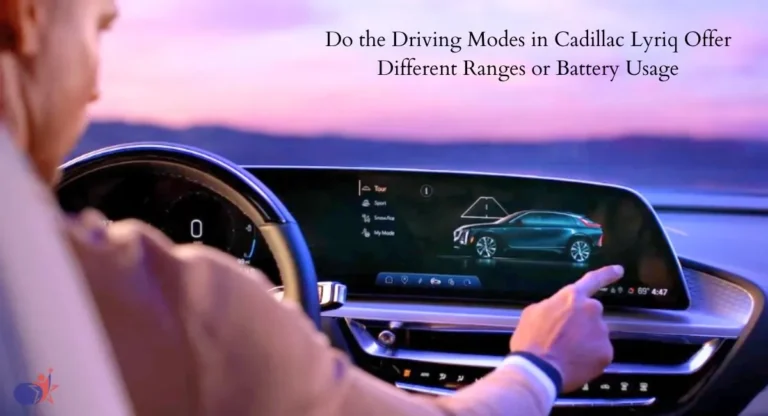
Buying an electric SUV like the Cadillac Lyriq is exciting, but it also brings new questions that never mattered with gas cars. One of the biggest is simple: Do the Driving Modes in Cadillac Lyriq Offer Different Ranges or Battery Usage in a meaningful way, or do they mostly change the “feel” of the drive? Many drivers notice the Lyriq can feel calmer, sharper, or more controlled depending on the mode, and it’s natural to wonder if that changes how fast the battery drops.
The most accurate way to think about it is this: driving modes usually do not change the battery itself, but they can change how you use it. Modes can adjust how quickly power comes on when you press the pedal, how strongly the vehicle slows when you lift off, and how traction systems manage slippery roads. Those shifts can nudge your driving style, and your driving style is what most strongly decides real-world range.
What “Range” Means Day to Day in the Cadillac Lyriq
EV range is not a fixed number that stays the same every time you drive. It’s more like a moving estimate based on your recent trips, outside temperature, traffic, road type, and how much heating or cooling you use. That’s why two Lyriq owners can drive the same model and get noticeably different results, even if the battery is in perfect condition.
Driving modes sit on top of all those factors, so they rarely act alone. If your commute is steady highway cruising, the mode might barely change anything compared to speed and wind. If your drive is stop-and-go, hilly, or full of short merges, the same mode can feel like it changes range more because it changes how you accelerate and slow down again and again.
How Driving Modes Can Influence Battery Usage
The biggest way modes affect energy use is through pedal response, often called throttle mapping. In a relaxed mode, the car may require a little more pedal movement to deliver strong power, which can help you accelerate smoothly without trying. In a more aggressive mode, the same pedal movement can deliver more power sooner, and that can lead to stronger acceleration without you noticing how much energy you requested.
Modes can also change how the vehicle manages traction and stability, especially on slippery roads. A mode designed for slick conditions may soften power delivery to prevent wheel slip, which can reduce wasted energy from spinning tires. That said, if the weather is cold or the road is rough, those conditions can still reduce range more than any mode can “fix.”
Tour Style Driving: The Best Everyday Baseline for Most Drivers
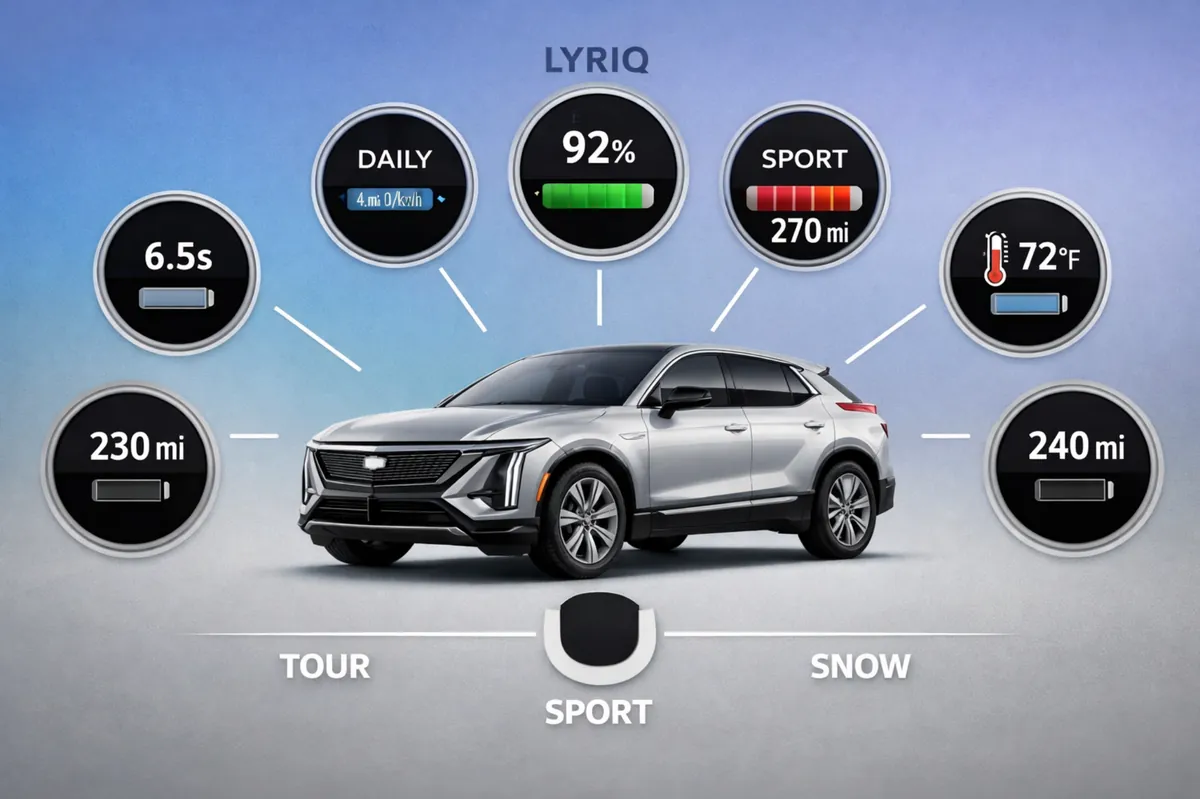
For many Lyriq owners, Tour (or the closest everyday mode available on their trim) feels like the best balance for normal use. It usually delivers smooth acceleration and a comfort-first response that makes it easier to hold steady speed and avoid sudden surges in power. When you’re aiming for consistent range, consistency in inputs matters, and Tour often supports that naturally.
Tour is also a good baseline because it reduces temptation. When the vehicle feels calm and predictable, most people press the accelerator more gently and lift off earlier. Over an entire battery charge, those small choices can add up. If you only want to change one thing to improve range without changing your whole driving routine, staying in a comfort-focused mode and driving smoothly is often the simplest place to start.
Sport Style Driving: Why It Often Costs Range (Even Without Trying)
Sport mode usually makes the Lyriq feel more responsive, and that can be a lot of fun. The downside is that it can encourage quick starts, stronger passing bursts, and more frequent “just because I can” acceleration. Hard acceleration is one of the fastest ways to increase energy use in any EV, not because it’s “bad,” but because moving a heavy vehicle quickly takes a lot of power in a short time.
It’s important to note that Sport mode does not automatically erase your range on its own. If you drive gently in Sport, keep speeds steady, and avoid repeated quick launches, the difference can be smaller than people expect. The real issue is that Sport makes it easier to ask for more power more often, and many drivers do that without realizing it, especially in city traffic where you accelerate repeatedly.
Snow or Ice Style Modes: Safer Traction, Not a Magic Range Saver
A snow or ice focused mode is usually built for control and stability. It often smooths out power delivery so the wheels are less likely to spin, and it may tune traction systems to respond sooner. In wet, slushy, or icy conditions, that can make the Lyriq feel more confident and easier to manage, especially during starts and turns.
But these modes are not designed to increase range overall. Cold weather typically reduces EV range because batteries are less efficient when cold and cabin heating can draw significant energy. A traction-focused mode may prevent energy waste from wheel spin, which can help a little in slippery conditions. Still, winter range changes are often driven more by temperature and heating needs than by the mode itself.
Regenerative Braking and One-Pedal Feel: Where Efficiency Really Adds Up
In everyday driving, regen can have a bigger impact on your energy use than switching between Tour and Sport. When the Lyriq slows down and sends energy back into the battery, it helps you recover some power you would otherwise lose as heat through the brakes. Stronger regen can be helpful in stop-and-go driving because it encourages smoother slowdowns and fewer sudden brake presses.
At the same time, regen is not “free energy.” The best efficiency still comes from not spending the energy in the first place. If you accelerate hard and then rely on regen to slow down, you will recover only part of what you used to speed up. The biggest gain comes from driving with a steady flow—gentle acceleration, early lift-off, and smooth speed changes—so regen becomes a helpful bonus rather than a tool you have to depend on.
When Driving Modes Matter Most (And When They Matter Less)
Driving modes tend to matter most in situations where your inputs change constantly. City driving, short trips, steep hills, frequent merges, and heavy traffic are the places where a more responsive mode can lead to more power use without you noticing. In those conditions, even small differences in how the pedal feels can change how often you surge forward, and that can show up in energy use.
On long highway drives, the mode often matters less than speed and weather. Air resistance rises quickly as speed increases, so a small speed drop can save more energy than a mode switch. If you cruise at a steady pace, the car’s efficiency is dominated by aerodynamic drag, rolling resistance, and climate use, so your biggest control points are usually speed, tire pressure, and heating or cooling choices.
The Biggest Range Factors That Can Beat Any Mode Setting
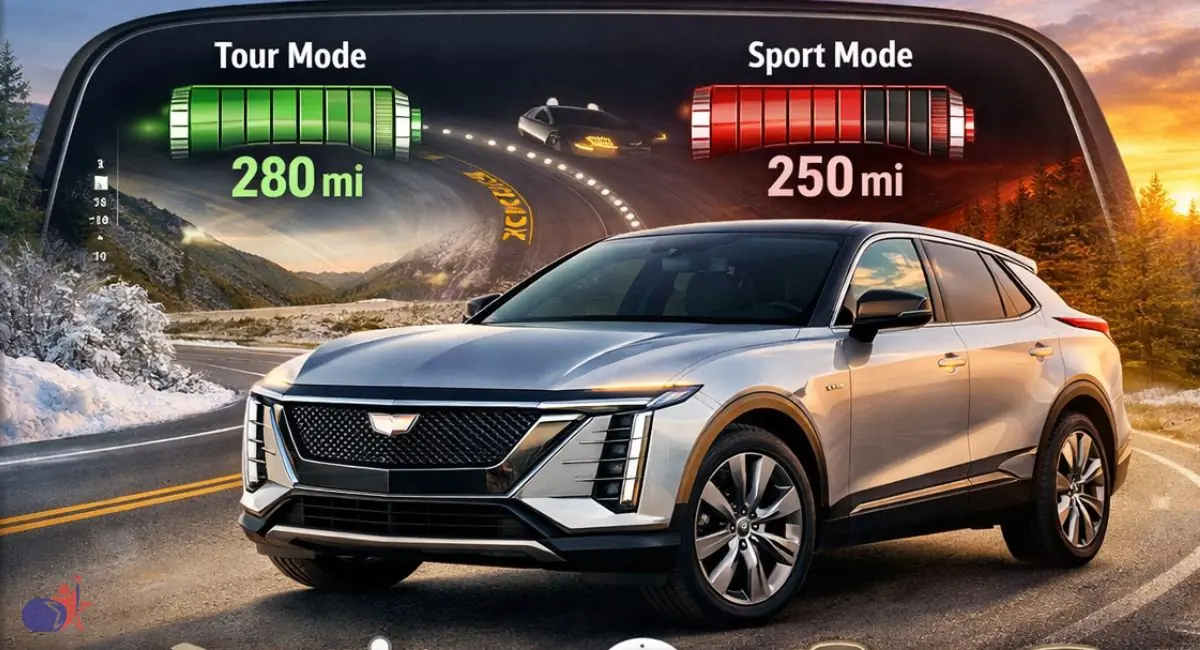
Climate control can have a surprisingly strong impact on range, especially in very hot or very cold conditions. Using strong heat for long periods can draw a lot of energy, and cold air also increases resistance. Many drivers find that using seat heating and steering wheel heat for comfort, while keeping cabin heat at a moderate level, helps the battery last longer on winter drives.
Other factors that often beat mode differences include tire pressure, cargo weight, road surface, and how many short trips you take. Short trips can be less efficient because the vehicle may spend more time warming the cabin or battery systems. If you want steadier range, combining errands into fewer trips, keeping tires properly inflated, and avoiding unnecessary weight can make the Lyriq feel more consistent regardless of the selected mode.
Quick Ways to Improve Range Without Making Driving Feel “Slow”
If you want better range without turning your drive into a chore, focus on simple habits that don’t feel restrictive once they become normal. These changes work well in any mode because they reduce wasted energy rather than relying on a setting to do the work for you. Over a week of real driving, they often make a clearer difference than switching modes back and forth.
-
Accelerate smoothly and avoid repeated hard launches.
-
Lift early for stops and let regen slow you down gradually.
-
Keep highway speed steady and consider driving slightly slower when possible.
-
Use seat and steering wheel heat first in cold weather, then add cabin heat gently.
-
Check tire pressure often, especially when seasons change.
A Simple Test You Can Do to See Mode Differences on Your Route
If you want a clear answer for your own driving, run a small test on a familiar loop. Pick a route you drive often, like your commute or a 15–25 mile round trip with similar traffic patterns. Keep your climate settings as consistent as you can, and try to keep your acceleration style the same, even if the car feels different.
Drive the route in an everyday mode one day, then repeat it in Sport another day, and compare the vehicle’s average energy use display afterward. Many people discover the difference is small when they drive calmly, but it becomes larger when Sport encourages stronger acceleration. This kind of test is practical because it reflects your roads, your habits, and your typical climate use, not a perfect laboratory scenario.
Final Thoughts
So, do the driving modes in Cadillac Lyriq offer different ranges or battery usage? They can, but usually through behavior and conditions rather than by changing the battery’s true capacity. Tour-style driving often supports smooth inputs that help efficiency, Sport can make it easier to use more power more often, and snow or ice focused modes aim for stability and control in slippery conditions rather than extra miles.
If your goal is the best possible range, your best tools are steady speeds, gentle acceleration, smart climate use, and good tire care. Pick the mode that fits your road and your mood, then let your driving habits do the heavy lifting. When you combine a comfortable mode with smooth driving and thoughtful climate settings, the Lyriq can feel both enjoyable and efficient without you constantly watching the battery meter.
Frequently Asked Questions (FAQs)
Do driving modes actually change the Lyriq’s battery capacity?
No, the battery capacity stays the same in every mode. Modes mainly change pedal response, traction behavior, and how the car feels.
Which mode usually gives the best real-world range?
A comfort or everyday mode often supports smoother driving habits. Smooth acceleration and steady speed usually matter more than the mode itself.
Does Sport mode always reduce range?
Not always, but many drivers use more power because it feels quicker. If you drive gently in Sport, the difference can be smaller than expected.
Is Snow/Ice mode better for saving battery in winter?
Snow/Ice mode is made for traction and control, not for extra miles. Winter range loss is usually driven by cold temps and cabin heating needs.
Does regenerative braking increase range a lot?
It helps most in stop-and-go traffic by recovering some energy while slowing. The biggest savings still come from avoiding hard acceleration and sudden braking.
Is one-pedal driving more efficient?
It can be, especially in city driving where you slow down often. It encourages early lift-off and smoother speed changes, which reduces waste.
Do modes matter more in the city or on the highway?
They often matter more in the city because you accelerate and slow down repeatedly. On highways, speed, wind, and temperature usually dominate energy use.
Can climate control reduce range more than driving mode?
Yes, heating and A/C can noticeably change how fast the battery drops. Smart settings and using seat heat can often help more than changing modes.
Does tire pressure affect battery usage in the Lyriq?
Yes, low tire pressure increases rolling resistance and makes the car work harder. Keeping tires properly inflated can improve efficiency and range consistency.
What’s the best way to compare modes for my commute?
Drive the same route on different days with similar traffic and climate settings. Compare the average energy use after each trip to see what changes for you.
Can aggressive acceleration hurt range even in the “best” mode?
Yes, hard launches use a lot of energy no matter which mode you select. Gentle acceleration is one of the fastest ways to improve real-world range.
Should I use one mode all the time?
You can, especially if it feels comfortable and predictable for daily driving. Switch modes when conditions change, like slippery roads or when you want sharper response.
FOR MORE : INSIDE FAME
