


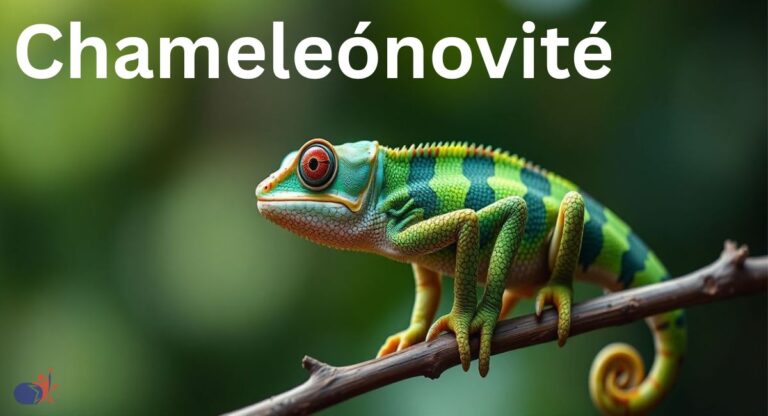
Chameleons have a way of stopping people in their tracks. One minute they look calm and still, and the next they shift color, aim both eyes in different directions, and snap up an insect with a tongue that moves faster than most people can blink. If you searched Chameleónovité, you’re likely trying to understand what these animals really are and what makes them so different from other reptiles. This beginner guide breaks it down in clear, simple language, without myths, confusion, or hard science words that slow you down.
What Does Chameleónovité Mean?
Chameleónovité refers to the chameleon family, a group of reptiles known for their specialized bodies and unique survival tools. These reptiles are not just “color-changing lizards.” They are built for a very specific lifestyle that depends on patience, stealth, balance, and precise hunting. Some people use the word when talking about chameleons in general, while others use it in a more scientific way to refer to the whole family and its many species.
In simple terms, Chameleónovité groups many different chameleon types under one family name. That means when people use this word, they might be talking about common pet species, rare wild species, or chameleons as a whole. For beginners, it helps to think of it like a “big umbrella” that covers many kinds of chameleons, each with different sizes, colors, and behaviors.
Where Chameleons Live in the Wild
Most chameleons live in the Old World, especially Madagascar and Africa, with a smaller number found in parts of southern Europe, the Middle East, and South Asia. Many species live in trees and shrubs, but not all of them. Some prefer low plants, dry scrub areas, or forest edges. Their homes can be humid rainforests, cool mountain zones, warm savannas, or dry desert-like habitats, depending on the species. This is one reason chameleons are so diverse: they have adapted to many climates while keeping the same basic “chameleon design.”
Chameleons usually pick places that help them stay hidden and hunt easily. Many choose branches and leafy areas because insects are common there and predators are easier to spot from above. Some species live in cooler mountain forests, while others survive in warmer and drier places by being active at the right times of day. Their location often decides how colorful they are, how big they get, and how they handle heat and water.
A Body Built for Climbing and Control
Chameleons are designed to move through branches like careful climbers. Their bodies are often tall and side-flattened, which helps them slip between leaves and twigs. Many have a gripping tail that works like a fifth limb. Their skin can be bumpy or patterned, and some species even have crests, horns, or helmet-shaped heads. Even when they look slow, they are not weak. Their “slow motion” style helps them avoid being seen and saves energy in environments where food may not always be easy to catch.
The Famous Eyes: Two Cameras at Once
One of the most surprising features is their eyes. A chameleon can rotate each eye in different directions, scanning two areas at once. This helps them watch for predators while also looking for prey. When it’s time to hunt, both eyes can lock onto a single target to judge distance better. For a beginner, this is a simple way to remember it: one eye can watch danger while the other searches for dinner, and then both eyes work together right before a strike.
The Tongue: Fast, Sticky, and Surprisingly Accurate
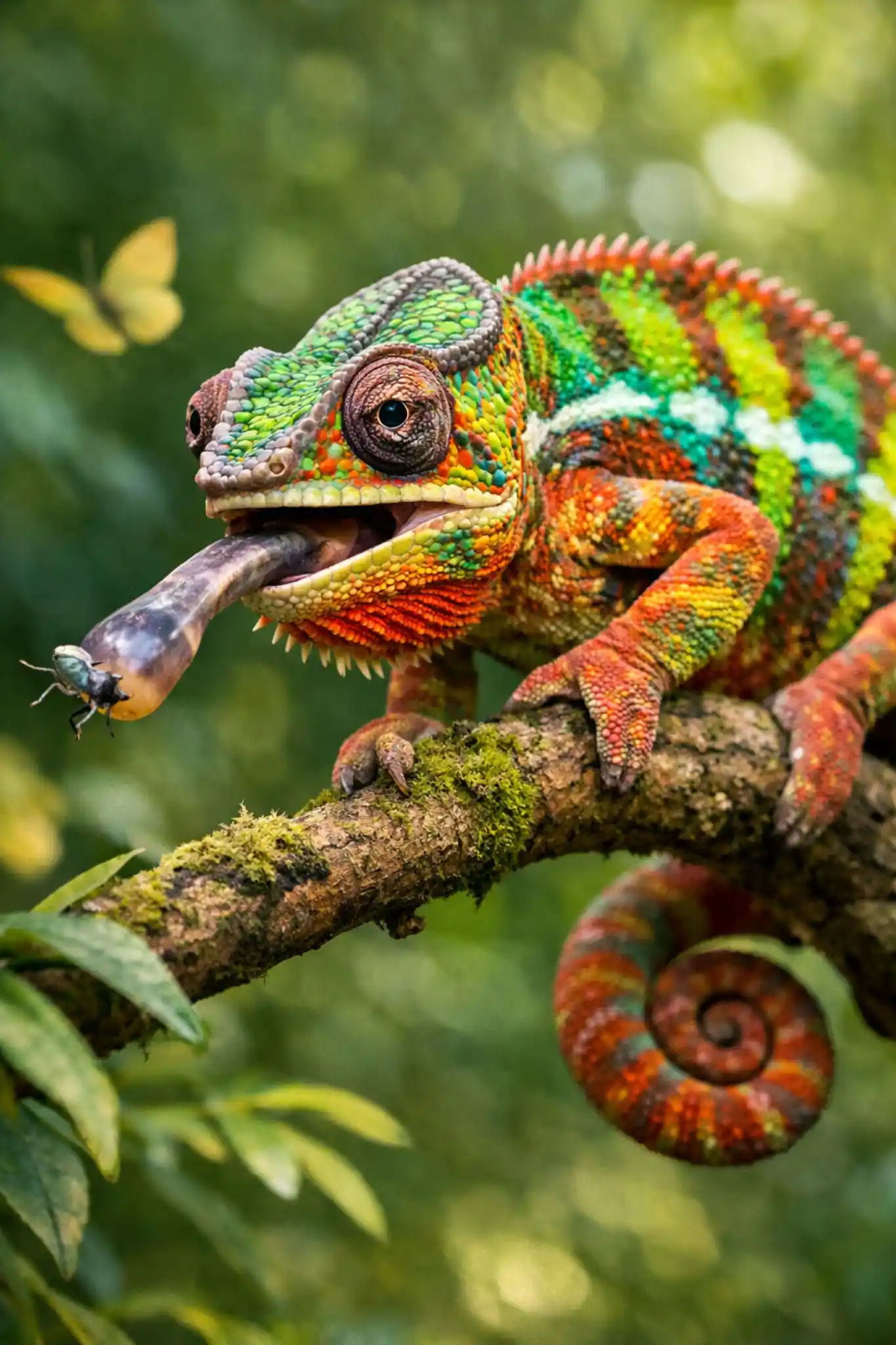
Chameleons are well known for their long tongue, but the real story is how it works. The tongue shoots out quickly, and the tip acts like a sticky pad that grabs insects. Many chameleons eat crickets, flies, grasshoppers, and other small prey, and they do it with a mix of patience and speed. They may sit still for a long time, then strike in a flash. Their tongue and aiming skill allow them to catch prey without chasing it, which is safer in trees and less tiring than constant movement.
Gripping Feet and a Strong Tail
Chameleon feet are shaped to clamp onto branches. Their toes are grouped into two opposing sets, making their grip firm and steady. This helps them hold onto thin twigs that would be difficult for other lizards. Many species also have a prehensile tail that can wrap around branches for extra balance. Together, these features help them climb, stay stable in wind, and move through plants without falling, even when they stretch far to reach a better spot.
Why Chameleons Change Color
A lot of people believe chameleons change color only to match the background. That can happen sometimes, but it is not the main reason. Color change is often about communication and control. Chameleons may darken to absorb heat or lighten to reflect it. They may show brighter colors during courtship, rivalry, or territorial displays. They can also shift colors when they feel stress, fear, or irritation. In simple terms: color change is like a visual language mixed with a temperature tool, not just a camouflage trick.
Color can also work like a warning sign. A chameleon may show darker tones when it feels threatened, or brighter tones when it wants to appear strong to another chameleon. Some changes happen quickly, while others are slower, depending on mood and the situation. This is why two chameleons of the same species can look very different at different times of day—even in the same place.
How Color Change Works
Chameleons change color because of special layers in their skin that interact with light. Pigment plays a role, but structure matters too. Tiny cells and layers can reflect light differently depending on how they shift and tighten. When the structure changes, the skin can reflect different wavelengths of light, which affects what colors you see. This is why some chameleons can shift from green to yellow to blue tones quickly, while others mainly change brightness or pattern strength. Not every species has the same range, and many are far more “subtle shifters” than people expect.
Not all color change is equally dramatic. Some species mainly shift between lighter and darker shades, while others can show brighter stripes or stronger patterns during social moments. Light, heat, and stress levels can also affect how noticeable the change becomes. For beginners, the easiest way to understand it is: color is a mix of skin layers, body signals, and the environment working together.
How Chameleons Eat and What They Usually Hunt
Most chameleons are insect eaters, and their meals often include a mix of insects they can safely swallow. Some larger species may also eat small lizards or other tiny animals if the chance appears, but insects are the main diet for many. They rely on good timing more than speed, so they choose a spot with a strong view and wait. Their hunting success depends on sharp aim, distance control, and staying calm. This style is one reason chameleons can survive in places where fast chasing would waste energy or cause dangerous falls.
Behavior: Calm, Solitary, and Very Aware
Many chameleons are solitary by nature. They tend to live alone and can become stressed by constant contact with others, especially in small spaces. They communicate through posture, head movements, and color shifts. A defensive chameleon may puff up, open its mouth, sway, or show darker tones. A confident chameleon may appear brighter or more sharply patterned. This behavior matters because it shows that chameleons are not “pet-like” animals that enjoy frequent handling. Even in the wild, they often prefer quiet observation over action, saving their energy for hunting and staying safe.
Their calm behavior is a survival advantage, not laziness. Staying still reduces attention from birds, snakes, and larger animals. When they do move, they often move in a careful, controlled way, step by step, with pauses. This helps them stay balanced and reduces the chance of being detected in open areas.
Temperature, Water, and the Truth About “Easy Care”
Chameleons are sometimes described as simple reptiles, but beginners should know they can be sensitive. Many species need the right temperature range, safe lighting, and access to water in a form they recognize. Some prefer droplets on leaves rather than still water in a bowl. Humidity needs also depend on the species and habitat type. When these basics are off, chameleons may lose appetite, become weak, or show stress colors more often. Learning the natural environment of a species is the best way to understand what it needs, because a desert-adapted type will not thrive under the same conditions as a rainforest type.
Because chameleons are sensitive, small changes in their environment can affect appetite and energy. If it’s too cold, digestion slows down and they may stop eating. If it’s too hot, they can become weak or dehydrated faster than people expect. This is why many beginners struggle at first: chameleons are not forgiving animals, and their health depends on consistent, correct conditions.
Beginner-Friendly Chameleon Facts to Remember
If you want a quick mental checklist for understanding Chameleónovité, keep these beginner points in mind:
-
They are built for climbing, not chasing.
-
Color change is often about signaling and temperature.
-
Their eyes can move independently for wide awareness.
-
They hunt with a fast tongue and strong aim.
-
Many do best with quiet space and low stress.
Reproduction, Growth, and Lifespan Differences
Chameleons reproduce in different ways depending on the species. Many lay eggs, sometimes burying them in soil or hidden places. Others give birth to live young. Growth speed can vary, too. Some species mature quickly, while others take longer. Lifespans can range from just a few years to much longer, and factors like habitat quality, climate, predators, and food supply can affect survival. This wide range reminds beginners that chameleons are not “one single animal type.” They are a large family with many life strategies shaped by different environments.
Different habitats push chameleons to develop different life plans. In some places, growing fast and reproducing quickly can be more useful than living a long time. In more stable environments, slower growth and longer lifespans may be more common. These differences help explain why chameleons can vary so much from species to species, even though they share similar body features.
Threats, Conservation, and Why It Matters
Chameleons may look tough, but many species are vulnerable because they depend on specific habitats. When forests are cleared, when brushlands are burned, or when small ecosystems are disturbed, some chameleons lose their entire home range. Illegal collection and careless trade can also hurt wild populations, especially for rare species that live in limited areas. Protecting chameleons is not only about saving a “cool animal.” It also protects the natural places they live, which supports many other species. For beginners, the key point is simple: habitat loss and human pressure can affect chameleons quickly because many cannot easily relocate and adapt.
Chameleons often suffer quietly because many live in small areas that people rarely notice. When a forest patch is cut down or a hillside is cleared, an entire local population can disappear. Some species have very limited ranges, meaning they exist only in one region or island zone. Protecting them often comes down to protecting the habitat first, because without the right plants and insect life, chameleons cannot survive long.
Final Thoughts
Chameleons are far more than reptiles that change color. The world of Chameleónovité includes careful climbers with gripping feet, a tail that helps them balance, eyes that scan like two separate cameras, and a tongue built for fast, accurate hunting. Their color shifts are not magic tricks, but real signals tied to mood, temperature, and communication. Once you understand these basics, chameleons become easier to respect and easier to learn about. They are quiet, specialized survivors, and the more you look past the myths, the more impressive they become.
Chameleons are not “magic color animals,” but real reptiles with highly specialized tools. Their eyes, tongues, feet, and tails all work together for a life spent climbing and hunting with precision. Once people understand how they live, they usually gain more respect for how delicate and impressive these reptiles truly are—and why protecting their natural environments matters.
Frequently Asked Questions (FAQs)
What does Chameleónovité mean?
It refers to the chameleon family, a group of reptiles known for unique hunting tools, climbing skills, and color change abilities.
Do chameleons change color to match anything they sit on?
Not always. They often change color for communication, stress, and temperature control, not just to blend in.
How do chameleons change color so fast?
Their skin has special layers that reflect light differently when the structure shifts, creating visible color changes.
Can chameleons move both eyes at once?
Yes, and they can also move each eye separately, which helps them watch for danger and locate prey.
What do chameleons eat most of the time?
Most eat insects like crickets, flies, and grasshoppers, using patience and a fast tongue to catch prey.
Are chameleons friendly to hold?
Many do not enjoy handling. They can become stressed, so quiet observation is usually better than frequent contact.
Where do most chameleons live in the wild?
Many live in Madagascar and Africa, with some species found in parts of Europe, the Middle East, and South Asia.
Do all chameleons have bright colors?
No. Some are very colorful, but many species have more subtle tones and mainly change brightness or pattern contrast.
Do chameleons drink water from a bowl?
Some may, but many prefer water droplets on leaves, which is closer to how they drink in nature.
Are chameleons dangerous to humans?
They are not dangerous to people. They may hiss or bite if scared, but they are not aggressive hunters toward humans.
Do chameleons lay eggs or have live babies?
Both exist. Many species lay eggs, while some species give birth to live young, depending on their type and habitat.
Why are some chameleons threatened today?
Habitat loss, environmental changes, and harmful collection can reduce populations, especially for species with small ranges.
FOR MORE : INSIDE FAME
