


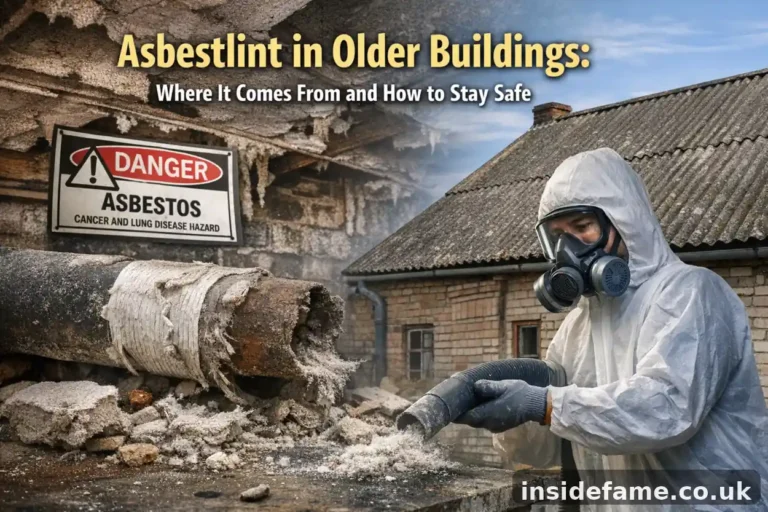
Older buildings often hide materials that were once seen as strong, cheap, and fire resistant. One of the most serious examples is asbestos. In many cases, people now use the word Asbestlint to talk about asbestos-like dust, loose fibers, or older asbestos rope, tape, and sealing material found around heat sources, joints, ducts, and equipment. The exact word is not a formal technical term in most English-speaking safety guidance, but the risk behind it is real. When asbestos-containing material is worn down, cut, broken, drilled, or removed the wrong way, tiny fibers can enter the air and create a health hazard.
What Asbestlint Usually Means in Real Buildings
In practical building safety terms, Asbestlint usually points to one of two things. It may refer to older asbestos tape, rope, cloth, or gasket-style material used to seal heat, fire, or pipe joints. It may also describe fine lint-like dust or debris released from asbestos-containing products after damage or aging. In both cases, the concern is the same. Small fibers can become airborne, settle on surfaces, move through indoor air, and be breathed in without any obvious warning. That is why people should focus less on the label and more on whether a suspect material could contain asbestos and release fibers when disturbed.
Why Older Buildings Are the Main Concern
Buildings built or renovated decades ago are the most likely places to contain asbestos products. That includes homes, schools, apartment blocks, offices, factories, storage areas, and public buildings. For many years, asbestos was used in insulation, fireproof panels, pipe coverings, cement sheets, coatings, floor tiles, and sealing products because it handled heat well and lasted a long time. Even where asbestos use is now banned, many older structures still contain legacy materials. If those materials remain sealed, solid, and untouched, the immediate risk is often lower. The real danger begins when repairs, drilling, sanding, demolition, leaks, fire damage, or age-related wear start to break them apart.
Common Places Where Asbestlint Comes From
The source of Asbestlint in older buildings is often not one obvious product but a mix of aging materials hidden in plain sight. Pipe lagging around heating systems is one of the biggest concerns, especially in boiler rooms, service spaces, and basements. Older insulating boards may also be found in wall panels, ceiling tiles, cupboard linings, partition walls, and near electrical systems. Outside the main structure, asbestos cement sheets may still appear on garages, sheds, roof panels, soffits, gutters, flues, and outbuildings. Some older textured finishes, vinyl floor tiles, and mastics may also contain asbestos.
Rope, Tape, Seals, and Hidden Heat-Proof Parts
A smaller but important source involves textile-like asbestos products. In older equipment, asbestos rope, tape, cloth, and gasket materials were used around boilers, ovens, heaters, pipe joints, valves, fire doors, shutters, and some ventilation points. This is one reason the word Asbestlint sometimes gets linked to tape-like or fabric-like material. These products can look harmless because they are thin, dry, and tucked into edges or gaps. But if they fray, crack, or get pulled out during repair work, they may release dangerous fibers. This risk is easy to overlook because the material may not look like the hard asbestos sheets many people expect.
How Fibers Get Into the Air
Asbestos does not usually become a problem because it simply exists in a building. It becomes a problem when material is disturbed. A worker drilling into a ceiling panel, a homeowner sanding old flooring, a plumber opening a boxed-in pipe, or a contractor removing an old heater seal can all trigger fiber release. Over time, moisture damage, vibration, weathering, impact, and general decay can also weaken older products. Once released, the fibers may stay suspended in the air, settle onto floors or furniture, and become airborne again when people walk through the space or try to clean it the wrong way.
Why Indoor Spread Can Be Hard to Notice
One of the most troubling parts of asbestos exposure is that you often cannot see the real danger. The most harmful fibers are so small that people do not notice them in the air. A room may look clean even after material has been disturbed. Dust may spread through clothing, shoes, soft furnishings, and nearby rooms. In some cases, air systems can make the problem worse by moving contaminated particles into other areas. That is why a small repair job in one corner of an older building can become a wider indoor problem if work continues after suspect material is broken open.
Health Risks Everyone Should Understand
Breathing in asbestos fibers can lead to very serious diseases, including mesothelioma, asbestos-related lung cancer, and asbestosis. These illnesses often take many years to appear, which is part of what makes asbestos so dangerous. A person may feel fine after an exposure event and still face harm much later in life. Risk usually rises with heavier or repeated exposure, but even short exposures are not something to dismiss. Smoking also makes the lung cancer risk worse. For children and younger people, there is extra concern because they have more years ahead for long-term disease to develop.
Signs That a Building Needs Extra Caution
People often ask how they can tell if Asbestlint is present. The honest answer is that appearance alone is not enough. Still, there are warning signs that should raise caution before any work begins. Here are the most useful ones:
- the building was built or refurbished before modern asbestos bans
- there are old pipe coverings, insulation boards, cement sheets, or heat seals
- repairs, leaks, cracks, fraying, or crumbling material are visible
- renovation work will involve cutting, drilling, lifting, scraping, or demolition
What To Do If You Suspect It
The safest response is simple. Stop work immediately. Do not drill further, do not sweep, and do not use a normal household vacuum. Keep people away from the area and avoid carrying dust to other parts of the building. If clothing may be contaminated, do not shake it out indoors. If there is airflow from vents or heating systems near the damaged area, that should also be taken seriously. At this stage, many people make the mistake of trying to “clean up quickly” before anyone notices. That can make the risk much worse. The correct next step is to treat the material as suspect until testing proves otherwise.
Testing and Professional Assessment
Because asbestos cannot be confirmed by sight alone, proper testing matters. In older buildings, this usually starts with an inspection or survey carried out by a trained professional. If needed, a sample is taken and analyzed by a qualified laboratory. In larger or higher-risk situations, air testing may also be used to check whether fibers are present after disturbance or removal work. This process matters because different materials create different levels of risk. A bonded cement sheet in good condition is not the same as loose insulation, pipe lagging, or a damaged fibrous seal. Good decisions depend on knowing exactly what is there and what condition it is in.
Removal Is Not Always the First Answer
Many people assume all asbestos must be removed right away, but that is not always true. If a material is intact, sealed, and unlikely to be disturbed, managing it in place may be safer than removing it. Removal can increase danger if it breaks the material apart and spreads contamination. On the other hand, damaged products, crumbling insulation, broken boards, or disturbed rope and tape seals often need professional action. The key point is that removal is a specialist job, not a casual home project. In many cases, the highest-risk work should only be done by licensed or specially trained professionals using controlled methods, protective equipment, and proper cleanup steps.
Staying Safe During Renovation or Property Work
Renovation is when many hidden asbestos problems come to light. Before any major work in an older property, it is wise to check whether asbestos-containing material may be present in walls, ceilings, floors, service areas, heating systems, and external panels. This is especially important before opening ceiling voids, removing old flooring, replacing boilers, updating ductwork, or tearing out partition walls. Contractors should not guess. Owners should not rely on old assumptions either. A careful check before work starts is far easier, safer, and cheaper than dealing with contamination after a preventable release.
Disposal, Cleanup, and Long-Term Safety
After asbestos work is complete, waste handling is just as important as removal. Suspect material should never be mixed with ordinary household rubbish or left loose on site. Proper disposal rules exist because broken waste can continue to release fibers during transport and handling. Good cleanup also matters. Standard sweeping and normal vacuuming are not safe methods for asbestos dust. Where contamination has occurred, cleanup must be controlled so fibers are not stirred back into the air. Long-term safety depends on a simple chain of decisions: identify the risk, avoid disturbance, use qualified help, and make sure any waste or debris is handled through the right process.
Final Thoughts
Asbestlint in older buildings is really a warning sign about hidden asbestos risk. It may come from damaged dust, fibrous debris, or older rope and tape materials used around heat and sealing points. The important fact is that the danger begins when asbestos-containing material breaks down or gets disturbed. That is why the safest approach is calm, not rushed. Do not panic, but do not ignore the issue either. If you suspect asbestos in an older building, stop work, keep people away, arrange proper testing, and let trained professionals guide the next step. A careful response today can prevent a serious health problem years down the line.
Frequently Asked Questions (FAQs)
What is Asbestlint in simple words?
Asbestlint usually refers to asbestos-related fibrous material, dust, or old tape-like sealing products found in older buildings. In plain terms, it means a possible asbestos hazard that should be treated with care.
Is Asbestlint the same as ordinary dust?
No, ordinary dust is not the same thing. If the material contains asbestos fibers, it can carry a much higher health risk because the fibers can be breathed in and stay in the body.
Where is Asbestlint most likely to be found?
It is most likely to show up around older insulation, pipe coverings, boiler parts, fireproof panels, cement sheets, and heat-resistant rope or gasket materials. Older service spaces are common trouble spots.
Can I tell if a material contains asbestos just by looking at it?
No, not with confidence. Some asbestos products look harmless or very similar to non-asbestos materials, so testing by a trained professional is the safest way to confirm it.
Is asbestos always dangerous if it is inside a building?
Not always in the same way. Material in good condition that is left untouched may pose less immediate risk, but damaged or disturbed material can quickly become dangerous.
What should I do first if I disturb suspected Asbestlint?
Stop work right away and keep people out of the area. Do not sweep, vacuum, sand, or keep pulling the material apart while trying to figure it out.
Can a normal vacuum remove asbestos dust safely?
No, that is not a safe choice. A regular vacuum can spread fine fibers back into the air instead of controlling them, which may increase exposure.
Does Asbestlint only appear in industrial buildings?
No, it can also be found in homes, flats, garages, schools, and small commercial properties. Any older building with legacy materials can carry this risk.
Is it safe to remove small asbestos material by myself?
That is usually not a good idea. Even small amounts can become dangerous if handled the wrong way, and professional assessment is much safer than guessing.
Can asbestos fibers spread through air systems?
Yes, they can in some situations. If fibers enter moving air near ducts, vents, or heating systems, contamination may spread beyond the original work area.
How long does it take for asbestos-related illness to appear?
These illnesses usually take many years to develop. That delay is why even a short exposure should be taken seriously and not brushed off.
Should all asbestos be removed from an older building?
Not always. Some materials are safer to manage in place if they are intact and unlikely to be disturbed, while damaged or high-risk material may need professional removal.
FOR MORE : INSIDE FAME
