


If you’ve been seeing Jyokyo online and wondering what it means, you’re not alone. In everyday Japanese, it most often points to the idea of a “situation” or “state of affairs.” People use it when they want to describe what’s going on right now, what the conditions are, and what needs to be considered before making a decision. It’s the kind of word you hear in offices, schools, news reports, and even casual chats when something changes and everyone needs an update.
You’ll also notice that people use it when they want to sound a bit more objective. It’s not only about feelings. It’s about conditions that can be explained, checked, and shared with others. That’s why it fits so well in phrases about progress, current conditions, and what the next step should be.
How to Say It Naturally Without Sounding “Textbook”
In conversation, people don’t usually stop to explain the word. They drop it in quickly, often with a simple verb like “see,” “know,” or “check.” You might hear a friend say something like “I’ll check the situation,” or a coworker say “Let’s confirm the situation first.” The point is not to be dramatic. The point is to be practical.
A helpful way to think about it is this: when you use Jyokyo, you’re talking about the bigger picture around something—what’s happening, what’s true right now, and what factors matter. It can be calm, serious, urgent, or routine, depending on the topic. The word itself is neutral, so the tone comes from context and your delivery.
Common Pairings People Use All the Time
Japanese often uses set pairings, and this word is no exception. Some combinations show up everywhere in daily life—especially in updates, meetings, and messages. People use it to describe progress, usage, or conditions in a clear way, like “current status” or “progress status.”
Here are a few natural patterns you’ll see again and again, and you can borrow them when you speak or write.
-
進行状況 = progress status
-
利用状況 = usage status
-
経済状況 = economic situation
-
現在の状況 = the current situation
-
状況によって = depending on the situation
That “depending on the situation” pattern is especially useful, because it can soften your message. It lets you say “it might change” without sounding unsure.
Quick Phrases You Can Actually Use Today
When you’re learning, it helps to have ready-made phrases that work in many situations. These are the kinds of lines people say in group chats, at work, or in everyday planning. They’re simple, polite, and widely understood.
A common theme is confirming facts before acting. Japanese communication often values checking first, then moving. That’s why you’ll hear phrases like “Can you share the situation?” or “Let me confirm.” These lines don’t sound stiff—they sound responsible. If you learn only a few, start with phrases that mean “check,” “update,” and “depending on.”
Jyokyo vs Similar Words People Mix Up
Learners often confuse this word with other Japanese words that can feel similar in English. Two common ones are “state” and “circumstances,” but Japanese breaks these ideas up more clearly.
Jyokyo is usually the “overall conditions around something.” Jotai often points more to a “state” that can be personal or physical, like the state of your health, the state of a machine, or the state of something functioning. Jijo can feel like “circumstances” but often hints at reasons in the background—what led to this, what’s going on behind the scenes. Yosu is often what you can observe on the surface, like how someone seems or how something appears in the moment.
If you choose the wrong one, people will still understand you, but your sentence may feel slightly off. When you want the broad picture—what’s happening, what conditions exist, and what that means—Jyokyo is usually the safest fit.
Polite vs Casual: How the Tone Changes
This is a word that works in both polite and casual speech, but the phrasing around it changes. In polite settings, people add respectful structure like “please confirm” or “we appreciate your update.” In casual settings, you’ll hear it shortened or used with casual verbs, like “what’s the situation?” or “how’s it going?”
At work, a standard approach is to ask for a “status update” using a calm, neutral sentence. Among friends, it can sound more like a quick check-in. The word itself doesn’t force formality. Your verbs and endings do. So if you want to sound natural, practice both a polite version and a casual version of the same message.
Where You’ll Hear It Most: Work, School, and News
In workplaces, it’s a go-to term for progress, issues, and next steps. People use it when they’re reporting on a project, a delay, or a change in plans. In schools, teachers use it when describing classroom conditions, student progress, or schedule changes. In the news, it shows up in reporting about events, weather, public issues, and social conditions.
This is one reason the word feels so common: it’s useful in any setting where facts matter and the bigger picture is changing. If you spend time listening to Japanese media or reading announcements, you’ll see it constantly, especially when the topic is “current conditions” or “how things stand right now.”
How to Ask About the Situation Without Sounding Pushy
Sometimes you want an update, but you don’t want to sound demanding. Japanese has a strong preference for softening requests, especially when you don’t want to pressure someone. With this word, the easiest softener is to add a gentle phrase like “if possible” or “when you have time.”
A natural way is to ask for a “share” rather than a “report.” Another approach is to ask what they “understand” so far, which invites them to speak without feeling blamed. Small changes like this can make your Japanese sound more considerate and more natural in real conversations.
Everyday Examples: Travel, Events, and Small Talk
You can use this word in everyday life without sounding like a business email. If trains are delayed, you might say you want to check the current situation. If you’re meeting friends and the weather is changing, you might mention the situation and adjust plans. If someone is sick, you might ask about their situation in a caring way—especially when you mean “how things are going overall,” not just a single symptom.
It’s also useful when you’re explaining why you’re changing plans. Instead of giving a long excuse, you can say “given the situation” and keep it simple. That kind of phrasing is common in Japanese because it reduces conflict and keeps the focus on conditions rather than blame.
Why “Jyokyo” Shows Up in Weird Online Searches
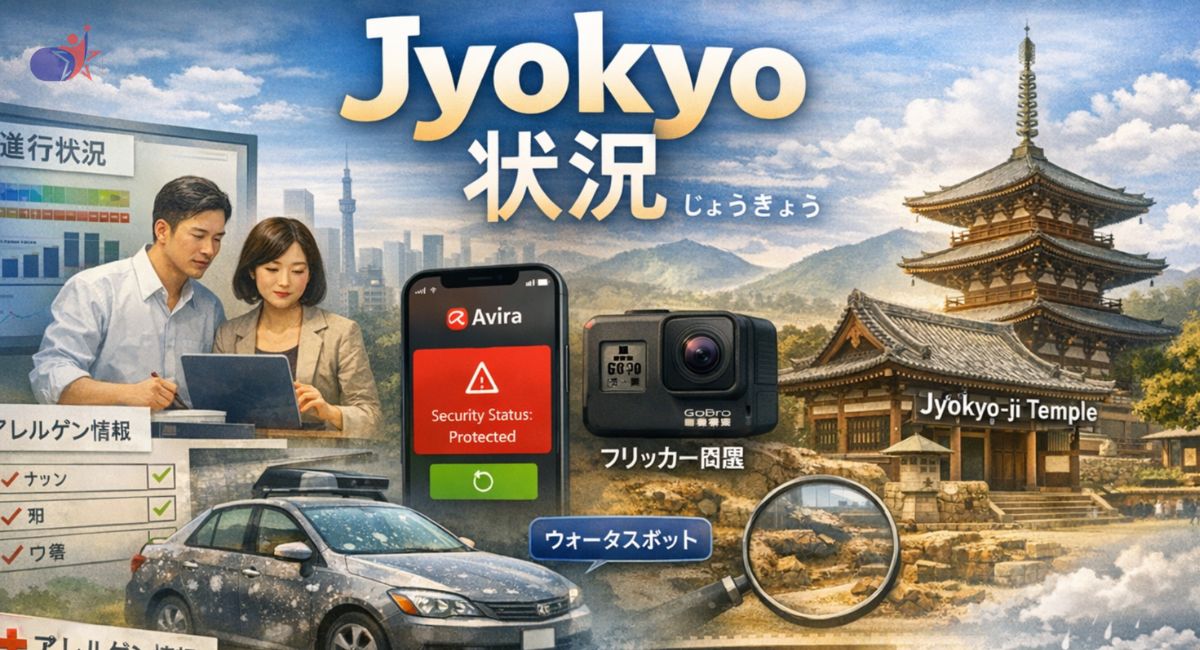
Online, people sometimes attach Jyokyo to all kinds of topics to mean “status,” “current condition,” or “what’s going on with this issue.” That’s why you may see it paired with tech problems, product issues, or very specific situations. For example, you might come across searches like avira jyokyo when someone wants to check an app’s protection status, or gopro フリッカーjyokyo when someone is dealing with flicker in video under certain lighting.
You may also see niche phrases that look like they belong to a specific site or guide, such as http kurumajoho.com iondeposit-jyokyo and http kurumajoho.com waterspot-jyokyo, which read like “ion deposit status” and “water spot status” in a car-care context. And sometimes you’ll see topic mashups like arerugen jyokyo tabemono, which reads like “food allergen situation,” a practical concern for people reading labels and trying to avoid specific ingredients.
A Quick “Situation Check” for Those Niche Topics
Because those searches can look confusing, it helps to understand the everyday logic behind them. When someone says “allergen situation” in a food context, they usually mean: what ingredients are involved, what labeling or menu details are available, and what risk level they should assume. When someone says “flicker situation” with an action camera, they usually mean: what lighting conditions cause the issue, what settings reduce it, and whether the fix changes video quality.
For car care terms like “ion deposit” or “water spot,” the “status” idea usually means: how severe the marks are, whether they sit on the surface or have etched deeper, and what level of cleaning or polishing is needed. These topics all share one thing: people want a quick, practical read on conditions right now—and that’s exactly what Jyokyo communicates in Japanese.
Jyokyo-ji Temple and Place Names That Look Similar
Not every “Jyokyo” you see online is about the everyday word. Some searches point to names, places, or romanized spellings that look similar. jyokyo-ji temple is one example that can show up as a proper name. When that happens, the intent is usually travel-related or local-history related, not language learning.
If you’re writing or speaking, this is a good reminder: romanized Japanese can be messy. The same-looking spelling can point to different kanji or different meanings, depending on the topic. So the safest move is always to focus on context—what the person is talking about—and not the spelling alone.
“Mozaiku Jyokyo-ki” and How to Handle Sensitive Topics Carefully
Another term that sometimes appears in searches is mozaiku jyokyo-ki. People may encounter it in discussions about video editing, image processing, or claims about “removing” pixelation or mosaic effects. It’s a topic that can drift into sensitive areas online, so if you mention it, it’s best to keep your explanation neutral and focused on general media concepts.
In a practical, everyday language sense, the key takeaway is that people attach Jyokyo-style wording to almost anything when they want a “status update” or a “current condition.” That’s why the word can appear next to tech, privacy apps, cameras, car detailing, places, and media terms. The core meaning stays the same: “what’s going on right now, and what does that mean for my next step?”
Final Thoughts
Jyokyo is one of those Japanese words that becomes more useful the more real-life input you get. It’s not fancy, and it’s not slang. It’s a practical “big picture” word that helps you talk about conditions, updates, and what’s happening right now. If you learn a handful of common pairings and practice asking for updates politely, you’ll start hearing it everywhere—and you’ll start using it naturally without overthinking.
The simplest way to master it is to treat it like a tool: use it when you want to confirm reality before acting. Whether you’re checking progress, adjusting plans, troubleshooting a device, or reading a notice, Jyokyo helps you sound calm, clear, and current.
Frequently Asked Questions (FAQs)
What does Jyokyo mean in simple English?
It usually means “the situation” or “current conditions,” especially the overall state of what’s going on.
Is Jyokyo used in casual conversation?
Yes—people use it casually, especially when they want an update or want to confirm what’s happening.
Is Jyokyo formal or polite?
It works in both. The politeness comes from the verbs and sentence endings you choose.
What’s the difference between Jyokyo and Jotai?
Jyokyo is the broader situation; Jotai is more like a specific state or condition of something.
How do I say “depending on the situation” in Japanese?
A common way is “状況によって,” which implies the plan may change based on conditions.
Can I use Jyokyo for someone’s personal life situation?
Yes, but use a gentle tone. It can sound caring if you’re clearly asking out of concern.
Why do I see “avira jyokyo” online?
People often attach it to apps to mean “status,” like checking security, activity, or protection status.
What does “gopro フリッカーjyokyo” suggest?
It suggests someone is asking about the “flicker situation” on GoPro footage and how to fix it.
What is “arerugen jyokyo tabemono” trying to say?
It points to the “food allergen situation,” like checking ingredients and labeling to avoid allergens.
Why are there searches like http kurumajoho.com waterspot-jyokyo?
They look like “status” pages about car paint water spots or deposits, using Jyokyo to mean “current condition.”
Is jyokyo-ji temple related to the word Jyokyo?
It’s usually a proper-name search, not language learning—context matters when romanized spellings look similar.
What should I do if I’m unsure when to use Jyokyo?
Use it when you mean the overall conditions around something, especially when you’re asking for an update or confirming facts.
FOR MORE : INSIDE FAME
