


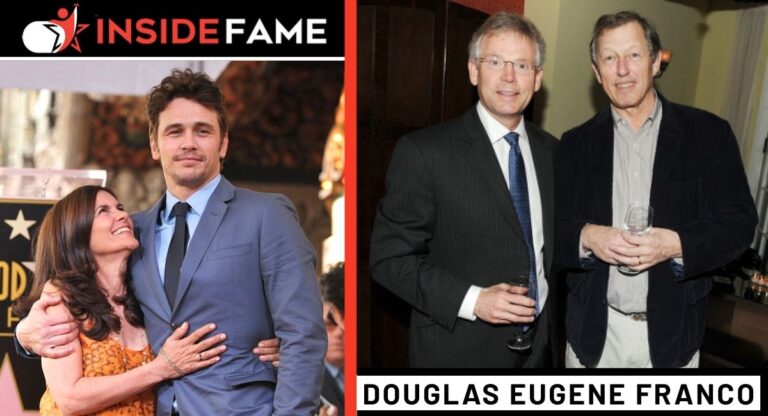
When people hear the name Douglas Eugene Franco, they usually connect it to his oldest son, actor and filmmaker James Franco. But Douglas’s own life story reaches far beyond red carpets and Hollywood premieres: he was a Midwestern-born math whiz, a Harvard-trained business mind, a Silicon Valley entrepreneur, and a quiet humanitarian who helped his family and strangers alike.
Born in 1948 in Glencoe, Illinois, and later settled in Palo Alto, California, Douglas built a life that blended analytical thinking with creativity and service. His choices—studying mathematics at Stanford, earning an MBA from Harvard, working in technology, founding an aid-focused organization, and supporting his three artistic sons—shaped the environment in which James Franco and his brothers grew up.
Quick Information About Douglas Eugene Franco
| Detail | Short Info |
|---|---|
| Full Name | Douglas Eugene “Doug” Franco |
| Birth | Feb 20, 1948 – Glencoe, Illinois, US |
| Death | Sept 26, 2011 – Palo Alto, California |
| Main Residence | Palo Alto, California |
| Education | Math at Stanford; MBA from Harvard |
| Occupation | Silicon Valley businessman |
| Spouse | Betsy Lou (Verne) Franco |
| Children | James, Tom, and Dave Franco |
| Known For | Tech ventures and humanitarian work |
| Notable Roles | SecureBox executive; Orchard founder |
Early Life and Education
Douglas Eugene Franco was born on February 20, 1948, in Glencoe, New Trier Township, Cook County, Illinois. Sources that trace his family history list his parents as Daniel Franco Jr. and Marjorie Franco, with Douglas growing up in a typical Midwestern setting before charting a path westward for college.
As a young adult, he enrolled at Stanford University, where he majored in mathematics. A Stanford-affiliated remembrance describes him as a math major who was also drawn to poetry and painting, suggesting that even in college he moved comfortably between the logical and the imaginative.
Marriage to Betsy Franco and Family Life
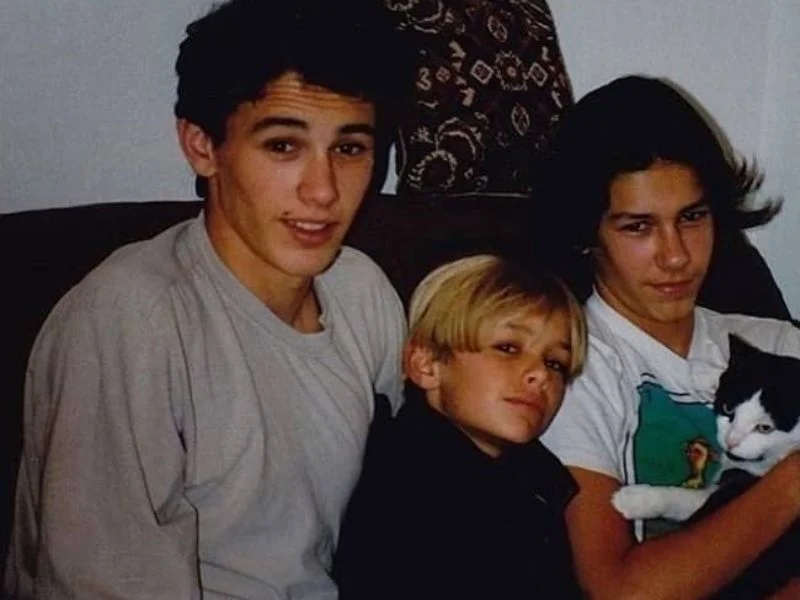
At Stanford, Douglas met Betsy Lou Verne, an art student who would later become a well-known author of children’s and young-adult books. The two married in 1971 in Palo Alto, building a partnership that blended his analytical strengths with her creative energy and eventually turned their home into a kind of informal studio for writing, art, and ideas.
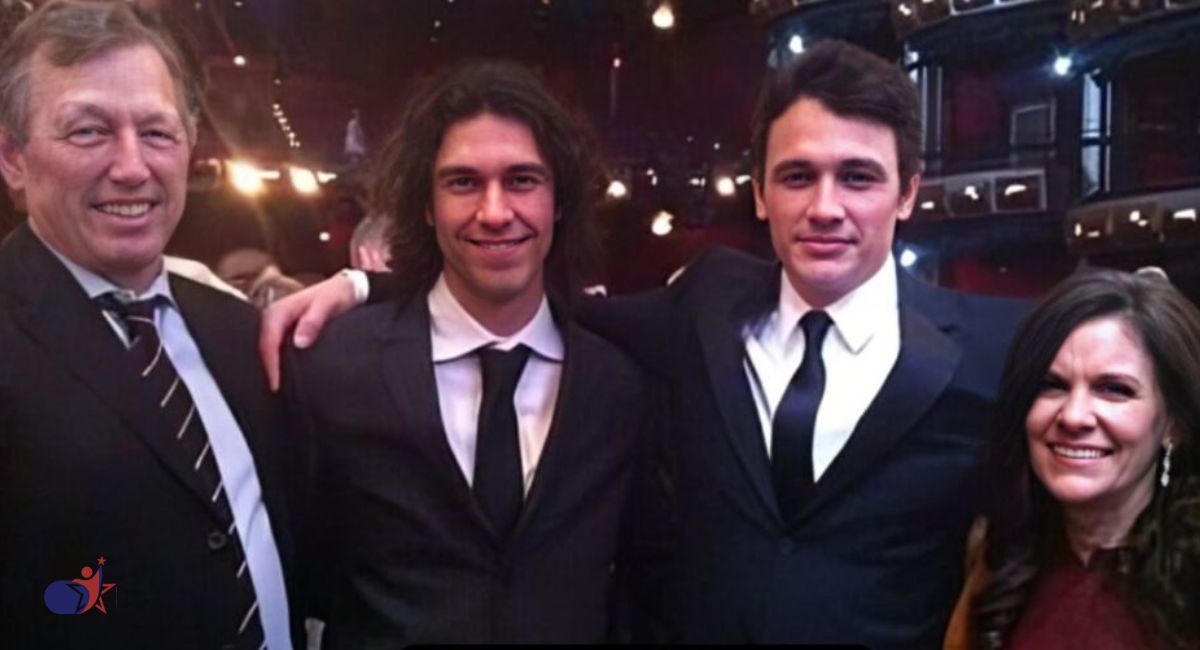
Together, Douglas and Betsy raised three sons—James Edward, Thomas Andrew, and David John Franco—all of whom pursued creative careers. Public biographical notes and film-industry profiles routinely reference Douglas as the father of James and Dave, emphasizing that he “ran a Silicon Valley business” while his wife wrote and occasionally acted, creating a family environment where both work and art were taken seriously.
Career in Silicon Valley
After completing his undergraduate degree at Stanford, Douglas continued his education at Harvard, where he earned a master’s degree in business. A Stanford magazine item notes that “after graduation, Doug Franco, ’70, got a master’s degree in business from Harvard,” and later worked in roles that tied technology to real-world infrastructure and logistics.
Over the years, he became known as a Silicon Valley businessman rather than a public-facing executive. News reports following his death describe him simply and succinctly as a “longtime entrepreneur in the Silicon Valley,” capturing a career that moved between established companies and newer ventures without seeking lots of media attention.
SecureBox and Technological Innovation
One of Douglas Eugene Franco’s most notable business connections was with SecureBox Corporation. A public profile of his Palo Alto house identifies him as an executive at SecureBox, noting that the company worked with Lawrence Livermore National Laboratory to develop a small, rugged device that travels inside a shipping container and monitors for intrusion, while also tracking GPS data.
The SecureBox system, as described in federal technology-transfer documents, was designed as a low-cost, reusable cargo security solution. It reflects Doug’s focus on practical innovation: instead of chasing flashy consumer products, he contributed to tools aimed at making global trade safer and more transparent—an example of how his mathematical training and business skills met real-world needs.
Orchard International and Humanitarian Work
Beyond his corporate and startup roles, Douglas Franco is frequently credited with founding or running Orchard International, a humanitarian effort that shipped aid overseas. A widely cited report notes that Orchard International sent roughly $15 million worth of medical supplies, food, and clothing to communities in Afghanistan, Ethiopia, India, Iraq, and the Philippines, as well as helping Native American and migrant communities in California.
This work reveals another side of his life: a desire to direct business structures toward service, not just revenue. By helping move surplus or donated supplies to areas of need, Douglas effectively used the logistics knowledge he gained in technology and commerce to close gaps in access, extending his impact well beyond Palo Alto and the walls of any single company.
How His Values Shaped the Franco Household
The way Douglas Eugene Franco lived his life quietly set the tone for the entire Franco household. He balanced demanding work in technology with a deep respect for art, reading, and big ideas, showing his sons that you could be both practical and imaginative at the same time. That combination—spreadsheets and sketches on the same table, business conversations alongside book discussions—helped normalize ambition for James, Tom, and Dave without turning their home into a pressure cooker. Instead, effort and curiosity became part of the family’s everyday rhythm.
His commitment to community and service also sent a clear message inside the home: success wasn’t just about personal gain, but about what you did with it. By taking on humanitarian projects and staying involved locally, he modeled a kind of grounded integrity that his sons could see up close, not just hear about in abstract terms. For a family that would later find itself in the public eye, that early example of living according to your values mattered just as much as any professional achievement.
Relationship With Creativity and the Arts
Although Douglas Eugene Franco built his career in business and technology, people who encountered him in academic and literary circles consistently remember him as someone who cared about language, images, and ideas. As a student, he didn’t treat art as a casual hobby; he took poetry and painting seriously enough to enroll in classes and stay engaged with those worlds even as he moved into corporate roles. That attitude made it easier for his sons to take their own creative interests seriously, because they saw that their father respected the arts on the same level as engineering or finance.
At home, this perspective translated into a culture where experimentation was encouraged and failure wasn’t fatal. Whether it was James making early short films, Tom developing his visual style, or Dave watching his older brothers navigate auditions and scripts, the underlying message was that creative work was real work. Douglas didn’t need to be on stage or on set himself; by showing steady interest, asking thoughtful questions, and supporting projects behind the scenes, he played a quiet but crucial part in the Franco family’s artistic story.
Why His Story Matters Beyond Hollywood
For many people who only know the Franco name from movies and television, it can be easy to assume that the family’s story begins and ends in Hollywood. Learning about Douglas Eugene Franco complicates that picture in a meaningful way. His path—from Midwestern roots to elite universities, from corporate offices to global aid shipments—reminds readers that the lives behind famous faces often involve decades of unseen work, trade-offs, and choices that never make it into a headline. It also shows how a parent’s character can influence the direction of a family without ever chasing a spotlight.
His story also resonates with anyone trying to balance career, family, and a desire to contribute something useful to the world. Douglas didn’t become a household name, but he still managed to support innovative technology, raise three creative sons, and send tangible help to people far beyond his neighborhood. For readers, that combination makes his life relatable and quietly inspiring: proof that you don’t have to be the one in front of the camera to shape a lasting legacy.
Personality, Interests, and Community Involvement
Accounts from colleagues and professors paint Douglas Eugene Franco as a person with wide-ranging interests and a strong sense of community. Stanford professor and poet Ken Fields recalled that Doug took several of his classes, remained in Palo Alto as a businessman, and stayed engaged with literature and art, reinforcing the picture of someone who never saw technical and humanistic pursuits as opposites.
Friends and entertainment reporters who met him through James Franco’s career have described Doug as warm, supportive, and genuinely proud of his sons’ accomplishments. He appears in these stories not as a back-stage manager but as a steady, encouraging presence at major milestones—someone more interested in celebrating family success than standing in front of the cameras himself.
Connection to James Franco’s Life and Career
Understanding Douglas Eugene Franco gives extra context to the way James Franco built his own path. James is known not only as an actor but also as a director, writer, and former student of multiple graduate programs, combining academic study with creative practice in a way that mirrors his father’s blend of math, art, and business.
Family accounts and later write-ups emphasize that Doug and Betsy fostered a home where books, painting, and ambitious projects were part of everyday life. Growing up with a father who could talk about container security systems and global shipping, and a mother who crafted stories and poems, likely made it feel natural for James and his brothers to push themselves in several directions at once.
Final Years and Legacy
In late September 2011, Douglas Franco died suddenly in Palo Alto at the age of 63, reportedly from a heart attack. Obituaries and news reports note that he was survived by his wife Betsy and their three sons, and they highlight not only his business work but also his charitable activity through Orchard International.
He was buried at Alta Mesa Memorial Park in Palo Alto, bringing his life story full circle near the campus where he had studied decades earlier. For his family, colleagues, and the people helped by his humanitarian work, Douglas Eugene Franco’s legacy lives on in creative careers he encouraged, in technologies he helped advance, and in shipments of aid that reached communities far beyond Silicon Valley.
Frequently Asked Questions (FAQs)
1. Who was Douglas Eugene Franco?
Douglas Eugene Franco was a Silicon Valley businessman, humanitarian, and the father of actors James and Dave Franco, as well as artist Tom Franco. He combined a math and business background with a lifelong interest in art and community work.
2. Where and when was Douglas Eugene Franco born?
He was born on February 20, 1948, in Glencoe, Cook County, Illinois, in the Chicago suburbs. He later moved to Palo Alto, California, where he lived for many years.
3. What did he study in college?
He studied mathematics at Stanford University and developed strong interests in poetry and painting alongside his technical work. Afterward, he earned a graduate business degree from Harvard.
4. Who was Douglas Eugene Franco married to?
He was married to Betsy Lou (Verne) Franco, an author and artist he met while they were both students at Stanford. Their marriage lasted from 1971 until his passing in 2011.
5. How many children did he have?
Douglas and Betsy had three sons: James, Tom, and Dave Franco. All three went into creative professions in acting and visual art.
6. What kind of work did he do in Silicon Valley?
He worked as a businessman and entrepreneur, holding roles in established technology companies and later in newer ventures. His work often focused on practical systems and infrastructure rather than public-facing products.
7. What is SecureBox, and what was his role there?
SecureBox is a company involved in developing portable security devices for shipping containers in partnership with national laboratories. Douglas served as an executive, helping bring the technology toward real-world use.
8. What was Orchard International?
Orchard International was an aid-focused effort associated with Douglas that shipped medical supplies, food, and clothing to communities in need. It also supported Native American and migrant communities within California.
9. How did he influence James Franco’s life?
He modeled a life that blended rigorous study, creative interests, and ambitious projects, which echoes in James Franco’s mix of acting, directing, writing, and academic work. His steady support also gave his sons confidence to pursue demanding paths.
10. What was known about his background and heritage?
Reports describe him as having Portuguese and Swedish ancestry, while his wife is of Jewish background. That mix of cultures contributed to a layered family identity for the Franco household.
11. When did Douglas Eugene Franco pass away?
He died on September 26, 2011, in Palo Alto, California, at the age of 63. His passing was reported by regional and national outlets because of his connection to James Franco.
12. How is his legacy remembered today?
His legacy is remembered through his sons’ creative work, his wife’s writing, and the projects he supported in technology and humanitarian aid. For many, he represents the quieter figure who helped build the foundation beneath a very visible family.
FOR MORE : INSIDE FAME
