


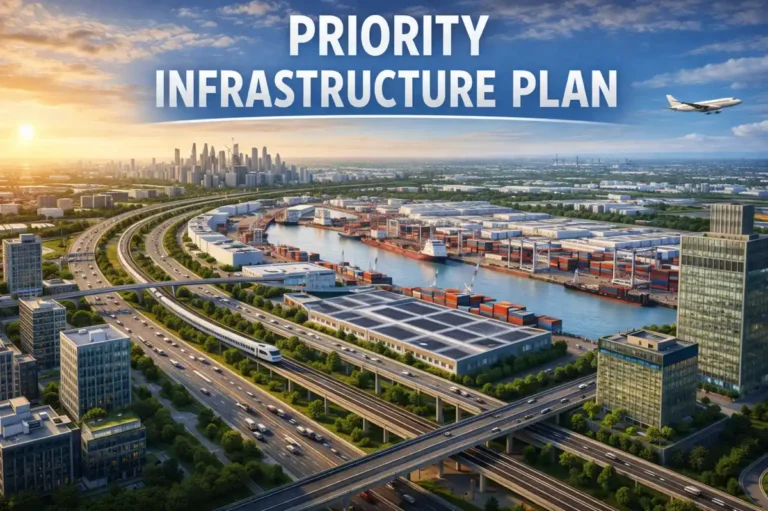
Cities rarely stand still. New housing estates appear, old industrial sites become mixed-use districts, and traffic patterns shift as jobs move around. When roads, pipes, power lines, and digital networks do not keep up, people feel it in longer commutes, unreliable services, and neighbourhoods that never quite work. A Priority Infrastructure Plan is designed to prevent this kind of disorder. It turns scattered project ideas into a shared roadmap that shows what should be built, where it belongs, and when it is needed so growth feels organised rather than overwhelming.
This type of plan is about daily life as much as engineering. It influences how long it takes to get to work, whether children have safe routes to school, how often streets flood in heavy rain, and whether new suburbs arrive with parks, clinics, and local shops nearby instead of years later. In this guide, we explore what a Priority Infrastructure Plan is, how it works in practice, and why it can reshape cities and communities in ways residents can feel every single day.
What Is a Priority Infrastructure Plan?
A Priority Infrastructure Plan is a long-term document that guides where and when major public networks will be built or upgraded. It brings together transport, water supply, wastewater, stormwater, power, parks, digital connectivity, and community facilities in one coordinated framework. Instead of treating each project as an isolated decision, it views them as parts of a single system that must support people, business, and the environment over decades.
Most plans look ten to fifteen years ahead and are closely tied to land-use planning, defining which areas will absorb new homes and jobs, what level of service residents should enjoy, and how projects will be staged in realistic steps.
How a Priority Infrastructure Plan Shapes Growth
One of the main roles of a Priority Infrastructure Plan is deciding where growth should be concentrated. By mapping a core growth area and focusing investment there, authorities can encourage compact neighbourhoods instead of scattered sprawl. This makes it easier to provide reliable services, limits the cost of stretching networks over long distances, and reduces the need for people to travel far for work, education, and daily errands.
The plan also changes when investment happens. Using population and employment forecasts, it allows upgrades to be delivered before networks are overwhelmed, so roads can be redesigned before gridlock sets in and drainage can be strengthened before the same streets flood every storm season.
Core Components of a Modern Priority Infrastructure Plan
Behind every effective plan is a strong evidence base. Planners begin by examining data on population trends, housing markets, land availability, employment clusters, and the current condition of networks. They estimate how many people are likely to arrive, where they are expected to live and work, and what this will mean for traffic, water use, energy demand, and pressure on public facilities. Another key component is the defined growth area, often called a priority infrastructure area.
This is the main zone where urban growth is expected over the life of the plan and usually includes places that already have basic services or can be connected efficiently. Within this area, the plan sets service standards and identifies the backbone of the urban system: major transport corridors, trunk water and sewer lines, drainage channels, energy networks, regional parks, and community hubs.
Everyday Services Shaped by Long-Term Planning
Although the term Priority Infrastructure Plan can sound technical, its results are easy to see on the ground. In practice, the backbone created by the plan shapes many systems people rely on every day:
-
Transport corridors that link homes with jobs and essential services
-
Primary water, sewerage, and drainage networks that protect health and safety
-
Power and digital connections that keep homes and workplaces running smoothly
-
Key social and recreational facilities that support learning, health, and community life
By planning these elements together, cities avoid the patchwork effect that comes from short-term fixes. New developments can connect into properly sized mains and roads instead of relying on improvised extensions, and future corridors for buses, light rail, bike lanes, and walking routes can be protected early so later projects fit neatly into place.
Linking Infrastructure to Social Outcomes and Fairness

Modern planning starts from the idea that infrastructure exists to serve people, not the other way around. A thoughtful Priority Infrastructure Plan asks not only whether a project is efficient, but also who benefits and which neighbourhoods have waited longest for quality services. In many cities, lower-income areas have endured poor transport, frequent flooding, or aging utilities while better-resourced districts received earlier upgrades. Long-term planning creates a chance to correct these patterns instead of repeating them by mapping social indicators alongside engineering needs and steering investment toward places with limited access to parks, clinics, schools, safe streets, and local centres.
Community Voice and Local Knowledge
For a Priority Infrastructure Plan to truly reflect the community it serves, local knowledge has to be part of the process. Residents, businesses, and community groups often see problems and opportunities that are invisible in raw data: a dangerous intersection, a frequently flooded corner, a well-used shortcut, or a park that feels unsafe after dark. When planning teams invite this insight and treat it seriously, the resulting plan becomes more accurate, practical, and widely trusted.
Engagement can include meetings, workshops, surveys, and interactive maps where people can pinpoint issues and suggestions, and it should actively seek out voices that are often missing, such as renters, young people, older residents, and new migrant communities.
Economic Growth, Jobs, and Business Confidence
Infrastructure is also a powerful engine for economic development. Reliable transport links, modern utilities, and strong digital networks make it easier for businesses to operate, move goods, reach customers, and attract skilled workers. A clear Priority Infrastructure Plan signals to investors where future hubs of activity will be and which locations will benefit from improved access and services.
That signal reduces uncertainty and encourages long-term commitments in housing, industry, logistics, and services. During construction, major projects create jobs in engineering, trades, and local supply chains, and over time efficient infrastructure lowers costs for firms and helps them compete in wider markets.
Climate Resilience and Environmental Quality
The growing impacts of climate change make long-term planning more important than ever. Heavy rainfall, heatwaves, droughts, and rising seas are already testing older systems that were designed for milder conditions. A modern Priority Infrastructure Plan builds resilience by factoring these risks into major decisions. It identifies zones at risk of flooding or erosion, areas likely to face extreme heat, and critical assets that must keep operating during emergencies.
This leads to different design and location choices, such as combining pipes with wetlands, rain gardens, and tree-lined streets to handle intense storms, reinforcing power and communication systems against high temperatures and strong winds, and guiding new development away from the most vulnerable locations or building it with higher protections where avoidance is not possible.
Governance, Funding, and Fair Sharing of Costs
Large projects need clear governance and realistic funding, or they remain concepts on paper. A Priority Infrastructure Plan sets out how different levels of government, agencies, and partners will work together to deliver the agreed priorities. It clarifies who is responsible for each network, how decisions are made when trade-offs arise, and how progress will be monitored. Funding frameworks are just as important.
Most communities rely on a mix of public budgets, grants, contributions from new developments, and sometimes partnerships with private investors. A good plan explains how growth will contribute to the cost of new infrastructure so existing residents are not asked to shoulder the entire burden, and it matches the program to realistic financial capacity to avoid overpromising.
Real-World Changes Residents Can Feel
The value of a Priority Infrastructure Plan becomes clear when you compare a city before and after it is in place. Without a shared roadmap, new suburbs may appear with limited public transport, poorly drained streets, and a long drive to the nearest school or health service. Road upgrades arrive years after congestion becomes severe, utility networks are stretched thin, and improvised extensions make future improvements complicated and costly.
In a city working from a strong plan, new neighbourhoods are opened in places where trunk networks can be extended efficiently, corridors for public transport and walking or cycling are protected early, drainage and green space are designed together, and upgrades to water, power, and digital systems are phased in ahead of peak demand.
Final Thoughts
A Priority Infrastructure Plan is ultimately a promise about the future of a city or region. It says that growth will be guided rather than left to chance, that public money will be spent where it makes the greatest difference, and that essential services will keep pace with people’s needs and environmental limits. By bringing together information on growth, service standards, funding, fairness, and climate resilience, it turns a patchwork of projects into a coherent story about where the community is headed.
Places that invest the time and effort to create and maintain such a plan are better prepared for change, able to adapt to new technologies, shifting economic trends, and unexpected shocks while staying focused on long-term goals.
Frequently Asked Questions (FAQs)
How long does a typical Priority Infrastructure Plan run for?
Most plans look ten to fifteen years ahead but are reviewed regularly so they can be updated as conditions, technology, and community needs change.
Who usually prepares a Priority Infrastructure Plan?
It is generally prepared by local or regional government, with input from planners, engineers, financial specialists, elected leaders, and community representatives.
How does this kind of plan affect new housing areas?
It helps decide where new neighbourhoods should be approved and ensures they can be connected efficiently to roads, public transport, utilities, parks, and other services.
Can a Priority Infrastructure Plan help ease traffic problems?
Yes, by planning transport corridors, public transit routes, and safe walking and cycling links in advance, it can reduce pressure on busy roads over time.
What role do local residents play in shaping the plan?
Residents can share local knowledge, comment on draft proposals, attend meetings or workshops, and highlight places that need better services or protection.
How does the plan relate to environmental protection?
It identifies sensitive areas, flood zones, and places under climate stress, then guides projects and design choices that protect land, water, air, and natural habitats.
Is a Priority Infrastructure Plan useful for smaller communities?
Absolutely. Smaller towns and rural regions can use it to manage growth, protect landscapes, coordinate services, and make the best use of limited funds.
How are projects ranked within the plan?
Projects are normally assessed against criteria such as urgency, safety, service gaps, social impact, economic benefits, environmental effects, and practicality of delivery.
Does such a plan define service levels for residents?
Yes, it often sets clear expectations for things like travel times, access to public transport, water reliability, drainage performance, and proximity to parks and facilities.
How does planning ahead support local businesses and jobs?
By improving connectivity and reliability, it makes the area more attractive for investment, which can lead to business growth, job creation, and stronger local economies.
What can happen if major decisions ignore the plan?
Ignoring the agreed direction can lead to scattered growth, overloaded systems, rising maintenance costs, and a loss of public trust in how infrastructure decisions are made.
How often should a Priority Infrastructure Plan be reviewed?
Many authorities review their plan every three to five years to check progress, respond to new challenges, and adjust priorities while keeping the long-term vision in place.
FOR MORE : INSIDE FAME
