


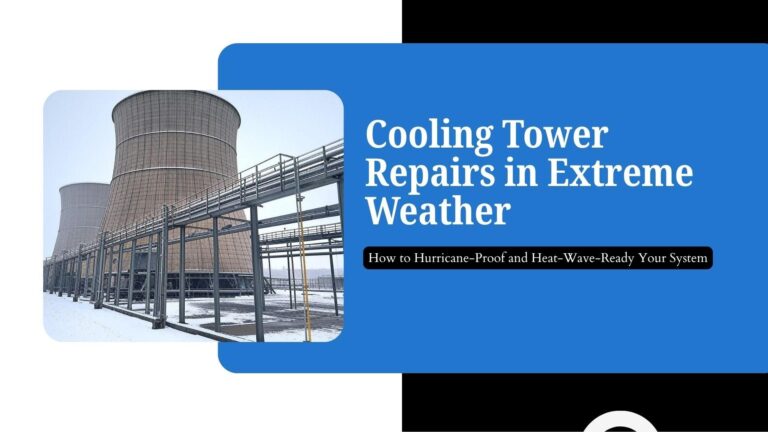
Extreme weather damages cooling towers through severe structural stress, rapid temperature fluctuations, and severe mechanical imbalance. Proper preparation, structural reinforcement, and timely cooling tower repairs are essential to maintain performance and avoid costly operational downtime.
When a system faces a sudden high wind load, the physical framework sustains heavy damage. Rapid shifts in temperature introduce severe thermal stress to the materials. Operators must implement proactive freeze protection during the winter months to stop pipes from bursting. Additionally, robust basin reinforcement prevents leaks during major storms.
Table of Contents
- Introduction
- Why Extreme Weather Is the Biggest Threat to Cooling Tower Reliability
- Hurricane Conditions: Structural and Mechanical Risks You Can’t Ignore
- Impact of High Wind Load on Tower Structure
- Fan Blade Imbalance and Mechanical Failure
- Basin Overflow and Water System Instability
- Heat Waves: How Thermal Stress Damages Cooling Tower Components
- Thermal Expansion and Structural Stress
- Reduced Cooling Efficiency and Overloading
- Lubrication Breakdown Under High Temperature
- Cold Weather Risks: Freeze Protection and System Damage
- Ice Formation in Basin and Piping
- Freeze Protection Strategies
- Critical Cooling Tower Repairs Required After Extreme Weather Events
- Preventive Maintenance Checklist for Extreme Weather Preparedness
- Final Thoughts
- Frequently Asked Questions
Why Extreme Weather Is the Biggest Threat to Cooling Tower Reliability
Cooling towers are designed for continuous operation. However, extreme weather introduces forces far beyond normal design conditions. Sudden high wind load impacts, rapid temperature changes, and massive moisture contamination severely disrupt the mechanical balance of the unit.
- Lack of Preparation: Most failures happen because systems are not prepared for extreme weather.
- Ignoring Warning Signs: When facility managers overlook early warning signs, what would have been routine maintenance can escalate into emergency repairs.
- Rapid Breakdown: Equipment can fail quickly if environmental vulnerabilities are not addressed.
Hurricane Conditions: Structural and Mechanical Risks You Can’t Ignore
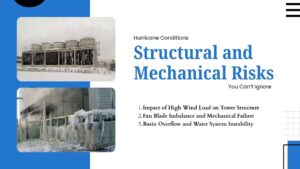
Hurricanes introduce dynamic loads that can damage both the outer structure and internal rotating components. Powerful storms exert immense pressure on every square inch of the unit, putting critical cooling tower parts at risk.
Impact of High Wind Load on Tower Structure
Most cooling towers are engineered to ASCE 7 standards for wind loads of roughly 120 mph. However, during Category 4 or 5 hurricanes, sustained winds exceeding 130 mph create lateral pressures that exceed these design limits. This causes ‘racking’ (leaning) of the internal framework and can rip casing panels off if the fastening systems aren’t rated for such high-velocity uplift.
Managers must watch for specific failure points after a storm passes.
- The structural framing warps under sustained wind pressure.
- Critical motor alignments shift, causing immediate operational hazards.
- Outer casing panels rip away from the main support beams.
Fan Blade Imbalance and Mechanical Failure
Fierce winds push against resting fan blades during a storm. This force creates microscopic fractures in the blade material. Identifying these issues requires precise fan blade balancing procedures.
- Heavy winds alter the pitch of the fan blades.
- Unbalanced blades increase the overall vibration of the entire unit.
- Excessive vibration places destructive stress on the main drive shaft.
Basin Overflow and Water System Instability
Torrential rainfall floods the cooling tower basin in a matter of minutes. Flooding disrupts the chemical balance of the water system. Operators face several immediate challenges during heavy rain events.
- Storm winds blow heavy debris directly into the water supply.
- Overflowing basins wash away critical chemical water treatments.
- Blocked filtration systems cause the entire cooling process to halt.
Heat Waves: How Thermal Stress Damages Cooling Tower Components
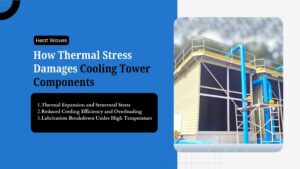
Extreme heat affects both material integrity and operational efficiency. Prolonged exposure to high temperatures weakens critical support structures, often leading to the need for cooling tower repairs.
Thermal Expansion and Structural Stress
Extreme temperature swings trigger different rates of thermal expansion between the metal fasteners and the Fiberglass Reinforced Plastic (FRP) casing. Because steel and FRP expand at different coefficients, a $40^\circ F$ jump in temperature can cause joints to shift and bolts to loosen. Over time, this leads to ‘fretting’—microscopic wear at the connection points that compromises the tower’s rigidity.
- Constant expansion and contraction cause severe material fatigue.
- Structural joints weaken as the fastening bolts stretch out of place.
- Fiberglass components become brittle and crack under direct sunlight.
Reduced Cooling Efficiency and Overloading
High ambient temperatures, especially when combined with high humidity (a high wet-bulb temperature), make it incredibly difficult for the tower to reject heat through evaporation. The mechanical systems must work twice as hard to achieve the same cooling delta.
- The facility demands more cooling power during a heat wave.
- The motors run continuously without any cooldown periods.
- Overheated systems trip internal safety breakers and shut down completely.
Lubrication Breakdown Under High Temperature
Industrial lubricants require specific temperature ranges to function correctly. Extreme heat destroys the viscosity of these essential oils. Without proper lubrication, moving parts grind themselves to dust.
- High temperatures thin out the gear oil, rendering it useless.
- Metal-on-metal friction increases dramatically inside the gearbox.
- Bearings overheat and fuse directly to the motor shaft.
Cold Weather Risks: Freeze Protection and System Damage
Freezing conditions create a different set of risks that can damage critical components and lead to expensive cooling tower repairs. Water expands when it freezes, exerting unstoppable pressure on pipes and valves.
Ice Formation in Basin and Piping
A sudden drop in temperature turns resting water into solid blocks of ice. Ice formation physically breaks the internal components of the tower. Operators must monitor the basin temperatures closely during the winter.
- Ice blocks the main water distribution nozzles.
- Frozen pipes crack and burst, causing massive water loss.
- Heavy ice buildup on the fan deck causes the structure to collapse.
Freeze Protection Strategies
Facility managers must implement robust freeze protection protocols before the first winter storm arrives. Keeping the water moving is the most effective way to prevent solid ice formation. These strategies save companies thousands of dollars in replacement costs.
- Install automated basin heaters to regulate the water temperature.
- Run the circulating pumps continuously during freezing conditions.
- Apply heavy insulation wraps to all exposed external piping.
Critical Cooling Tower Repairs Required After Extreme Weather Events
After a severe weather event, prompt inspection and repair are crucial to getting your system back online safely and preventing catastrophic failure. Professional technicians offer comprehensive cooling tower repairs to address any damage sustained. Their process includes:
- Executing a full structural inspection to locate hidden fractures.
- Applying strong basin reinforcement materials to seal major water leaks.
- Realigning the gearbox and motor to prevent future vibration issues.
- Conducting advanced fan blade balancing to ensure smooth rotation.
Preventive Maintenance Checklist for Extreme Weather Preparedness
Preparation is the most effective way to minimize repair costs and downtime. A strict maintenance schedule catches small vulnerabilities before a hurricane hits. Maintenance teams must execute these steps before the severe weather season begins.
- Inspect the overall structural integrity of the outer casing and support beams.
- Check the mechanical alignment of the drive shaft, motor, and gearbox.
- Ensure proper lubrication levels in all moving parts and bearings.
- Secure all loose components, access doors, and inspection hatches.
- Monitor baseline vibration levels to detect early signs of mechanical imbalance.
Final Thoughts
Professional repair strategies ensure your systems recover quickly and operate efficiently after extreme weather. Attempting to fix damage without expert knowledge can lead to further equipment failure, so it’s best to secure professional cooling tower repairs to protect your investment.
- Experienced technicians provide a faster diagnosis of hidden mechanical issues.
- Experts execute precision repairs using factory-authorized replacement parts.
- Professional maintenance guarantees long-term reliability and system safety.
To fully protect your investment, you must anticipate the elements. Proactive cooling tower repairs, like addressing high wind load vulnerabilities and managing thermal stress, prevent structural collapse and keep motors running efficiently.
Implementing winter freeze protection stops pipes from bursting. Adding proper basin reinforcement prevents storm leaks, and scheduling routine fan blade balancing stops destructive vibrations. Prioritize your extreme weather readiness today.
Frequently Asked Questions
How do extreme weather conditions affect cooling towers?
Extreme weather causes severe physical damage through high winds, temperature extremes, and heavy precipitation. These elements warp structures, unbalance fans, and break internal piping.
What repairs are needed after a hurricane?
After a hurricane, facilities typically need structural framework repairs, fan blade realignments, and debris removal from the water basin. Technicians must also check for motor alignment shifts caused by heavy wind impacts.
How does thermal stress impact cooling towers?
Thermal stress causes the physical materials of the tower to expand and contract rapidly. This movement weakens structural joints, cracks fiberglass panels, and degrades essential mechanical lubricants.
What is the best way to protect cooling towers from freezing?
The best protection method is keeping the water moving continuously and installing automated basin heaters. Adding thick insulation to all exposed external piping also prevents severe freeze damage.
How can fan blade imbalance be prevented?
Regular vibration monitoring and professional balancing services prevent blade imbalance. Technicians must inspect the blades for micro-fractures and pitch alignment issues before the severe weather season begins.
