


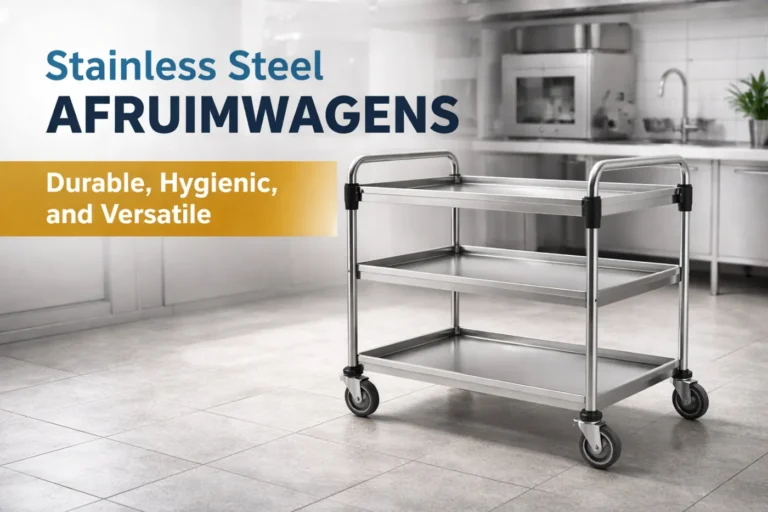
In busy food service, seconds matter. Staff are clearing plates, moving glasses, sorting cutlery, and keeping walkways safe while guests still need fast, friendly service. That’s where Afruimwagens make a real difference. These clearing carts help teams collect used items in an organized way and roll them smoothly from dining areas to the dishwashing space. When the cart is made from stainless steel, it usually handles daily wear better, cleans up faster, and keeps a professional look even after heavy use. In this guide, you’ll learn what an afruimwagen does, why stainless steel is such a popular choice, and how to pick the right setup for your kitchen and service style.
What Afruimwagens are used for in real kitchens
Afruimwagens are built for one main job: making clearing and transport easier. Instead of carrying stacks of plates by hand or making many short trips, staff can load one cart and move everything in one go. That reduces dropped items, reduces staff fatigue, and keeps service areas looking tidy. Many teams also like that the cart creates a simple routine: plates in one zone, glasses in another, cutlery in a separate container, and scraps in a bin. That kind of structure matters during peak hours when multiple people are clearing at the same time.
A typical afruimwagen is compact enough to move between tables but still large enough to hold a meaningful load. Many designs include removable tubs and shelves so staff can quickly separate waste, dishes, and tools. Wheels with brakes are common so the cart stays in place while loading, and bumpers help reduce damage to walls, table legs, and door frames. These details may sound small, but over hundreds of daily trips, they add up to smoother work and fewer accidents.
Why stainless steel is the go-to material for clearing carts
Stainless steel is popular in professional kitchens for practical reasons. It is hard-wearing, handles moisture well, and stays stable under frequent cleaning. In a dish area, surfaces get splashed constantly, and equipment gets wiped down many times a day. Stainless steel holds up under that routine and is less likely to crack or absorb smells compared to some other materials. It also looks clean, which matters in open kitchens or dining spaces where guests can see service equipment.
Another big reason is how stainless steel behaves during cleaning. Smooth metal surfaces are easier to wipe and rinse when compared to rough or porous materials. In a high-traffic kitchen, anything that is easier to clean is more likely to be cleaned properly and more often. That doesn’t just help with appearance. It also supports safe day-to-day operations because spills and food residue are less likely to linger.
RVS afruimwagens and what “RVS” means in practice
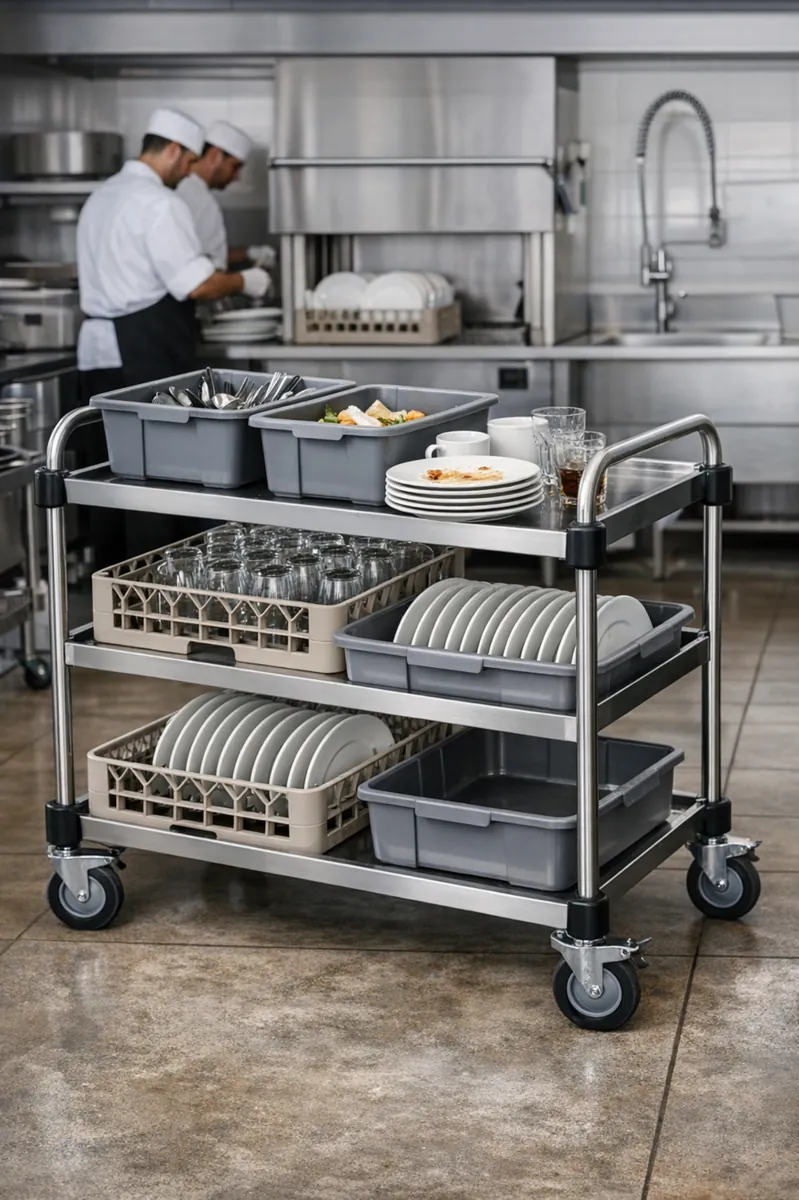
If you see rvs afruimwagens, “RVS” is a common Dutch term that refers to stainless steel. In practice, it usually signals a cart meant for frequent, intensive use. Stainless steel frames help the cart stay rigid while rolling across thresholds, ramps, and uneven floors. Many models also include stainless shelves and mounts that don’t bend easily under normal loads. Over time, that rigidity can mean fewer rattles, fewer loose parts, and a cart that still moves straight even after months of busy shifts.
RVS models are also chosen because they fit the “washdown” mindset of many professional kitchens. Staff want to wipe the cart quickly, sanitize key touchpoints, and move on. Stainless steel supports that routine, especially when paired with removable tubs that can be washed separately. If your operation runs multiple meal periods, the ability to reset fast between rushes can be a major advantage.
The features that make a clearing cart actually helpful
Not all clearing carts feel good to use. The best ones match how your team clears tables and how your dish area is organized. Many popular designs combine a top surface or shelf for stacking plates with removable tubs for scraps or cutlery sorting. You’ll often see carts sized to be narrow enough for aisles but tall enough to work comfortably without deep bending. Wheels matter too: a cart can look strong, but if the wheels snag on tile grout or don’t turn well in tight corners, staff won’t like using it.
Here are common practical features operators look for in an afruimwagen:
-
Removable tubs for scraps, cutlery, or small wares
-
Braked wheels to keep the cart steady while loading
-
Bumpers to protect furniture, walls, and the cart itself
-
Multiple shelves so plates and glasses aren’t stacked together
-
A stable frame that doesn’t twist when turning corners
That’s the only list you need. Everything else comes down to fit: your floor plan, your service style, and the habits your team already has.
How stainless steel supports speed and daily workflow
Speed in food service is rarely about moving faster. It’s about removing friction. Stainless steel carts help remove friction because they are built for repetition. Staff can load, roll, unload, wipe, and repeat without worrying about the frame flexing or the surface staining. When a cart stays stable, it also stays quieter. That matters more than people think, especially in hotels, event spaces, or fine dining where noise control is part of the experience.
Stainless steel also helps with “reset time.” After a rush, teams need the dining room ready again. A cart that wipes down quickly and doesn’t hold onto odors helps the team get back to baseline faster. Over a day, small time savings turn into real breathing room. That breathing room can improve guest experience because staff aren’t constantly “behind,” and it can reduce stress on the team.
Hygiene, cleaning habits, and what to avoid
A cart’s cleanliness depends on habits, not just material, but stainless steel makes good habits easier. The best approach is simple: remove loose debris first, wash with gentle tools, rinse, dry, and keep moving. Rough pads can scratch the surface, and those scratches can trap grime. Some strong chemicals can also be harsh on stainless steel over time, especially if they contain chlorine. It’s usually better to use kitchen-safe cleaners meant for stainless surfaces and follow with a clean rinse.
Also, don’t forget the hidden spots. Wheels collect hair, tape, and food bits. Brakes pick up grease. Handles get touched constantly. If you build a short routine—quick wipe on the frame, clean the tubs, check the wheels—your cart will look better and last longer. In most kitchens, the carts that “fail early” are not the ones used most. They’re the ones cleaned least and checked least.
Durability: what “lasting longer” really means
When people say stainless steel lasts longer, they often mean three things: the frame stays solid, the surface stays presentable, and the cart remains safe to use. A cart that wobbles can spill a load. A cart with bent shelves can make stacking risky. A cart with weak wheels becomes hard to steer and may cause strain injuries. A sturdy stainless frame helps protect against these problems, but only if the cart is used within reasonable load limits and maintained.
Durability also depends on how the cart is assembled and how it’s stored. If a cart is left outdoors, pushed through gravel, or slammed into thresholds, no material will stay perfect. But in normal indoor use—restaurants, hotels, catering prep, schools, or care dining—stainless steel clearing carts are often seen as a dependable “workhorse” choice.
Choosing the right afruimwagen for your layout
Before you pick a model, picture the cart’s daily route. Does it pass through tight doors? Does it need to turn around in a narrow corridor? Does it ride an elevator? Does it cross a ramp into a dish room? These questions matter more than small differences in looks. If space is tight, a narrower cart with smooth-turning wheels can outperform a larger cart that constantly bumps into corners.
Also consider where the cart is loaded. If staff clear directly from tables, you may want a top surface that’s easy to reach and tubs placed at a comfortable height. If staff clear from trays, you might want guides or shelf spacing that matches your tray size. In other words, start from workflow and space, then choose the features that support that workflow.
Bins, shelves, and smart sorting that reduces breakage
Sorting is the hidden superpower of a good clearing cart. When everything is piled together, breakage goes up and dish area work slows down. When there is a clear system—plates here, glasses there, cutlery separate—people move faster without thinking. Many operations use tubs to keep scraps contained and to prevent food residue from spreading across plates and glassware.
This is where stainless steel frames and well-placed tubs work together. Staff can scrape plates into a tub, drop cutlery into a separate container, and stack plates safely on a shelf. If you run events or buffets, this sorting becomes even more valuable because the volume is high and the pace is nonstop.
Wheels, brakes, and the “feel” of the cart during service
If you want staff to actually use the cart, it must feel easy to push. That is mostly about wheels. Look for wheels that turn smoothly, roll quietly, and include reliable brakes. Brakes are not just for ramps. They matter when the cart is parked while staff load it, especially when floors are slightly sloped or slick from cleaning.
Bumpers also help with “feel.” They reduce harsh impacts and make the cart more forgiving when a new staff member is learning the flow. Over time, protecting doors and walls can also save money. In many operations, the cart is used hundreds of times per week, so this is not a minor detail.
Care settings, schools, and catering: where these carts shine
While many people first think of restaurants, clearing carts are also widely used in schools, care dining, and catering prep. In these settings, the goal is often steady, consistent movement of trays, cups, and utensils rather than table-by-table clearing. The cart becomes part of a predictable system: collect items, transport safely, unload, sanitize, repeat.
This is another reason stainless steel models are popular. They handle frequent cleaning and can look presentable for years. In places like hospitals or care facilities, equipment is often visible to patients and visitors. A clean-looking cart supports a calm, orderly environment, and it can help staff stay consistent with cleaning routines.
Final Thoughts / Conclusion
A good clearing cart doesn’t just move dishes. It improves the rhythm of the entire operation. Afruimwagens help staff clear faster, reduce breakage, and keep dining spaces looking organized. When you choose stainless steel—especially rvs afruimwagens—you’re usually choosing a material that supports frequent cleaning, daily wear, and long-term reliability. The best choice is the one that matches your space and your workflow: the right width for your aisles, the right layout for your sorting habits, and wheels that feel smooth and controlled. Pick the cart that your team will enjoy using, and it will quietly pay you back every shift.
Frequently Asked Questions (FAQs)
What is an afruimwagen used for?
An afruimwagen is used to collect and transport used plates, glasses, and cutlery from service areas to the dishwashing area in a safer, faster way.
Are Afruimwagens only for restaurants?
No. They are also common in hotels, catering, schools, and care dining where trays and dishes need organized transport.
Why are rvs afruimwagens so popular?
Stainless steel models are popular because they handle frequent cleaning well, stay sturdy under daily use, and keep a professional look.
Do stainless steel carts rust?
They are designed to resist rust, but they still need proper cleaning and drying—especially around wheels and seams.
What wheel features matter most?
Smooth swivel wheels and strong brakes matter most because they improve control, reduce effort, and keep the cart steady while loading.
How do I reduce breakage when using a cart?
Sort items as you load: keep glasses separated, stack plates flat, and store cutlery in its own container to avoid clashing.
Should I choose a cart with removable tubs?
Yes, removable tubs make it easier to separate scraps and speed up cleaning because tubs can be washed on their own.
How often should an afruimwagen be cleaned?
In most operations, a quick wipe-down should happen daily, with deeper cleaning and wheel checks done regularly.
Can Afruimwagens help with staff fatigue?
Yes. They reduce carrying and repeated trips, which can lower strain on wrists, shoulders, and back during busy shifts.
What size cart should I buy?
Choose a size that fits your aisles and doors first, then pick capacity based on your volume and how far the dish area is from service.
Are bumpers actually useful?
Yes. Bumpers protect walls, furniture, and the cart itself, especially in tight spaces or during rushed service.
How long do stainless steel clearing carts usually last?
With normal indoor use and routine maintenance, stainless steel carts often stay reliable for years because the frame and surfaces hold up well.
FOR MORE : INSIDE FAME
