


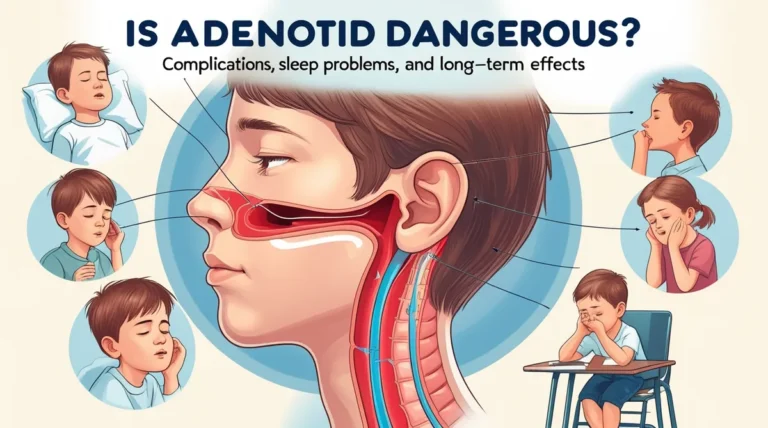
Hearing the word Adenoidid for the first time can be confusing and even a little frightening, especially if it is mentioned in relation to your child’s breathing or sleep. Many parents worry that this condition might be dangerous, or that it could cause long-term health problems if it is not treated quickly. In simple terms, Adenoidid usually refers to problems with the adenoids, such as inflammation, infection, or long-lasting swelling that makes it hard to breathe through the nose. While most cases can be managed safely, ignoring ongoing symptoms can lead to sleep disturbances, ear and sinus issues, and changes in a child’s growth and development over time.
What Does Adenoidid Really Mean?
In everyday online use, Adenoidid is not an official medical term. Most of the time, people are talking about adenoiditis (inflamed adenoids) or adenoid hypertrophy (enlarged adenoids). The adenoids are small patches of immune tissue high at the back of the nose, above the soft palate. They help trap germs that enter through the nose and mouth and form part of the body’s early defence system in childhood. Because they sit where the nose and throat meet, even a modest increase in their size can narrow the airway and affect breathing, especially when a child lies down to sleep.
Adenoids are most active and largest in early childhood and often start to shrink during the teenage years. When a child has repeated colds, allergies, or infections, the adenoids can stay swollen or become chronically inflamed. This is the group that many online articles call “Adenoidid,” even though a doctor might write “chronic adenoiditis” or “adenoid hypertrophy” in the notes. Understanding that Adenoidid usually means long-term or repeated adenoid problems helps explain why it can have such a strong influence on sleep, behaviour, and long-term health.
Is Adenoidid Dangerous in the Short Term?
In the short term, Adenoidid is often uncomfortable and disruptive rather than immediately life-threatening. A child with inflamed or enlarged adenoids may have a constantly blocked nose, thick nasal discharge, and a muffled “stuffy” voice. They may breathe mainly through the mouth and complain of a sore or dry throat when they wake up. These symptoms are annoying but usually not dangerous when they are mild and short-lived. Many children recover as the infection settles and the swelling slowly comes down.
However, Adenoidid becomes more serious when the swelling is large enough to seriously narrow the airway, or when infections keep coming back. Laboured breathing, very noisy snoring, pauses in breathing during sleep, trouble swallowing, or a high fever that does not improve all need prompt medical attention. In these situations, Adenoidid is not just a minor cold-like problem; it can be a sign of a deeper infection or a significant airway blockage that deserves urgent evaluation. Parents and adults should trust their instincts: if breathing looks or sounds wrong, or a child seems unusually unwell, it is safer to seek medical care quickly.
Sleep Problems Caused by Adenoidid
One of the clearest ways Adenoidid can be dangerous over time is through its effect on sleep. Swollen adenoids sit right where air should flow smoothly from the nose into the throat. When they are enlarged, the space becomes narrow and the air has to squeeze through a much smaller opening. This can cause snoring, noisy breathing, and moments when breathing briefly stops, especially during deep sleep. Doctors often group these issues under the term sleep-disordered breathing, and in more severe cases it may progress to obstructive sleep apnea, where repeated pauses in breathing disturb normal sleep patterns.
Poor sleep does not just mean a restless night. Children who do not sleep well because of Adenoidid can wake up feeling unrefreshed, have trouble concentrating in class, and may show irritability, hyperactivity, or mood swings during the day. Adults with long-standing adenoid problems can experience morning headaches, daytime sleepiness, and a constant sense of fatigue. Over months and years, disrupted sleep may contribute to learning difficulties, behavioural problems, and reduced quality of life if it goes untreated.
Common sleep-related signs families notice
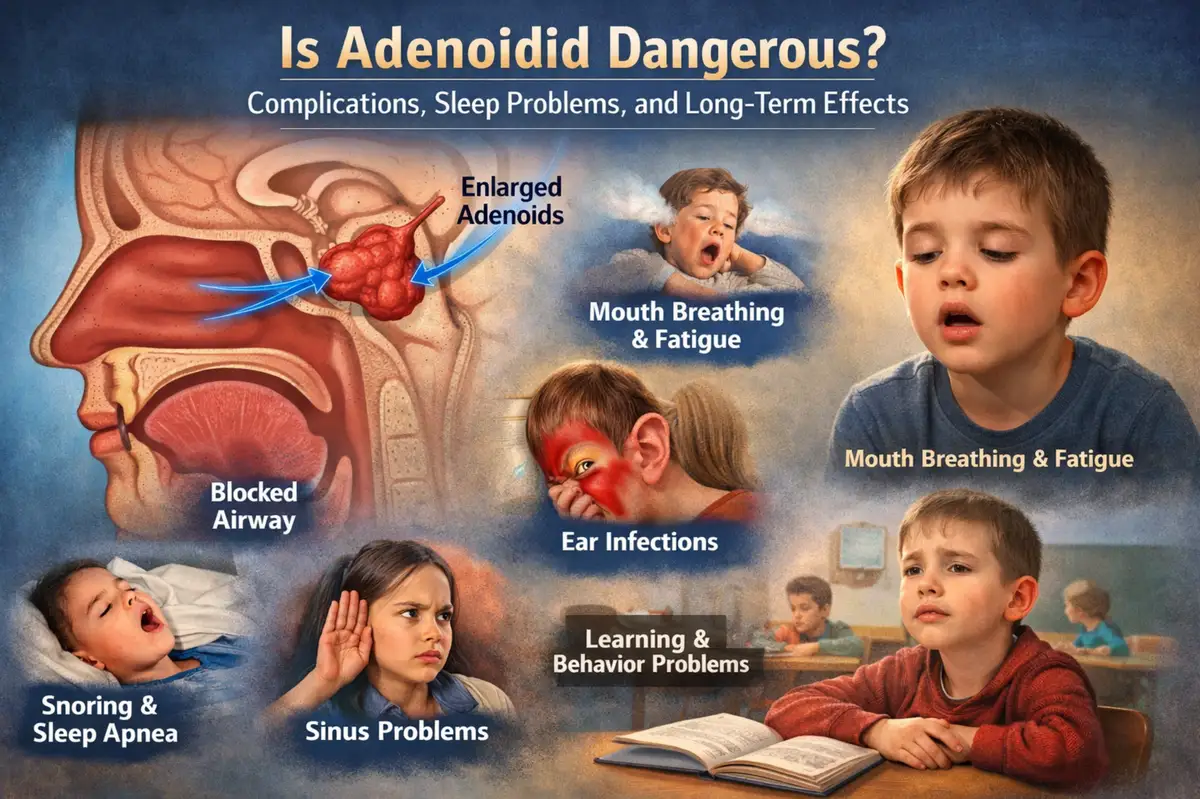
When Adenoidid is disturbing sleep, families often report things like:
-
Loud, regular snoring that lasts for weeks, not just during a single cold
-
Mouth breathing at night with the jaw hanging open
-
Restless sleep, frequent position changes, or sweating during sleep
-
Brief pauses in breathing followed by gasps or snorts
-
Morning tiredness, headaches, or difficulty waking up
Not every child or adult with Adenoidid will show all of these signs, but a pattern of ongoing sleep problems is an important reason to speak with a healthcare professional.
Long-Term Effects on Growth and Development
The long-term danger of Adenoidid is not only the blocked nose itself but the years of changed breathing patterns that can follow. Children with chronically enlarged adenoids often adapt by breathing mainly through the mouth. This mouth-first breathing alters how the tongue rests, how the jaw sits, and how the face grows during vital years of development. Research has linked long-standing adenoid hypertrophy and mouth breathing with features such as a longer face, a narrower upper jaw, and misaligned teeth that may later require orthodontic treatment.
Alongside changes in facial shape, Adenoidid can influence posture and chest development. A child who is always trying to pull in more air may tilt the head forward or arch the neck in a way that feels more comfortable. This can affect how the spine, jaw, and chest grow over time. While not every child with Adenoidid develops obvious changes, the risk is high enough that dentists, orthodontists, and ear, nose, and throat (ENT) specialists often work together to spot early signs and protect growth wherever possible.
Behaviour, Learning, and Overall Health
Adenoidid can also quietly shape a child’s behaviour and school life. Repeatedly fragmented sleep reduces the amount of deep, restorative sleep the brain needs to reset, process information, and control emotions. Many children with sleep-disordered breathing from enlarged adenoids show problems with attention, memory, and impulse control, and some are mislabelled as simply “naughty” or “difficult” when they are actually exhausted. Studies have suggested that long-term sleep disruption from adenoid and tonsil problems can contribute to lower academic performance and more behavioural issues in class.
Ongoing Adenoidid may also affect overall growth and physical health. Poor sleep can interfere with hormone balance, including hormones involved in growth and appetite control. Children with significant sleep problems are more likely to struggle with weight issues and may have a higher risk of later cardiovascular problems if severe sleep apnea goes untreated. While not every case will lead to these outcomes, understanding the potential long-term effects helps families appreciate why “just snoring” should not always be ignored.
Ear, Sinus, and Breathing Complications
Another group of dangers linked to Adenoidid involves the ears and sinuses. The adenoids sit close to the opening of the eustachian tubes, the small passages that drain fluid from the middle ear into the back of the nose. When adenoids are enlarged, they can block these tubes, trapping fluid behind the eardrum. This fluid creates a perfect setting for repeated ear infections and can temporarily reduce hearing. If this happens often, a child may turn the television up, ask people to repeat themselves, or fall behind in speech and language development.
The same blockage and inflammation can extend to the sinuses. Children and adults with Adenoidid may have frequent sinus infections, facial pressure, nasal discharge that never seems to clear, and a chronic cough from constant drainage down the back of the throat. In more serious or neglected cases, lower airway infections such as bronchitis or pneumonia can become more common because mucus and germs are not cleared efficiently. Over the years, this repeating cycle of congestion, infection, and inflammation can wear down the immune system and significantly reduce everyday comfort and energy.
How Doctors Diagnose Adenoidid
Because Adenoidid is not an official medical label, a doctor will focus on diagnosing the underlying adenoid problem rather than the online term itself. The process usually starts with a careful history: how long the snoring or mouth breathing has been happening, how often infections occur, whether there are pauses in breathing during sleep, and whether there are concerns about hearing, school performance, or behaviour. A physical examination follows, where the doctor checks the nose, throat, ears, and neck to look for signs of swollen adenoids and related problems.
In some cases, an ENT specialist may use a small flexible camera passed gently through the nose to view the adenoids directly. This quick procedure helps show how much of the airway is blocked. Occasionally, imaging tests such as X-rays or more detailed scans are used to assess adenoid size and rule out other causes of obstruction. When sleep problems are severe, a sleep study may be recommended to see exactly how breathing changes during the night. All of this information together helps the team decide how serious the Adenoidid is and what treatment level is needed.
Treatment Choices and When Surgery Is Considered
The treatment plan for Adenoidid depends on how severe the symptoms are and how long they have been going on. Mild cases may improve with simple measures such as saline nasal rinses, treatment of allergies, and careful monitoring while a current infection clears. When a bacterial infection is suspected, a doctor may prescribe antibiotics. Nasal steroid sprays or other medicines may be used for a time to reduce swelling and improve airflow, especially when allergies contribute to the problem.
Surgery, known as adenoidectomy, is usually reserved for children or adults who have frequent infections, significant breathing or sleep problems, or ongoing ear and sinus complications despite other treatments. During this procedure, the adenoids are removed through the mouth under general anaesthetic. Most patients go home the same day and recover over one to two weeks, with improved breathing and fewer infections afterwards. Sometimes the tonsils are removed at the same time if they are also enlarged or infected repeatedly. While any surgery has risks, adenoidectomy is a common and generally safe procedure when performed by an experienced specialist, and it can dramatically reduce the long-term dangers linked with Adenoidid.
Living With Adenoidid and Supporting Recovery
For families living with Adenoidid, small daily habits can make a real difference alongside medical care. Keeping the air at home clean and smoke-free helps reduce irritation to the nose and throat. Using a cool-mist humidifier during dry seasons, encouraging regular handwashing, and staying up to date with routine childhood vaccinations all support the immune system and reduce the number of infections that inflame the adenoids. Managing allergies with medical guidance can also prevent constant swelling that keeps the problem alive.
After treatment or surgery, paying attention to sleep quality is important. Many parents notice quieter nights, reduced mouth breathing, and better daytime behaviour once the airway is clear again. Regular follow-ups with the doctor, dentist, or orthodontist may be suggested to track hearing, dental development, and facial growth. By combining medical treatment with healthy daily routines, most children and adults can move past Adenoidid and enjoy normal breathing, sound sleep, and a better quality of life.
Final Thoughts
So, is Adenoidid dangerous? On its own, the word can sound alarming, but the real issue is what it represents: inflamed or enlarged adenoids that keep the airway narrow, disturb sleep, and invite repeated infections. When these problems are mild and short-lived, they are usually manageable and often improve as a child grows. When they are intense, frequent, or long-lasting, Adenoidid can contribute to sleep-disordered breathing, ear and sinus disease, delays in growth and learning, and changes in facial development if not addressed. The good news is that these problems are well known, and effective treatments exist. By watching for warning signs, seeking timely medical advice, and following a clear plan, most families can deal with Adenoidid confidently and protect their long-term health.
Frequently Asked Questions (FAQs)
What does Adenoidid actually mean?
Adenoidid is a casual term people use online for problems involving the adenoids, usually long-lasting inflammation or enlargement that affects breathing and sleep.
Is Adenoidid the same as adenoiditis?
Not exactly, but they often describe the same situation, because adenoiditis is the medical name for inflamed adenoids and is a common cause behind Adenoidid-type symptoms.
Can Adenoidid go away on its own?
Mild cases linked to a short infection can settle as the illness clears, but ongoing snoring, mouth breathing, or repeat infections usually need medical assessment.
How do I know if my child’s Adenoidid is serious?
Warning signs include loud snoring most nights, pauses in breathing, frequent ear or sinus infections, hearing problems, or obvious tiredness and behaviour changes during the day.
Is Adenoidid dangerous for adults too?
Yes, adults can also be affected, and long-term blocked breathing during sleep may raise the risk of high blood pressure, heart strain, and constant daytime fatigue.
Can Adenoidid cause permanent facial changes?
If mouth breathing from enlarged adenoids continues for years in a growing child, it can contribute to a longer face, narrow jaws, and misaligned teeth in some cases.
Does every child with Adenoidid need surgery?
No, surgery is usually reserved for cases with severe or repeated problems; many children improve with time, medicines, and careful monitoring under a doctor’s guidance.
Will removing the adenoids affect my child’s immunity?
The immune system has many other tissues that perform similar roles, so most children continue to fight infections normally after adenoid removal.
Can Adenoidid cause hearing loss?
Swollen adenoids can block the tubes that drain the middle ear, leading to fluid build-up and temporary hearing loss, which usually improves with proper treatment.
Is Adenoidid linked to poor school performance?
Yes, if it causes disturbed sleep and tiredness, children may struggle to concentrate, remember information, and manage their emotions in the classroom.
What can I do at home to help with Adenoidid?
You can support recovery by keeping the home smoke-free, managing allergies, encouraging good sleep habits, and following any treatment plan given by the doctor.
When should I see a specialist for Adenoidid?
You should ask for a referral to an ENT specialist if your child or you have ongoing snoring, mouth breathing, repeated infections, or any breathing pauses during sleep.
FOR MORE : INSIDE FAME
