


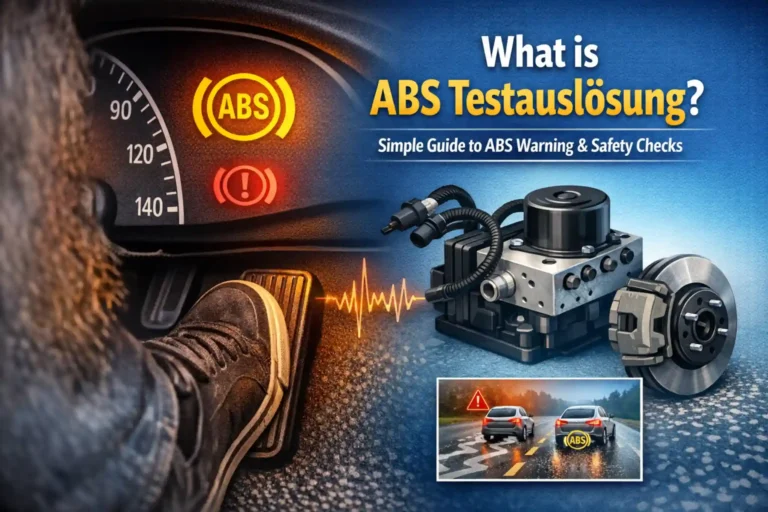
Modern cars are full of safety systems working quietly in the background, and the anti-lock braking system is one of the most important. If you have ever felt a light vibration in the brake pedal or noticed an ABS light on the dashboard, you have already seen this system at work. The term ABS Testauslösung might look technical and confusing, especially if you are not familiar with German car terminology, but the idea behind it is actually simple. This guide will walk you through what it means, when it happens, how it relates to warnings on your dash, and what you can do to stay safe on the road.
How ABS Works in Everyday Driving
ABS stands for Anti-lock Braking System. It is designed to stop the wheels from locking up when you brake hard. Instead of allowing the wheels to skid and slide, ABS rapidly adjusts brake pressure so the tires keep better grip on the road. This helps you steer and stay in control during emergency stops or on slippery surfaces.
In normal driving, ABS does nothing at all. It is only when the system detects that a wheel is about to lock that it begins to act. Sensors at each wheel constantly watch how fast the wheels are turning. A control unit compares this information and, if it sees a wheel slowing down too quickly compared with the others, it pulses the brake pressure at that wheel. This all happens many times per second, much faster than any driver could manage with their foot.
What Is ABS Testauslösung?
The word ABS Testauslösung comes from German and can be translated as “ABS test triggering” or “ABS test activation.” In simple terms, it describes the moment when the anti-lock braking system is deliberately activated to check that it still works correctly. This can happen automatically inside the vehicle or when a mechanic uses a diagnostic tool to run a controlled test of the system.
You can think of it like a quick self-check that happens inside the brake system. During this process, the control unit may briefly activate valves and the ABS pump to make sure everything responds as expected. In some cases, you might feel a short vibration in the brake pedal or hear a soft buzzing noise. As long as it happens at the right time and no warning light stays on, this test is a normal part of how modern vehicles keep you safe.
When You Might Notice ABS Testauslösung
In many vehicles, ABS Testauslösung takes place shortly after you start the engine and begin to move. Once the car reaches a low speed, the system performs a short internal test. You may hear a faint click or hum, especially on a quiet street or in a garage, and then everything goes back to normal.
You might also notice this test when a technician is checking your brakes in a workshop. With a diagnostic device connected, they can command the system to run ABS Testauslösung while the car is safely lifted or on a test bench. This allows them to confirm that valves, the pump, and the control unit are responding correctly without needing an emergency stop on the road.
Normal Test vs. Warning Sign
For most drivers, ABS Testauslösung is completely normal and nothing to worry about. It is simply the system making sure it will be ready when you need it most. A brief noise or light pedal vibration right after starting and moving off can be part of this process. The key point is that the ABS warning light should turn off after the initial self-check and stay off while you drive.
However, there are times when something does not look or feel right. If the ABS light stays on, comes on while you are driving, or is paired with unusual noises or longer vibrations, it may mean the system has detected a fault. At that point, the vehicle may switch off ABS assistance and store a fault code in the control unit. Basic braking still works, but you may not have the added protection of anti-lock control during emergency stops.
Here is a quick checklist you can keep in mind:
-
A brief ABS light at start-up that goes off again: usually normal system test
-
Short, soft noise or vibration just after moving: often part of ABS Testauslösung
-
ABS light stays on or flashes while driving: possible fault that needs checking
-
Strong or repeated vibration during normal braking: may signal a problem, especially if the road is not slippery
Common Faults Behind ABS Warnings

When ABS Testauslösung detects something unusual, the system records a fault and often turns on the warning light to tell you that support may be limited. One common reason is a problem with the wheel speed sensors. Because these small sensors work in a harsh environment near the wheels, they can be affected by dirt, rust, or physical damage. If one sensor stops sending a clear signal, the control unit can no longer compare wheel speeds correctly and may switch off ABS support.
Another frequent cause is an issue with wiring, connectors, or the hydraulic unit itself. Corroded connectors, broken wires, or a failing pump can interrupt communication inside the system. Low brake fluid, air in the brake lines, or worn components may not be direct ABS faults, but they still affect braking performance and can sometimes show up together with an ABS warning. That is why any persistent light on the dash should be treated seriously and checked as soon as possible.
How Drivers and Mechanics Check the System Safely
If the ABS light comes on or you suspect something is wrong, the safest step is to have the system read by a professional. In most modern cars, a diagnostic device can connect to the onboard electronics, access the ABS control unit, and read out stored codes. These codes point to the area where the system noticed a problem, such as a specific wheel sensor or internal valve.
Visual inspection is also important. A mechanic will often look at the wiring to each wheel, check for damage near the hubs, and inspect the sensors and rings. If needed, they may run ABS Testauslösung with the vehicle raised to watch how the system behaves. In some cases, cleaning a dirty sensor or fixing a damaged wire is enough to clear the warning. In others, parts like sensors, pumps, or the control unit itself may need replacement to restore full function.
How to Respond Safely on the Road
If the ABS light turns on while you are already driving, stay calm. Your normal brakes still work, but you should assume that the anti-lock function may be disabled. This means that in a panic stop, the wheels could lock more easily, especially on wet, icy, or loose surfaces. To stay as safe as possible, keep more distance from the car ahead, avoid sudden aggressive braking, and drive at a moderate speed until the issue is checked.
When ABS is working correctly, the recommended action in an emergency stop is to press the brake pedal firmly and allow the system to do the pulsing for you. You will often feel a vibration in the pedal and hear a rapid clicking or buzzing sound; this is the system rapidly adjusting brake pressure to prevent wheel lock and help you steer around obstacles.
Why ABS Testauslösung Matters for Safety
ABS has been required on new passenger vehicles in many markets for years because it greatly improves control during hard braking. By preventing wheels from locking, it helps you maintain steering and reduces the chance of skidding out of control. As of the mid-2010s, it became standard on all new passenger cars in the United States and other regions, making ABS Testauslösung a routine part of what happens behind the scenes every time you drive.
Understanding ABS Testauslösung gives you more confidence when something unusual happens. Instead of panicking when you feel a light vibration or see the ABS light briefly at start-up, you know that the system is doing a quick check. And if a warning stays on, you also know it is not something to ignore for weeks, because it directly affects your ability to stop safely in difficult conditions.
The Role of ABS Testauslösung in Regular Maintenance
ABS Testauslösung is also part of good vehicle care. Many workshops include an ABS check when they perform brake service on modern cars. When a mechanic triggers a controlled test, they are not trying to scare you with noises or shaking; they are confirming that components such as valves, pumps, and sensors are doing their job. This can reveal small issues before they turn into serious safety risks or costly repairs.
For drivers, basic maintenance still matters. Keeping brake fluid at the correct level, replacing worn pads and discs, and having the system inspected according to the manufacturer’s schedule all support the work ABS is trying to do. In many cases, taking care of the basic brake system reduces the chances of ABS faults and keeps Testauslösung events smooth and uneventful.
ABS Testauslösung in Different Driving Conditions
You may notice ABS behavior more clearly in certain conditions. On dry pavement, ABS usually intervenes only during very hard braking or in emergencies. On wet roads, ice, or loose gravel, the system may step in more often to prevent wheels from locking. During ABS Testauslösung, the system checks that it can respond correctly in all of these situations. Even though you may not feel every test, the control unit is always ready.
It is also worth remembering that ABS is not a magic shield. It cannot overcome physics or poor judgment. Driving too fast for the conditions, following other cars too closely, or using worn tires will still increase stopping distances and reduce safety. ABS Testauslösung helps ensure that one important part of the safety chain is working, but good driving habits and proper maintenance remain just as important.
Final Thoughts
At first glance, the term ABS Testauslösung might seem like something only mechanics or engineers need to understand. In reality, it describes a process that affects every driver in a modern car. It is the system’s way of saying, “I am checking myself so I can protect you when it matters.” Knowing that this test exists and recognizing the signs of normal behavior versus warning signs can reduce stress and help you make better decisions on the road.
If you ever feel unsure, remember three simple ideas: a brief test at start-up is usually normal, a persistent ABS light is a signal to get the system checked, and safe driving habits always matter. With that mindset, ABS Testauslösung becomes less of a mystery and more of a quiet reminder that your car is constantly working to keep you and your passengers safe.
Frequently Asked Questions (FAQs)
What does ABS Testauslösung mean in simple terms?
It means the anti-lock braking system is being activated on purpose, either automatically or by a technician, to make sure it can react correctly when you brake hard.
Is ABS Testauslösung dangerous for my car?
No, the test itself is not harmful. It is designed to confirm that the system works as it should, and it is a normal part of how many vehicles monitor their own safety functions.
Why do I feel a vibration in the brake pedal during ABS Testauslösung?
The vibration comes from the system rapidly adjusting brake pressure. That pulsing feeling is how ABS prevents the wheels from locking and is usually a sign that it is working.
Should I be worried if my ABS light turns on briefly at start-up?
A short light at start-up that goes off again is usually part of the normal self-check. If the light stays on or comes back while driving, then you should have the system inspected.
Can I still drive if the ABS warning light is on?
You can usually drive carefully to a workshop, because basic braking still works. However, you may not have anti-lock support, so you should slow down and avoid hard braking until it is checked.
What are common reasons for ABS warning problems?
Typical causes include faulty wheel speed sensors, damaged wiring, low brake fluid, or issues with the hydraulic control unit or pump. A diagnostic scan is needed to find the exact cause.
How do mechanics test ABS safely?
They use a diagnostic device to talk to the control unit, read stored fault codes, and sometimes trigger ABS Testauslösung while the car is safely lifted to see how the system responds.
Can dirt or rust cause ABS Testauslösung issues?
Yes. Dirt, rust, or debris around wheel speed sensors and rings can disturb the signal they send, leading the system to log faults and turn on the warning light.
Does ABS always shorten braking distance?
ABS often helps shorten stopping distances on dry or wet pavement while keeping steering control, but on loose gravel or deep snow it may slightly increase distance while still helping you stay in control.
Is ABS Testauslösung the same in every car brand?
The basic idea is the same, but details vary. Different brands and models may use slightly different test routines, noises, or timing, which is why the owner’s manual and a professional diagnosis are helpful.
How often should my ABS system be checked?
It should be checked whenever the ABS light stays on, after any serious brake work, and according to the maintenance schedule in your owner’s manual or the advice of a trusted workshop.
What should I do if ABS activates often in normal driving?
Frequent activation may mean you are braking hard, driving on very slippery roads, or that there is an issue with the system or tires. Slow down, increase following distance, and have the car inspected if it keeps happening.
FOR MORE : INSIDE FAME
