


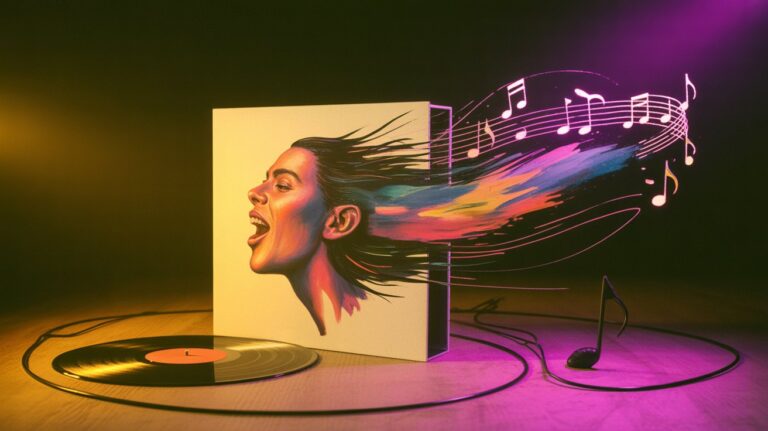
A music portrait used to wait for the listener. It sat on a cover, poster or profile page while the song supplied the movement. Now the face itself can enter the performance: a glance shifts, a mouth follows a lyric and a still image becomes a brief visual event.
That change is easy to dismiss as a novelty, especially when the result lasts only a few seconds. But the most interesting use is not pretending that a photograph captured a real performance. It is treating the singing portrait as a designed micro-performance—small enough for a feed, recognisable enough for a fan and clearly constructed rather than secretly fabricated.
The space between cover art and music video
A full music video builds a world around a track. Cover art condenses that world into one image. The singing portrait sits between them. It can give one visual identity a pulse without demanding a location, choreography or continuous story.
That makes the format suited to a chorus reveal, release countdown, alternate-language greeting or visualiser transition. It can also animate an original mascot or illustrated character whose identity belongs to the project. The strongest clips do one job and then hand attention back to the music.
Why the format feels made for fandom
Recognition arrives immediately
Fans can identify a familiar cover, era, colour palette or character before a caption is read. Movement adds surprise to that recognition. A short loop can feel like a collectible variation rather than a cut-down advert.
It invites a response
A rights-cleared template can become a prompt: choose a lyric, reinterpret an original character or answer with a duet-style edit. Participation works best when the artist or label defines which assets and audio may be reused. A fan invitation should not be mistaken for permission to animate every image associated with a public figure.
It gives quieter releases a visual beat
Not every track needs spectacle. An acoustic version, demo, spoken interlude or archive note may benefit from one controlled facial gesture and a clear line of text. The restraint can become part of the aesthetic.
The creative grammar is smaller than it looks
A convincing micro-performance needs a hierarchy. The song provides emotion. The portrait provides identity. The motion provides emphasis. If all three compete, the clip feels busy even when it is technically polished.
Start with one expressive beat: the first word of a hook, the pause before a title or the final line of a teaser. Keep the framing close enough for lip movement to read, but allow visual clues that the piece is designed media. Typography, illustration, waveform elements or an explicit label can help set that expectation.
Creators who have cleared the image and audio can use Make Photo Sing to render the central motion. FreeLipSync pairs a chosen portrait with supplied audio, but the creative team still determines the edit, disclosure, licensing and meaning of the performance.
Four rights sit behind one moving face
The portrait
The photographer, illustrator, subject and commissioning party may hold different rights or permissions. A publicly available image is not automatically available for animation. The approval should cover synthetic movement and the intended channels, not merely reposting the still.
The music
A song involves composition and recording rights. A platform’s music library may permit a use inside that platform without granting the same permission for an exported clip elsewhere. Teams should document which recording, excerpt and territory the licence covers.
The voice and performance
Animating a face to an authorised recording is different from cloning somebody’s voice or inventing words for them. Voice replication requires specific consent. The final clip must not imply that an artist sang, endorsed or approved material they did not perform.
The character or brand
Original fictional characters can be ideal for this format because their rules can be defined from the start. Existing film, game or comic characters remain protected creative property; fan enthusiasm does not erase those boundaries.
Famous faces require more care, not less
Celebrity recognition can make a clip travel quickly, but it also increases the risk of false attribution. Do not animate a press photo, red-carpet image or old interview still simply because the person is well known. The same caution applies to deceased artists: an estate, archive, photographer and music rightsholder may all have a legitimate interest in how the image is used.
If an authorised project reconstructs an archival figure, label the synthetic element and separate sourced words from newly written narration. Nostalgia should not be used to manufacture a performance the artist never gave.
Disclosure can become part of the style
A disclosure does not have to arrive as a cold legal interruption. It can appear in the caption, end card or visual language: ‘animated artwork’, ‘synthetic performance’ or another accurate description suited to the context. The goal is to prevent a reasonable viewer from mistaking the clip for documentary footage.
Keep the original portrait, audio source, permissions, script and final export together. If a campaign ends or consent changes, the team should know which versions to remove. A traceable creative record protects both the artist and the fans who share the work.
A small format can still carry artistic weight
The singing portrait will not replace the live performance or the music video, and it does not need to. Its role is more compact: give a song one memorable visual gesture, create a bridge between artwork and sound, and invite attention without pretending that a camera witnessed the moment.
The future of face animation in music will be decided by more than realism. The lasting formats will combine a recognisable idea with permission, authorship and honest framing. When those pieces are visible, a still image can become a performance without turning identity into a prop.
