


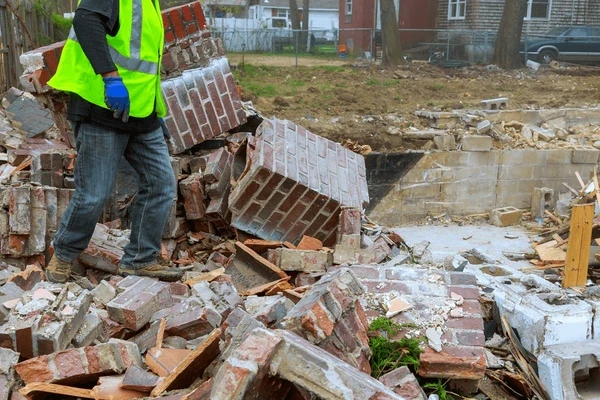
Large hardscape construction projects—such as patios, retaining walls, walkways, driveways, and outdoor living installations—combine heavy materials, extensive site preparation, and detailed installation work. These projects often involve excavation, demolition of existing surfaces, base preparation, and the installation of stone, concrete, or pavers. Throughout each phase, debris is generated continuously and must be managed carefully to keep the project moving efficiently.
Unlike lighter construction work, hardscape projects produce dense, heavy materials that can quickly impact workflow if not handled properly. Soil, broken concrete, excess stone, and packaging from bulk materials all contribute to a complex debris stream. If this waste is not controlled, it can slow down crews, restrict equipment movement, and create unnecessary labor demands.
For contractors, effective debris management is essential for maintaining productivity, protecting the site, and ensuring that large hardscape projects stay on schedule.
Why Hardscape Projects Generate Heavy and Continuous Debris
Hardscape construction is material-intensive from the start. Excavation alone produces significant volumes of soil, roots, and existing landscape materials. As the project progresses, additional debris is created from cutting pavers, shaping stone, and removing old structures such as patios or walkways.
These materials vary widely in both weight and volume. Soil and vegetation can fill space quickly, while concrete and stone add substantial weight even in smaller quantities.
Because multiple phases often overlap, debris is generated continuously rather than in isolated stages. Without a plan, it can accumulate across the site and create obstacles for crews and equipment.
Understanding the nature of this debris is key to managing it effectively.
Planning Waste Removal Before Excavation Begins
One of the most important steps in managing hardscape debris is planning waste removal before excavation starts. Once digging begins, debris is generated rapidly, and delays in removal can quickly affect productivity.
Contractors should evaluate the scope of the project and estimate the types and volume of materials that will be produced. This includes identifying where debris will be generated and how it will be removed throughout each phase.
Planning ahead allows for better coordination of container placement, scheduling, and handling methods.
Starting with a clear strategy helps prevent bottlenecks and keeps the project organized from the beginning.
Preparation supports smoother execution.
Managing Debris Across Expansive Outdoor Work Areas
Large hardscape projects often span wide outdoor areas, especially in residential properties or commercial landscapes. Crews may be working in multiple zones at the same time, generating debris in different locations.
Without coordination, materials can become scattered, increasing the time required for cleanup and reducing efficiency.
Contractors should establish a system that directs debris toward designated disposal points. This may involve creating centralized collection areas or using multiple containers placed strategically across the site.
Managing debris flow across large areas helps maintain organization and reduces unnecessary movement.
A structured approach improves overall site control.
Coordinating Debris Removal with Equipment Movement
Hardscape construction relies heavily on equipment such as skid steers, compactors, and excavators. These machines require clear pathways to operate effectively.
Debris that is left in work areas can interfere with equipment movement, forcing operators to navigate around obstacles or reposition materials.
This slows down progress and increases labor demands.
Contractors should plan debris removal in a way that keeps equipment pathways clear and allows for uninterrupted operation.
Maintaining open access routes supports both efficiency and safety.
Clear movement is essential for productive equipment use.
Strategic Placement of Containers for Heavy Materials
Container placement is a critical factor in managing heavy debris on hardscape projects. Containers must be positioned where they can be loaded efficiently while also supporting safe access for hauling.
Because of the weight of materials such as concrete and stone, placement must also consider ground stability and load distribution.
Contractors should position containers close to active work areas while avoiding interference with equipment and pathways.
Working with providers such as Waste Removal USA helps ensure that placement supports both efficiency and site conditions.
Proper positioning reduces travel time and improves overall workflow.
Strategic placement is key to effective debris management.
Balancing Soil, Stone, and Construction Debris
One of the challenges in hardscape projects is managing a mix of materials with different characteristics. Soil, stone, and construction debris must be handled in a way that maintains efficiency and prevents overloading.
Heavy materials such as concrete and stone should be distributed evenly in containers, while lighter materials can be used to fill remaining space.
Mixing materials without a plan can lead to inefficient use of containers or increased hauling needs.
Balancing these materials helps maximize capacity and maintain control over disposal.
Effective loading supports smoother operations.
Keeping Debris Moving to Maintain Workflow
Allowing debris to accumulate is one of the fastest ways to slow down a hardscape project. Piles of soil, stone, or demolition materials take up valuable space and create additional work for crews.
Instead of staging debris for later removal, contractors should focus on continuous disposal.
Removing materials as they are generated helps maintain clear work areas and supports steady progress.
This approach reduces the need for large cleanup efforts and keeps the project moving forward.
Keeping debris moving is essential for maintaining momentum.
Consistency improves efficiency.
Reducing Labor Through Efficient Handling
Handling heavy materials multiple times increases labor costs and slows down work. On large hardscape projects, where materials are often dense and spread across wide areas, inefficiencies can add up quickly.
Contractors should aim to minimize manual handling by using equipment to load materials directly into containers whenever possible.
Reducing the number of times debris is moved improves productivity and allows crews to focus on installation tasks.
Efficient handling is a key factor in maintaining profitability.
Less movement leads to better results.
Adapting to Changing Site Conditions
Hardscape projects evolve as work progresses. Areas that were once used for excavation may become finished spaces, and new zones may open for installation.
Debris management strategies must adapt to these changes.
This may involve relocating containers, adjusting removal schedules, or redefining disposal pathways.
Regular evaluation helps contractors stay ahead of these changes and maintain efficiency throughout the project.
Flexibility is essential for managing dynamic outdoor environments.
Adapting quickly helps keep operations on track.
Avoiding Common Debris Management Mistakes
Several common mistakes can disrupt debris management on hardscape projects. These include underestimating the volume of materials, placing containers in inconvenient locations, and allowing debris to accumulate.
Another frequent issue is failing to coordinate removal with the pace of work, which can lead to clutter and delays.
Avoiding these mistakes requires proactive planning and consistent monitoring of site conditions.
A structured approach helps prevent inefficiencies and keeps the project running smoothly.
Attention to detail improves overall performance.
Supporting Project Efficiency and Final Outcomes
Effective debris management contributes directly to the success of large hardscape construction projects. When waste is handled properly, crews can work more efficiently, equipment can operate without interruption, and the site remains organized.
This leads to faster project completion, reduced labor costs, and improved overall quality.
Contractors who prioritize waste management gain an advantage in delivering high-quality results.
Efficiency improves when debris is treated as part of the workflow.
Debris management is a critical component of large hardscape construction projects. The combination of heavy materials, continuous debris generation, and expansive work areas makes effective planning essential.
For contractors, integrating waste removal into the overall project strategy helps ensure that debris does not interfere with workflow or site conditions. Strategic placement, continuous removal, and efficient handling all contribute to smoother operations.
By treating debris management as a core part of the project, contractors can improve productivity, reduce delays, and successfully complete large hardscape installations with greater efficiency and control.
