


When people search for a game top-up service, the first question is rarely about price alone. It is usually about trust. That is exactly why the question, “Is Skaipi safe?” matters so much. A top-up can feel simple on the surface. You choose a game, enter your details, pay, and wait for the balance to arrive. But the real issue is what happens behind that quick process. If a service is unclear about what it needs from you, how long it takes, or where support happens, a cheap deal can become a stressful mistake.
Skaipi can look convenient for players who want fast top-ups, but convenience should never come before caution. The safest way to use any top-up platform is to slow down before you pay. Check how the order works, what information is requested, how the service explains delays, and whether the support path feels real and consistent. A trustworthy buying experience should feel clear from start to finish. If anything feels rushed, hidden, or too casual, that is your signal to pause before money leaves your account.
Why Safety Comes First With Any Top-Up Service
The main risk with any gaming top-up service is not always the payment itself. Sometimes the bigger risk is the information you hand over during the order. A simple top-up that only asks for a player ID is very different from a process that asks for login access or highly sensitive account details. That difference matters because once private account information is shared, control becomes harder to protect. Even a service that seems friendly or fast can still expose you to avoidable risk if the process is not strict and transparent.
That is why safe buying starts with understanding the type of order you are placing. Not every top-up works the same way. Some are direct and low-friction. Others involve more steps, longer waiting times, or manual handling. The more complicated the process becomes, the more careful you should be. A smart buyer does not just ask, “Will I get my order?” A smart buyer also asks, “What am I giving up to receive it?” That mindset is the difference between a smooth purchase and a problem you regret later.
Check the Official Presence Before You Buy
The first safety check is simple: confirm that you are dealing with the right Skaipi account, page, or website. Many online buyers lose money not because the brand itself fooled them, but because they were redirected to the wrong person, the wrong chat, or a fake copy of the real page. Scam accounts often copy profile photos, names, and writing style. They look close enough to the real thing to trick buyers who are moving too quickly.
Before you top up, compare the name, branding, and contact channels carefully. Look for signs that the service uses a consistent identity across its website and update channels. If the support number, payment details, or social handle changes without explanation, stop immediately. A real service should make it easy to verify where official updates happen. You should never feel forced to trust a random direct message, a sudden payment instruction, or a last-minute account switch. If you cannot verify the channel, do not continue.
Why Brand Consistency Matters

A reliable service usually leaves a clear trail. Its pages look connected, the order flow makes sense, and the support channels do not feel improvised. That does not automatically make a site perfect, but it does reduce uncertainty. In contrast, scam setups often feel patched together. One page sends you elsewhere, another account gives different instructions, and support replies feel vague. Confusion is often the first warning sign. A safe transaction should not depend on guesswork.
Review the Payment Flow With a Critical Eye
The second major check is the payment process. A safe service should explain what you are paying for, how to confirm your order, and what happens after payment. If the price is listed but there is no clear note about delivery, confirmation, or proof, you are taking on more risk than you think. Good payment flow is not just about convenience. It is a trust signal. It shows whether the seller expects accountability after the sale.
You should also pay attention to the tone of the checkout experience. Does it feel organized, or does it feel like you are being rushed into sending money and hoping for the best? Safe sellers usually give you enough detail to double-check your order before you confirm it. Unsafe sellers often push speed over clarity. If a platform asks you to pay first and figure out the details later, that is not efficiency. That is a warning. Clear instructions, stable pricing, and a visible confirmation step matter far more than flashy claims about speed.
Understand What Information Is Actually Needed
One of the most important parts of judging whether Skaipi is safe is understanding what details are needed for the top-up you want. In general, the safest top-up flow is one that asks only for the minimum needed to complete the order. If a game item can be delivered with a player ID, server, or username alone, that is usually a safer setup than one requiring deeper access to your account.
This is where many buyers make mistakes. They assume that because a seller offers a product, every request it makes must be normal. That is not true. You should always ask whether the requested information matches the item being delivered. If the order form asks for more than seems reasonable, step back and question it. A trustworthy purchase flow should feel limited, specific, and necessary. The moment it starts asking for highly private account access, the level of risk rises sharply.
Never Ignore the “Too Much Information” Problem
A lot of online trouble starts when buyers normalize over-sharing. They think, “It is only for a few minutes,” or “They probably need it to process faster.” That kind of thinking can cost you your account. Sensitive information should be treated like house keys. Once shared, you lose control over how it is handled. Even if the transaction goes through, the fact that you had to expose private access can still make the deal unsafe in practice.
Never Share Secrets That Protect Your Account
Passwords, backup codes, one-time codes, and similar security details should stay private at all times. This rule is bigger than Skaipi. It applies to every gaming account, every marketplace, and every social platform. The second a purchase requires you to give away the codes designed to protect your account, you are no longer making a normal transaction. You are stepping into account-risk territory.
A lot of people only realize this after something goes wrong. They focus on whether they received the top-up, but forget that their account may now be vulnerable. Even if the service seems polite, fast, or popular, secret login details are still secret login details. The safest habit is simple: if a piece of information could help someone enter, reset, or recover your account, do not share it. Your game balance is replaceable. Your account history, purchases, and access are much harder to recover.
Look for Support That Feels Real, Not Decorative
Support is where trust gets tested. Any service can look organized when things go well. The real question is what happens when an order is delayed, mismatched, or unclear. Before you buy, see whether support feels reachable and structured. You should know where to ask for help, what proof to send, and how the service handles common issues. If the support setup feels vague before payment, it will probably feel worse after payment.
Good support is not only about fast replies. It is also about useful replies. A safe service should have a clear path for order confirmation, status updates, and problem reports. If the only answer to every issue is “wait,” that is not enough. A real support experience should tell you what happened, what to check next, and what kind of evidence is needed. Buyers feel safer when the process is documented. Silence, confusion, and generic messages create the opposite effect.
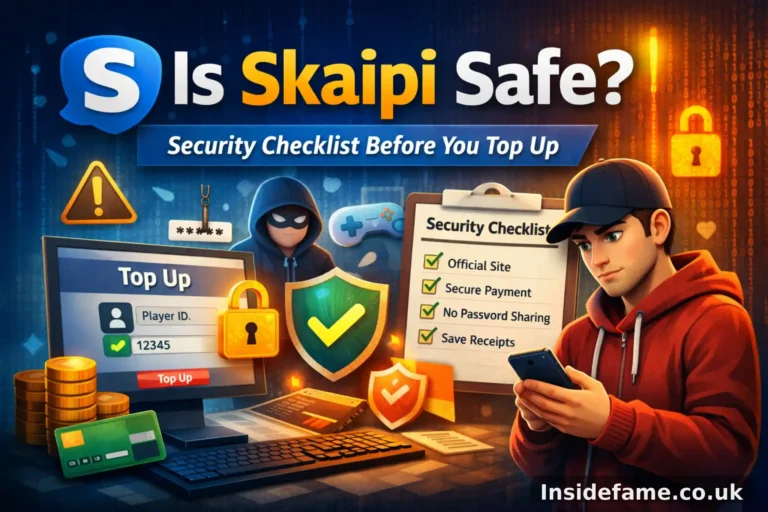
Security Checklist Before You Top Up
Use this short checklist before placing any order on Skaipi:
- Confirm you are on the real website or official update channel
- Double-check the game, amount, and account details before paying
- Make sure the requested information feels necessary and limited
- Never share passwords, backup codes, or one-time login codes
- Save your payment proof and order confirmation right away
If you cannot say yes to every point above, stop the order and review it again. A careful pause is always cheaper than a rushed mistake.
What To Do If Something Feels Off
Sometimes the safest move is simply to walk away. If the instructions change midway, the support path feels inconsistent, or the order suddenly requires more private information than expected, you do not need to continue. Buyers often feel pressure to finish because they already spent time on the order. That is a bad reason to ignore warning signs. Lost time is better than lost money or lost account access.
You should also trust the feeling that something is not right, even if you cannot explain it perfectly yet. Unsafe transactions often create small signs before big problems happen. Maybe the answers are too casual. Maybe the payment details keep shifting. Maybe the seller avoids direct questions. One sign alone may not prove danger, but several together should be enough to make you stop. Safe buying is not about bravery. It is about discipline.
What To Do After a Successful Top-Up
Even after a successful order, your safety work is not over. Check that the balance or item arrived exactly as expected. Review your account for anything unusual, especially if the order process involved information beyond a basic player ID. If you ever shared more account access than you normally would, change your password immediately and review your security settings. A completed purchase should not be the end of your caution.
It is also smart to monitor the account for a while after the transaction. Watch for unexpected login alerts, changed settings, or unfamiliar activity. The goal is not to become paranoid. The goal is to stay responsible. A safe user understands that account protection continues after the payment screen closes. Good habits after the purchase are just as important as smart checks before the purchase.
Final Thoughts
So, is Skaipi safe? The honest answer is that safety depends on how carefully you approach the transaction and how much private information the process asks from you. No buyer should treat any top-up service as automatically safe just because it looks active or popular. Safety comes from verification, limited data sharing, proper proof, and a willingness to stop when something feels wrong.
The best way to use Skaipi is with a clear checklist and a calm mindset. Verify the channel, review the order flow, protect your account details, and keep proof of everything. If the process stays simple and transparent, your risk is lower. If it becomes confusing or asks for too much, step away. In online gaming, smart caution is not overthinking. It is how responsible buyers protect their money, their account, and their peace of mind.
Frequently Asked Questions (FAQs)
Is Skaipi safe for first-time users?
It can be safer for first-time users if they verify the official channel, review the order details slowly, and avoid sharing any highly private account information.
A careful first order should feel clear, limited, and easy to confirm before payment is made.
What should I check before paying on Skaipi?
Check the game, amount, account details, payment method, and support path before you send money.
You should also confirm that the page or contact method matches the brand’s normal public presence.
Is it normal for a top-up service to ask for login details?
Not every top-up needs login access, so you should question any request that feels broader than necessary.
The safest orders usually ask only for the details needed to deliver the item, nothing more.
Should I share my password for a faster order?
No, your password should stay private even if someone says it is needed for speed or convenience.
Anything that protects access to your account should be treated as sensitive and never handed over casually.
What if the price on Skaipi seems much lower than other places?
A lower price is not always a problem, but an extreme discount should make you more careful.
Use that moment to verify the channel, read the steps again, and make sure nothing feels rushed or hidden.
How do I know if I am using the real Skaipi account?
Look for consistent branding, matching contact paths, and clear update channels before you place an order.
If the instructions suddenly move to a different payment account or random chat, stop and verify first.
What proof should I save after a top-up?
Keep the payment receipt, transaction ID, product selected, and any order confirmation you receive.
These details make support easier and protect you if there is a delay, mismatch, or dispute.
What if my top-up does not arrive on time?
Start by checking your order details and payment proof, then contact support with clear information.
A calm, organized message usually gets better results than sending repeated short messages without context.
Can I trust screenshots of reviews or testimonials?
Screenshots can help, but they should not be your only reason to trust a seller.
It is much better to combine reviews with clear order steps, real support access, and consistent brand identity.
What should I do if I already shared sensitive account details?
Change your password right away, review your account settings, and turn on stronger security if available.
Act quickly so you reduce the chance of later misuse, even if the order itself seemed to finish normally.
Is a player ID safer than giving full account access?
In most cases, yes, because a player ID usually reveals less and gives less control to another party.
The less private data you share, the lower your exposure tends to be during an online purchase.
What is the safest mindset when using Skaipi?
Move slowly, verify everything, and do not let low prices or urgency push you into a rushed decision.
Safe buyers protect their account first and treat every step of the transaction with care.
FOR MORE : INSIDE FAME
