


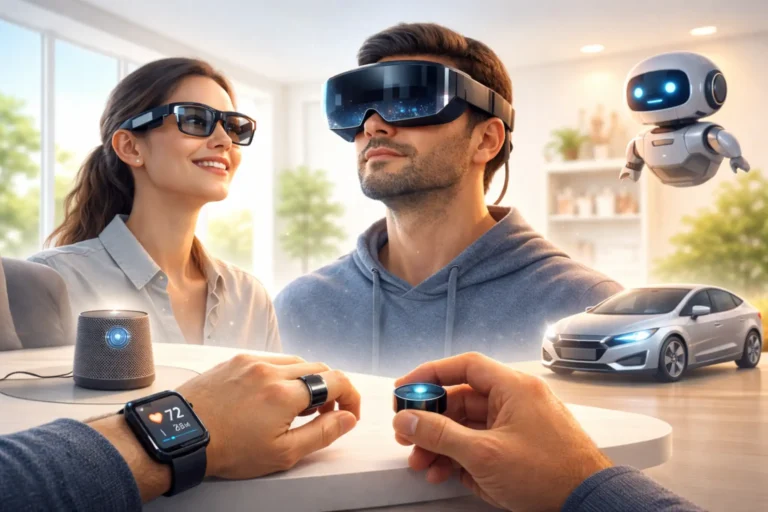
Picture your day five or ten years from now. You wake up, but instead of reaching for a glowing rectangle on your nightstand, information is already flowing quietly around you. Your watch has tracked your sleep, your glasses bring up a gentle weather overlay when you look out the window, and a small speaker in the kitchen has your calendar and messages ready when you ask. Your phone still exists somewhere in a bag or drawer, but it is no longer the center of the story.
This is the kind of future large technology companies are actively trying to build as Tech Giants Envision Future Beyond Smartphones. They are investing in headsets, smart glasses, wearables, home devices, and intelligent assistants that move digital life off a single screen and into the spaces where people actually live and work. Instead of one object that you stare at all day, the goal is a calm layer of computing that sits in the background and appears only when you need it.
Why Tech Giants Want to Move Past the Smartphone
There are practical reasons behind this big shift. After more than a decade of rapid growth, the phone market has slowed down. New models are still powerful, but the upgrades from one year to the next feel smaller, and many people hang onto older devices for longer. Companies looking for growth are naturally searching for the “next big thing,” and it probably will not be just another touch screen.
At the same time, many people are more aware of how much time they spend scrolling. Concerns about distraction, eye strain, and constant alerts have inspired calls for technology that fits more gently into daily life. When Tech Giants Envision Future Beyond Smartphones, they see an opportunity to solve both problems at once: create new categories of devices that open fresh business possibilities while also promising more natural, less addictive ways to stay connected.
The New Building Blocks of a Post-Phone World
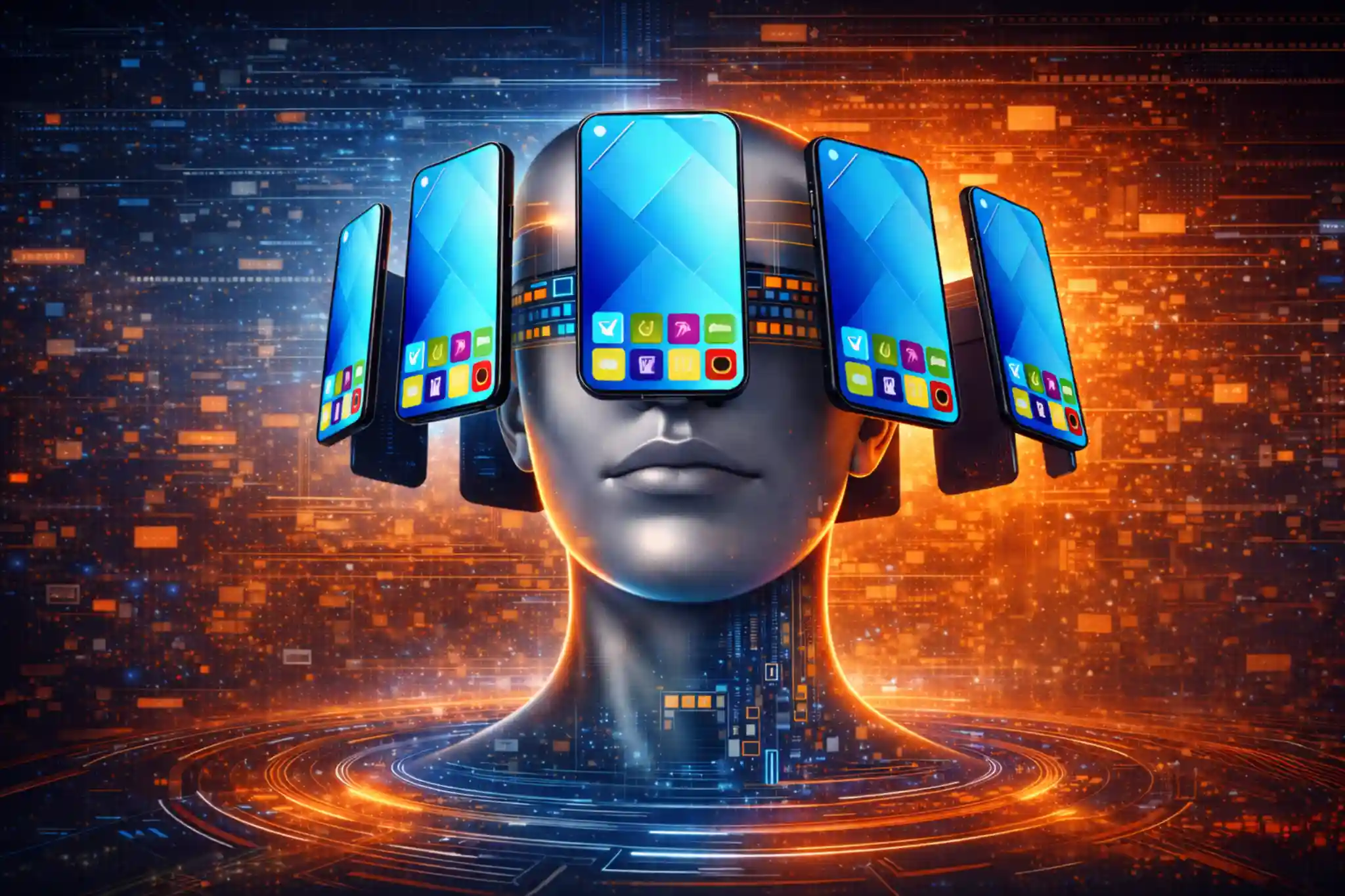
To understand what might replace phones, it helps to look at the main technologies companies are pouring resources into today. A few themes come up again and again: smarter assistants, immersive displays, devices you wear instead of carry, and environments that respond intelligently on their own. Together, they form the foundation of a world where you do not always need to pull out a handset to be online.
AI and Ambient Computing
Smarter artificial intelligence is the quiet engine behind nearly every post-phone idea. Assistants are learning to understand natural language, keep context over longer conversations, and act across many different devices at once. In a mature version of this world, you would not open separate apps and menus. Instead, you would simply say what you need or type a short request, and an underlying system would coordinate the steps behind the scenes.
This approach is sometimes described as ambient computing: instead of a bright screen demanding your attention, intelligence is spread across your surroundings and only surfaces when useful. Lights, speakers, thermostats, cars, and wearables become different faces of the same brain. That brain may live in the cloud, but to you it just feels like a helpful presence always within reach, no matter which device is nearby.
Augmented and Virtual Reality Headsets
Another major pillar of this future is the move from flat screens to immersive displays. Companies have released early versions of spatial computing headsets that mix digital content with the physical world. When you look at your desk through one of these devices, you can pin virtual windows above it, hold a video call in mid-air, or pull up a 3D model of a building and walk around it as if it were really there.
These headsets are still large and expensive, and they will not push phones aside right away. But they give a strong hint of what comes next. Instead of bending over a small screen, you can surround yourself with as many virtual screens as you need, then clear them away with a simple gesture. Over time, as designs become lighter and cheaper, it is easy to imagine everyday tasks like messaging, browsing, or working documents shifting into this shared digital space.
Smart Glasses and Everyday Wearables
While headsets try to replace your desktop or laptop, smart glasses aim at everything you currently do on the go. The latest models look closer to regular eyewear, with small speakers, microphones, and sometimes displays hidden in the frames. Paired with an assistant, they can show directions, translate speech, capture photos, or read out messages without you touching a phone at all.
Around them, a wider family of wearables is growing. Watches, fitness bands, rings, and even smart clothing capture health signals, motion, and other data and feed them into your personal system. Instead of one large screen, you get quick glances at your wrist, subtle audio cues near your ears, or gentle taps on your skin when something needs attention. The result is less time hunched over a device and more time looking up at the world.
The Internet of Things and Smart Environments
The move beyond phones is not just about what you wear; it is also about where you are. Homes, offices, cars, and public spaces are gradually filling with connected sensors and controllers. Lights that dim automatically, doors that lock themselves, and speakers that follow you from room to room are early steps in this direction. When everything from your fridge to your car can share information, the need to use a handheld control panel for every little task starts to fade.
In the future that Tech Giants Envision Future Beyond Smartphones, you might adjust many parts of your life without even noticing the technology doing the work. A room can change lighting and temperature based on who just walked in. A car can adapt routes to your calendar without requiring you to type in addresses. Your devices stop acting like separate tools and start behaving like parts of a single, coordinated environment.
How Major Players Are Positioning Themselves
Even though the destination is similar, each large company has its own path toward this new landscape. Some lead with hardware, others with cloud services, and most mix both. Their strategies give useful clues about which replacements for phones they believe in most strongly.
One group is leaning hard into spatial computing, with high-end headsets meant to reimagine work, entertainment, and communication. Another is doubling down on cloud-based intelligence and home devices, trying to turn smart speakers, TVs, and thermostats into the main touchpoints of daily life. Social platforms are pouring resources into immersive virtual worlds where people might one day gather instead of scrolling through feeds on a phone. Companies that focus on business software are shaping tools for training, design, and remote collaboration that could eventually filter down into everyday consumer use.
Benefits for Everyday Users

The most obvious benefit of moving past phones is freedom from constant screen time. Instead of long stretches of scrolling, you get quick, focused interactions: a glance here, a short voice request there, an overlay that appears only when needed. That can lower mental clutter and make it easier to set limits, such as keeping certain rooms or hours “display-free” while still staying reachable in emergencies.
There are also gains in accessibility and inclusion. Voice commands, gesture control, and heads-up displays can be easier to use for people who struggle with touch screens or small text. Real-time captions, translation overlays, and audio descriptions built into glasses or earphones can help people participate more fully in conversations, events, and workplaces. When Tech Giants Envision Future Beyond Smartphones, many also see a chance to design tools that serve a wider range of bodies, abilities, and preferences.
The New Risks and Frictions
Of course, this transition is not all upside. Spreading computing across glasses, rooms, and vehicles means more microphones, cameras, and sensors around us. That raises fair questions about who is collecting data, how long it is kept, and what safeguards exist against abuse or leaks. People may feel uneasy around devices that can watch and listen continuously, especially in public spaces where not everyone has chosen to opt in.
On a practical level, there are also barriers related to cost, comfort, and culture:
-
Many of the most advanced headsets and wearables are expensive, early models can feel heavy or awkward, and not everyone is eager to wear visible gadgets on their face or body all day.
Some regions still lack reliable high-speed connections, which makes cloud-heavy services less useful or even impossible to use. And just as it took time for smartphones to feel normal in social settings, it will take years for new habits and manners to form around glasses, voice assistants, and ambient devices.
How You Can Prepare as a User
You do not need to buy every new gadget to be ready for a future beyond phones. A few small steps can help you benefit from the change while staying in control. First, you can experiment with one or two devices that truly serve your needs, such as a basic fitness watch, a simple smart speaker, or a pair of wireless earbuds with a voice assistant. Focus on tools that actually save time or improve comfort rather than chasing novelty for its own sake.
Second, it is wise to learn the privacy and security settings of any device you bring into your home or onto your body. Turning off microphones in certain rooms, limiting data sharing, or setting clear “do not disturb” schedules can keep the balance between convenience and peace of mind. As Tech Giants Envision Future Beyond Smartphones, individuals who understand their choices will be better positioned to enjoy the benefits without feeling overwhelmed.
Final Thoughts: Beyond the Screen, Back to the World
The idea that Tech Giants Envision Future Beyond Smartphones is not just a headline; it reflects a deep effort to redesign how people live with technology. The replacement for the phone is not one new gadget but a collection of devices, services, and spaces that work together. They promise a life with fewer long sessions staring down at a screen and more short, focused moments where information appears exactly when and where it is useful.
Whether that promise turns into something healthy and human-centered will depend on countless decisions made by companies, governments, and everyday users. If handled well, the next era of personal technology could feel less like an addiction and more like a quiet, helpful layer around ordinary life. If handled poorly, it could increase surveillance, distraction, and inequality. For now, the smartest step is to stay informed, choose tools carefully, and remember that every new device should serve your life, not the other way around.
Frequently Asked Questions (FAQs)
Will my current smartphone become useless in a few years?
No, it will almost certainly keep working for a long time, and many services will continue to support phones even as new devices appear.
Are smart glasses really practical for everyday use?
Early models are still a bit limited, but each generation improves comfort, design, and features, making them more suitable for daily wear.
How do these new technologies change the way we work?
They enable more immersive meetings, shared 3D workspaces, and flexible setups where people can collaborate from almost anywhere.
Will all these connected devices make privacy harder to protect?
They can, which is why strong controls, clear rules, and informed choices are essential as more sensors and assistants enter homes and public spaces.
What if I do not like wearing gadgets on my body?
There will still be options based on speakers, displays, and room-level systems, so you can benefit from new tools without wearing them constantly.
Are these changes only for wealthy countries?
New devices often appear first where incomes and infrastructure are strongest, but lower-cost versions usually follow over time, just as they did with phones.
How could this shift affect children and teens?
It may change how young people learn, socialize, and play, so families will need to set new boundaries around headsets, glasses, and always-on assistants.
Will I have to learn completely new systems?
Some new gestures and voice commands will be different, but companies try to keep interfaces simple so people can adapt without feeling lost.
Can these technologies actually reduce stress instead of adding more?
If designed carefully, they can cut down on cluttered screens and constant notifications, but that outcome depends heavily on settings and personal habits.
Do I need very fast internet for this future to work?
Many advanced features rely on strong connections, especially for streaming rich or 3D content, so better networks will make a big difference.
What happens if different companies’ devices do not work well together?
That is a real risk, and users may favor brands that support open standards and make it easy to mix devices from different makers.
What is the biggest sign that we are truly moving beyond smartphones?
When you start to notice entire days where the phone rarely leaves your pocket but you still feel fully connected and supported, you will know the shift is underway.
FOR MORE : INSIDE FAME
