


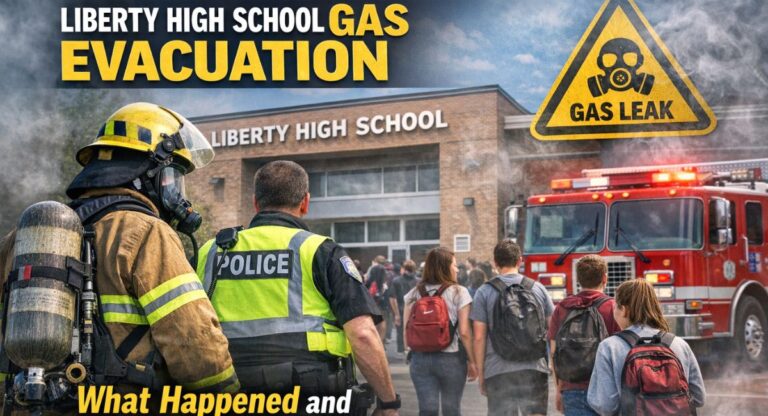
The Liberty High School gas evacuation was one of those moments that stirred concern among students, families, and the wider community. On a regular school day, an unusual odor resembling gas was detected in the building, prompting immediate action from staff and emergency teams. This situation led to the orderly evacuation of students and faculty as a safety measure. The incident raised important questions about how schools manage emergencies and ensure the well-being of everyone on campus.
Even though no major injuries were reported, the event highlighted how quickly routine school life can shift into emergency mode when a potential hazard is perceived. Schools have detailed emergency procedures in place precisely for situations like this, and the way Liberty High School handled the incident shows both the effectiveness and challenges of implementing those plans under real pressure.
This article walks through what happened, why the evacuation was necessary, how the school and emergency responders acted, and why the event matters far beyond that single day.
What Triggered the Liberty High School Evacuation
On the morning of the evacuation, staff members noticed a strong smell that they believed resembled gas inside the school building. The odor raised concerns because gas leaks can be dangerous; if an actual gas leak occurs inside a crowded building it can lead to health risks, fires, or even explosions.
Because the school houses hundreds of students and staff in a close-quarters environment during the day, any hint of a gas smell is treated seriously. Natural gas used in buildings is naturally odorless, but utility companies add a chemical to it that smells like rotten eggs so people can detect leaks. The presence of that smell, even before any gas levels can be confirmed by instruments, is usually enough to trigger emergency responses.
Immediate Response and School Procedures
As soon as the odor was reported, school administrators activated their emergency protocols. Modern emergency plans in schools include clear steps for safe and calm evacuations whenever a potential threat is detected, including suspected gas leaks, fires, or other hazards. Trained staff begin by alerting students and guiding them out of classrooms through designated exit routes.
Teachers and staff keep order, help students stay calm, and walk everyone to predetermined assembly areas outside the building. Once outside, teachers take roll calls to ensure that all students and staff are present and accounted for. These procedures are practiced periodically so that in real emergencies people know exactly what to do and how to react efficiently.
Coordination With Emergency Responders
While the school was evacuating students, administrators also contacted local emergency responders. Firefighters, police, and gas utility teams are trained to respond quickly to reports of potential leaks. Once on the scene, emergency technicians used specialized detection equipment to check multiple areas of the building for gas levels.
Teams carefully inspected hallways, utility areas, and gas lines, making sure there were no dangerously high concentrations of gas. In many cases like this, these responders are able to pinpoint whether the smell has a true safety risk or if it was a false alarm or a minor issue. In the Liberty High School incident, emergency crews ultimately determined that there was no active gas leak, and the building was safe to re-enter.
Safety Threats and Why Precaution Matters
Why is a gas smell such a serious concern? Gas leaks, even when small or slow, can pose multiple safety threats. If gas accumulates in a closed space, it can lead to:
-
Headaches, dizziness, nausea, and breathing difficulties for people exposed.
-
A fire risk if the gas finds an ignition source.
-
Potential explosions if levels build up unchecked in enclosed areas.
Because schools have so many people in one place and operate many hours during the day, the safest approach is always to evacuate whenever a gas smell is detected. Waiting to confirm the hazard could put lives at risk if an emergency does occur.
Student and Staff Experience During the Evacuation
For most students and teachers, the evacuation was sudden but orderly. Students were instructed to leave classrooms immediately and gather at preassigned outdoor areas away from the building. Teachers and administrators focused on keeping students calm, conveying what was happening without alarming them. Remaining composed in such situations helps reduce anxiety, especially for younger students who may have never experienced an emergency before.
Staff members also played a key role in providing reassurance. They explained that the evacuation was a precaution and helped students stay focused on safety. Counseling and support services were available for anyone who felt shaken by the experience.
Communication With Families
During any school emergency, timely communication with families is crucial. Schools typically use mass notification systems such as automated calls, text alerts, or school apps to update parents and guardians. These messages usually include information on why the evacuation happened, how students are doing, and when it is safe to pick up children if needed.
In the Liberty High School incident, families were promptly informed that their children were safe and that the situation was being evaluated carefully by professionals. Clear communication helps prevent panic, stops rumors, and provides comfort to families awaiting news.
Impact on the School Day and Community
Even though no injuries resulted from the evacuation, the disruption had some impact on the normal school day. Classes were interrupted, schedules shifted, and some activities were postponed. However, safety always comes first. Parents and community members appreciated that the school took swift action rather than waiting to see if the situation became dangerous.
This event also sparked conversations about emergency preparedness among families and in the broader community. Many discussed the importance of regular safety drills and communication plans to be ready for any kind of school emergency.
The Role of Regular Safety Drills
One of the major lessons from this event is the value of regular safety drills. Emergency drills, including fire and evacuation drills, give students and staff the muscle memory needed to act quickly and calmly in real situations. Knowing exactly where to go, what to do, and how to stay safe reduces panic and confusion.
These drills are integrated into school routines and coordinated with local emergency services to ensure accuracy. This kind of preparation can save lives when a real threat arises.
Training for Faculty and Staff
In addition to drills, faculty undergo regular training on emergency response procedures. They learn how to recognize hazards, how to begin evacuations, and how to support students during and after emergencies. Staff training also covers communication with emergency services and families.
This preparation ensures that when a real situation like a potential gas leak happens, everyone knows their role and can act efficiently under pressure.
Lessons for the Future
Even though this particular liberty school gas evacuation ended without any injury or confirmed danger, it still provided valuable lessons. It reinforced that:
-
Acting early and cautiously is always better than risking delay.
-
Preparedness through drills and training makes emergencies more manageable.
-
Communication with families and responders is key to successful outcomes.
Following the event, schools often review what happened, refine procedures, address any gaps, and improve systems to prevent similar issues in the future.
Why Precaution Can’t Be Overlooked
Some might wonder why a school would immediately evacuate based on smell alone. The answer lies in how serious the consequences of gas exposure can be. Even when there is no clear sign of gas, the risk remains too high to treat as anything but a potential emergency.
By choosing to evacuate, school leaders demonstrated a commitment to safety and responsibility. The cost of precaution — interrupted class time and temporary relocation — pales in comparison to the possible dangers that could arise from ignoring a potential threat.
Conclusion
The Liberty High School gas evacuation reminds us that schools, while centers of learning and growth, must also be places where safety is taken seriously. When students or staff report a potential hazard, it triggers a chain of safety procedures designed to protect lives. In this incident, the early warning and swift response averted harm and highlighted the effectiveness of trained school safety systems.
Emergency preparedness — including drills, training, communication plans, and coordination with local responders — is not just a bureaucratic requirement. It is a vital part of keeping school communities safe. The way Liberty High School handled the gas evacuation offers a model for other schools and districts, showing that when safety is prioritized, even uncertain situations can be navigated successfully.
Frequently Asked Questions (FAQs)
What is the Liberty High School gas evacuation?
The Liberty High School gas evacuation refers to a safety incident where students and staff were temporarily moved out of the school building after a gas-like odor was detected. The evacuation was done as a precaution to protect everyone on campus.
Why did Liberty High School evacuate students?
Students were evacuated because a smell believed to be gas was noticed inside the school. Since gas leaks can be dangerous, school officials followed safety procedures and cleared the building right away.
Was anyone injured during the evacuation?
No injuries were reported during the Liberty High School gas evacuation. Students and staff exited the building calmly under supervision, and safety was maintained throughout the process.
Did emergency teams respond to the situation?
Yes, local emergency responders were called to the school. They inspected the building using detection equipment to check for any dangerous gas levels before allowing re-entry.
Was an actual gas leak confirmed?
After a full inspection, responders did not find an active gas leak. The smell did not turn out to be a serious threat, but the evacuation was still considered the right decision.
How long did the evacuation last?
The evacuation lasted until emergency crews completed their safety checks. Once the building was confirmed safe, students and staff were allowed to return inside.
How were students kept safe during the evacuation?
Teachers guided students to designated outdoor areas and took attendance to make sure everyone was present. Staff stayed with students at all times to provide supervision and reassurance.
Were parents informed about the evacuation?
Yes, parents and guardians were notified through the school’s communication system. They were informed that students were safe and that the situation was being handled.
Did the evacuation affect the school schedule?
The school day was briefly disrupted, with classes paused during the evacuation. Normal activities resumed after the building was cleared for safety.
Why are gas smells treated as emergencies in schools?
Gas smells can indicate leaks that may cause health problems, fires, or explosions. Because schools have many people inside, even a small risk is taken seriously.
Do schools practice for situations like this?
Yes, schools regularly conduct safety drills to prepare for emergencies such as fires, gas concerns, or other hazards. These drills help everyone respond quickly and calmly.
What can parents do after an evacuation event?
Parents can talk with their children about what happened, answer questions calmly, and reassure them about safety. If a student feels anxious, schools often provide counseling support.
FOR MORE : INSIDE FAME
