


Running a business is hard enough without having your payment account rejected, delayed, or suddenly frozen. For many companies, this becomes a real problem when banks or processors decide the business falls into a higher-risk category. That can happen because of the industry, refund patterns, recurring billing, international sales, or a limited processing history. When that happens, a standard payment setup often stops being reliable. A High-Risk Merchant Account at HighRiskPay.com is meant to solve that problem by giving merchants a more suitable way to accept card payments.
This guide explains the topic in simple terms for beginners. It covers what a high-risk merchant account is, why some businesses need one, how HighRiskPay.com works, what fees and reserves can look like, and what to check before applying. The goal is to help business owners understand the process before they make a decision. If you have been declined elsewhere, or you simply want a more stable setup for a higher-risk business model, this guide will help you understand the basics without confusing industry jargon.
What Is a High-Risk Merchant Account?
A high-risk merchant account is a payment processing account built for businesses that banks consider more likely to face chargebacks, fraud issues, refunds, or compliance concerns. The word “high-risk” sounds dramatic, but it does not always mean the business is unsafe or untrustworthy. In many cases, it simply means the business operates in a category that processors watch more closely. This can include online-only stores, subscription services, businesses with international customers, and industries that receive more customer disputes than average.
The main difference between a regular merchant account and a high-risk one is how the account is reviewed and managed. High-risk accounts usually go through stricter underwriting, may have slightly higher fees, and sometimes include a reserve. In return, the merchant gets a payment setup designed for that kind of risk level from the start. That is important because using the wrong type of processor can lead to sudden holds, delayed payouts, or account termination after sales begin to grow. For many businesses, the right account is less about convenience and more about long-term payment stability.
Why Some Businesses Are Labeled High-Risk
A business can be labeled high-risk for many reasons, and the label is not always tied to poor business quality. Some merchants are placed in this group because they sell products or services in industries banks already consider sensitive. Others are labeled high-risk because they use recurring billing, accept payments online without face-to-face contact, sell to customers across borders, or handle larger average transactions. New businesses can also be put in this category because they do not yet have enough history to show how they manage refunds, fraud, and customer disputes.
There are also cases where the risk comes from account history rather than the business idea itself. A merchant with past chargebacks, weak credit, previous processor issues, or a terminated account may have trouble getting approved through standard providers. Some businesses are profitable and fully legal, yet still face heavy review because processors worry about what could happen later. This is why specialist providers matter. They understand that not every higher-risk business is a bad business. In many cases, the real need is better underwriting and better tools, not blanket rejection.
How HighRiskPay.com Helps Merchants in This Category
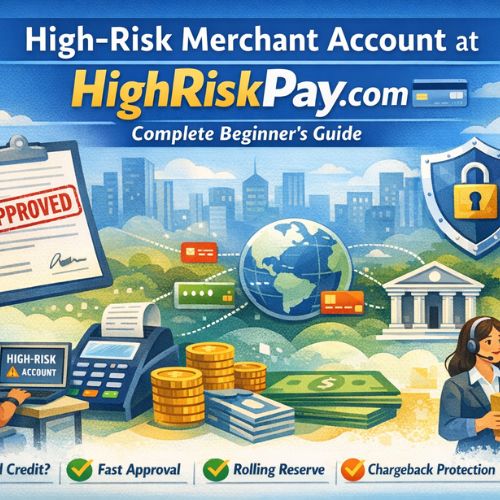
HighRiskPay.com focuses on merchants that often struggle with standard processors. It positions itself as a specialist for businesses that need more flexible approval, better risk support, and payment options built for higher-risk industries. For beginners, this matters because many payment brands make sign-up look easy but become strict once they review the real business model. A specialist provider works differently. Instead of treating the account like a standard low-risk profile, it reviews the merchant with the correct context from the beginning.
That approach can be useful for businesses with bad credit, complex sales models, or industries that regular providers avoid. HighRiskPay.com is often associated with support for faster approvals, broad industry coverage, and more tailored risk review. That can help merchants who need a real merchant account instead of a temporary payment shortcut. A business that depends on recurring billing, high monthly volume, or online sales needs a processor that can support growth without reacting badly to normal activity in that industry. For many merchants, that stability is the real value.
Industries and Business Types That May Need This Solution
Some business categories are more likely than others to need a specialized account. This often includes online subscription companies, continuity offers, nutraceutical sellers, travel businesses, adult services, CBD-related businesses, coaching offers with higher ticket prices, tech support, and certain dropshipping operations. A merchant may also need this kind of account if the company sells internationally, has delayed delivery times, or operates in a category where customer disputes are more common. Even a new eCommerce store can be seen as risky if the product type or billing model raises questions for processors.
Common business signs that may lead to a high-risk setup include:
- recurring monthly billing
- high chargeback exposure
- card-not-present sales
- international transactions
- limited business history
- previous account closure
- poor owner credit
- regulated or closely reviewed products
The key point is that high-risk processing is not only about what you sell. It is also about how you sell, who you sell to, how often customers dispute purchases, and how banks view that activity. That is why two businesses can sell similar products and still be treated very differently by different processors.
Fees, Pricing, and Rolling Reserve Basics
One of the first questions beginners ask is cost. High-risk merchant accounts usually cost more than standard accounts because the provider is taking on more review, more monitoring, and more potential exposure. That higher cost may show up in the transaction rate, monthly fees, chargeback fees, or reserve structure. Even so, price should not be judged by rate alone. A cheaper account is not really cheaper if it leads to frozen funds or account closure later. For many merchants, the better deal is the one that stays open, pays out on time, and supports the business model properly.
Another term beginners need to understand is the rolling reserve. This is a percentage of processed funds that may be held for a period of time to cover possible refunds or chargebacks. Not every account has the same reserve terms, but it is common in higher-risk processing. Merchants should always ask how much is held, how long it is held, and when those funds are released. A reserve can affect cash flow, so it should never be treated as a small detail. The smartest way to review a merchant account offer is to look at the full picture: rate, monthly cost, reserve, payout speed, and chargeback support.
The Approval Process and What You May Need
Applying for a high-risk merchant account is usually more detailed than opening a basic payment app, but the process is still straightforward when you are prepared. In most cases, the provider reviews business information, ownership details, expected monthly volume, average ticket size, website quality, and past processing history if available. This deeper review is called underwriting, and it exists to help the processor understand the business before approval. That is actually one reason these accounts can be more stable. The provider looks at the business carefully before taking it on, instead of approving instantly and reviewing later.
To improve approval chances, merchants should be ready with clean and complete information. A provider may ask for business registration papers, government ID, recent bank statements, past processing statements, a voided check, and a live website with clear customer policies. Your site should clearly show contact details, refund terms, shipping information, product descriptions, and billing language that matches what customers see on their statements. A weak or incomplete website can slow down approval, even for a real business. Good presentation shows the underwriter that the business is serious, transparent, and ready to process responsibly.
Benefits, Risks, and How to Choose Wisely
The main benefit of a High-Risk Merchant Account at HighRiskPay.com is that it gives higher-risk businesses a realistic path to payment acceptance. That means more approval flexibility, better understanding of complex industries, and a lower chance of sudden disruption compared with using an unsuitable processor. A specialist account can also support recurring billing, larger transaction values, and more advanced fraud or dispute controls. These features matter because merchants in higher-risk industries usually need more than simple checkout access. They need stability, support, and a processor that understands the pressure points of their business model.
Still, business owners should review offers carefully and not focus only on fast approval claims. A smart choice means asking about reserves, monthly fees, integration options, payout speed, gateway compatibility, and chargeback help. It also means being realistic about your own business. If your refund process is messy or your website is unclear, even the best processor will not fix those problems for you. The best results come when a strong merchant account is combined with clear billing, good customer support, honest marketing, and fast issue resolution. A reliable payment account works best when the business behind it is organized and transparent.
Final Thoughts
For many businesses, getting labeled high-risk feels frustrating at first. It can seem unfair, especially when the business is legitimate and trying to grow. But the label is usually a banking decision, not a judgment on quality. Once you understand that, the next step becomes easier. Instead of trying to force a standard processor to fit your business, it makes more sense to choose a payment setup built for your level of risk from the beginning. That is the real purpose of a High-Risk Merchant Account at HighRiskPay.com. It is about fit, stability, and better long-term support.
If you are just starting your research, focus on the essentials. Understand your industry risk, review your chargeback exposure, prepare your documents, and compare the full account terms before applying. Look at approval speed, pricing, reserve details, and how well the processor fits your billing model. A beginner does not need to know every technical detail on day one, but they do need to choose carefully. The right merchant account can protect revenue, improve checkout reliability, and help a business grow with fewer payment interruptions over time.
Frequently Asked Questions (FAQs)
What is a high-risk merchant account?
It is a payment processing account for businesses that banks view as more likely to face disputes, refunds, or fraud.
These accounts are designed to support merchants that standard processors may decline or limit.
Why would a business need HighRiskPay.com?
A business may need it when regular providers are too strict or unstable for its sales model.
It can be a better fit for merchants with higher chargeback exposure or sensitive industries.
Is a high-risk account only for adult or CBD businesses?
No, many ordinary online businesses can also be placed in this category.
Recurring billing, international sales, or limited history can also trigger a high-risk label.
Can I get approved with bad credit?
Yes, some specialist providers work with merchants who have weak personal credit.
Approval still depends on the full business profile, not just the owner’s credit score.
How long does approval usually take?
It can be faster than many beginners expect if your documents are complete.
Timing depends on underwriting, business type, and how clearly your site presents your offer.
What is a rolling reserve?
A rolling reserve is a small share of processed funds held back for a period of time.
It is used to help cover future refunds or chargebacks if they happen.
Are fees higher than normal processing?
Usually yes, because the provider takes on more review and monitoring.
The exact cost depends on your industry, history, risk level, and monthly volume.
What documents do I need to apply?
Most providers ask for ID, business papers, bank statements, and website details.
If you processed payments before, past statements may also help your application.
Can this work for subscription businesses?
Yes, subscription and recurring billing businesses often need this type of setup.
That is because recurring payments tend to create more disputes and cancellations.
Why not just use Stripe or PayPal?
Those platforms can be convenient, but they are often stricter with higher-risk accounts.
A specialist provider is usually better for long-term stability in tougher industries.
Will a merchant account stop chargebacks completely?
No, no processor can fully remove chargebacks from your business.
What it can do is give you better tools and support to reduce them over time.
How do I improve my approval chances?
Keep your website clear, your policies visible, and your business documents complete.
Honest billing, good customer service, and a clean application can make a big difference.
FOR MORE : INSIDE FAME
