


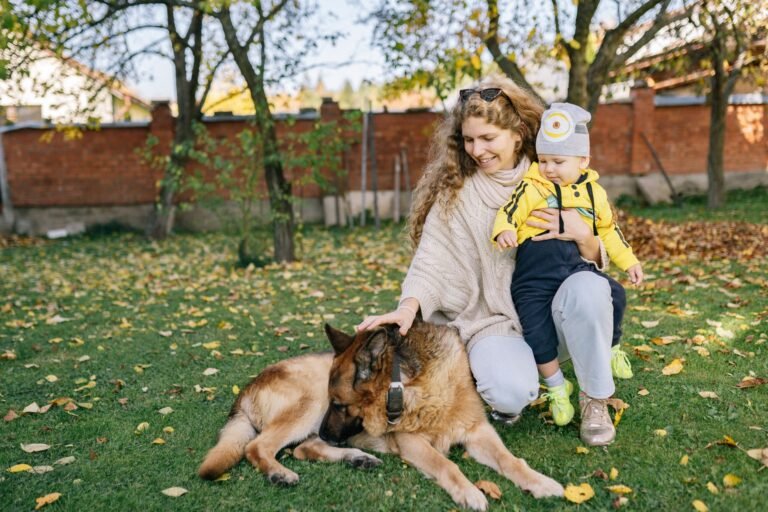
Having a dog for years means seeing quite a few versions of the same animal. There’s the puppy that cannot sit still for five minutes. Then the teenage dog that suddenly decides every command is negotiable. Later comes the calmer adult stage, and eventually the slower walks, longer naps and a bit more care that come with getting older. It’s easy to think that once a routine works, there’s no reason to change it. Dogs, unfortunately, don’t work that way. Their bodies, energy levels and behaviour keep changing, so the way they are looked after has to change a little too.
Puppy Days Are Messy, But Important
Puppies spend a huge amount of their early life figuring things out. The sound of the washing machine. Someone knocking at the door. A trip in the car. A stranger trying to say hello. Another dog barking from across the road. Some puppies take all of this in their stride. Others need more time.
Good socialisation is really about making these experiences positive and manageable. There’s no need to overwhelm a puppy with everything at once. A few calm experiences repeated over time can be much more useful.
Then there’s feeding. A growing puppy has different nutritional requirements from a fully grown dog. They need enough energy and the right nutrients to support all that growth, but simply feeding more isn’t the answer. This is particularly relevant for larger breeds, which can take considerably longer to reach their full size.
And yes, there will probably be chewing. Shoes. Furniture. Things that were definitely not left on the floor five minutes ago. A fairly predictable routine around food, sleep, toilet breaks and training can make those early months a little easier. It will not stop the chaos completely. Nothing really does.
Then the Teenage Phase Arrives
This is the stage that tends to surprise people. A dog that was doing brilliantly with training can suddenly become distracted by absolutely everything. Recall becomes unreliable. Walks take longer because every smell is fascinating. Some dogs also become more nervous or reactive during this period. It can feel like going backwards. It usually isn’t. Adolescence comes with a lot of physical and behavioural changes, so training needs to continue rather than being abandoned because the dog has become difficult.
This is also a good time to give them more to do. Scent games are an easy option. Puzzle toys can help. Even taking a different route on the daily walk gives a dog something new to investigate. There’s a balance, though. A young dog doesn’t need to be exhausted every day. Sometimes ten minutes of using their brain does more than another twenty minutes of running around.
This is also when conversations around neutering, exercise and feeding often come up. There’s no universal timeline that suits every dog. Breed and size make a difference, so a vet can help work out what makes sense for an individual dog.
Adulthood Is Usually Calmer
Eventually, things settle down. Not completely. Dogs still have their personalities, odd habits and random bursts of energy. But there’s usually less of the constant supervision that comes with a puppy. The bigger change is often physical.
Once a dog has finished growing, its food and calorie requirements are different. Smaller breeds can mature relatively early, while larger breeds may keep developing for longer. The American Kennel Club notes that breed and size both influence when dogs reach physical maturity.
Activity can change too. A dog that used to spend hours running around may become perfectly happy with a couple of walks and some time playing at home. If feeding stays exactly the same while activity drops, weight can creep up. It’s surprisingly easy not to notice.
A few extra treats. Slightly larger portions. Less running around. Over time, it adds up. This is one reason choosing an appropriate adult dog food can be part of keeping a mature dog’s diet suited to its stage of life. Portion sizes and overall activity still matter, of course. And food is only one part of it. Dental care, parasite prevention, exercise and routine veterinary appointments all become part of keeping an adult dog healthy. Waiting until something looks obviously wrong isn’t always the best approach.
Getting Older Happens Gradually
There’s rarely a clear moment when a dog suddenly becomes old. It’s usually little things. The walk is a bit shorter. Getting up from the floor takes longer. Jumping into the car is no longer automatic. The dog sleeps more during the day. Some of these changes are completely normal. Others can point to problems such as joint pain or arthritis, which is why noticeable changes shouldn’t simply be dismissed as ageing.
Small changes around the home can help. A non-slip rug on a slippery floor. A bed that’s easier to get into. Moving food and water somewhere more accessible. A ramp if getting into the car has become difficult. None of this needs to turn the house into a hospital. Exercise may need adjusting as well. An older dog might not manage a long walk anymore, but that doesn’t mean walks are no longer useful. A shorter route with plenty of time to sniff around can be far more suitable.
There’s also the question of food. Some senior dogs need fewer calories. Others have health issues that affect what they should eat. Kidney problems, dental issues, obesity and other conditions can all change nutritional requirements, so simply buying something labelled “senior” isn’t necessarily enough. A vet can advise based on the dog’s actual health rather than its age alone.
The Routine Has to Move With Them
There’s no perfect schedule for every dog. Two dogs can be the same age and still have completely different needs. One may be running around the garden all afternoon while another is perfectly happy sleeping beside the sofa. That’s why age is only part of the picture. Pay attention to changes in appetite, weight, energy, movement and behaviour. A dog drinking noticeably more water, struggling with stairs or suddenly avoiding walks may be telling its owner something.
The changes don’t always need to be major. Sometimes the right adjustment is simply a shorter walk. A different feeding amount. More rest. A bit more stimulation. Or a veterinary check when something seems unusual. The basics stay fairly simple throughout a dog’s life: decent nutrition, movement, attention, preventative healthcare and somewhere comfortable to sleep. What changes is the balance.
A puppy needs structure. An adolescent needs patience. An adult dog usually benefits from consistency. An older dog may need more consideration around comfort and mobility. The trick isn’t trying to keep the dog on the same routine forever. It’s noticing when the dog has changed, and changing with it.
