


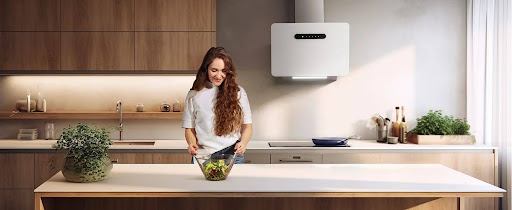
The kitchen is the heart of the home, but it is also a hub for heat, steam, grease, and strong odors. For decades, standard boxy extractors dominated wall spaces, often presenting a bulky profile that stood in the way of visual harmony and physical comfort. Modern kitchen design requires appliances to match clean aesthetics while providing excellent utility.
Enter the angled cooker hood, a design-led ventilation solution that shifts the flat canopy layout into a sleek, slanted plane. This simple change addresses a long-standing issue: head clearance. By sloping away from the cooktop, this appliance creates open space above the cooking surface, allowing you to focus on your recipes without worrying about accidental bumps.
Core Features and How They Work
An angled extraction system functions differently than a traditional horizontal canopy. Instead of hoping steam rises directly into a flat underside, the slanted design utilizes perimeter extraction to draw air toward a vertical or sloped plane. Here are the key functional features that define this appliance category:
- Sloped Tempered Glass or Steel Panels: The front panel is set at an angle (usually between 30 to 45 degrees). This angled front not only creates room to work but also naturally channels rising vapors toward the suction zone.
- Perimeter Extraction Technology: Air is drawn through narrow outer gaps rather than a wide open center. This narrow pathway increases air speed, pulling in grease and steam more effectively.
- Dual Ventilation Modes: Most setups can be configured for extraction (venting air to the outside via a duct) or recirculation (filtering grease and odors through carbon filters and returning clean air to the kitchen).
- Openable Tilt Panels: Many premium models allow the front glass panel to swing open slightly. This reveals the grease filters for quick removal and boosts airflow during heavy cooking sessions.
Key Benefits of Making the Switch
Choosing a slanted ventilation system over a standard chimney style brings several distinct advantages to your home environment.
1. Improved Head Clearance and Comfort
Standard flat hoods sit directly over the hob, creating a barrier for taller cooks who must lean forward to check on simmer pots. The primary advantage of a slanted model is physical freedom. The angled face slants backward, leaving the zone above your head entirely open.
2. High Suction Efficiency in a Compact Profile
Do not let the slim shape fool you. Modern slanted hoods carry powerful internal motors. By compressing the air intake along the outer edges, these units create a strong vacuum effect. This means grease and heavy steam are captured before they have a chance to settle on your cabinets.
3. Simplified Cleaning and Maintenance
Traditional horizontal grease filters accumulate dust and grease underneath, which can eventually drip back down onto your stove if neglected. Slanted glass surfaces are incredibly easy to maintain. A quick spray with a glass cleaner and a microfiber cloth keeps the exterior pristine. The internal aluminum filters are easily reached behind the hinged panel and can be run through a dishwasher cycle.
Design Options to Fit Your Space
When planning your kitchen layout, you will find several variations of these appliances, each suited to different cooking habits and room sizes.
| Type | Best For | Typical Features |
| 60cm Compact Models | Standard 4-zone cooktops in smaller kitchens | Space-saving, often available in recirculation modes |
| 90cm Wide Models | Large 5-zone hobs or range cookers | Expanded catchment area, high-volume extraction rates |
| Glass vs. Stainless Steel | Matching modern or professional aesthetics | Tempered black/white glass for minimalism; steel for durability |
| Chimney-Free Models | Low ceilings or clean, minimalist walls | Compact housing designed solely for ductless recirculation |
Potential Challenges to Consider
While these units offer incredible style and ergonomics, a smart buyer should keep a few considerations in mind before purchasing.
- Slightly Reduced Front-Zone Coverage: Because the bottom of the hood does not extend fully over the front burners, steam from very large front pots can occasionally escape if the fan is on a low setting. Using the back burners for heavy boiling easily solves this.
- Surface Fingerprints: Glossy black or white glass panels look stunning but can show smudges or grease marks under bright kitchen lights. They require regular wiping to maintain their high-end look.
- Wall Installation Space: These units must be mounted securely to a flat, sturdy wall. They cannot be suspended from the ceiling above an island cooktop, making them strictly wall-use appliances.
Installation Guidelines: Getting the Height Right
To ensure your extraction system runs efficiently and safely, it must be installed at the correct distance from your hob. Placing it too high will allow cross-breezes to scatter smoke, while mounting it too low risks heat damage to the appliance.
- For Electric or Induction Hobs: Install the lower edge of the hood between 50 cm and 60 cm above the cooktop.
- For Gas Hobs: Gas burners produce open flames and higher ambient heat. Install the unit between 65 cm and 75 cm above the pan supports to ensure safety and prevent component damage.
Integrating Smart Technology with the Ciarra One
As kitchen designs lean closer to connected smart homes, ventilation technology has adapted. Traditional hoods relied on mechanical buttons that required physical contact with greasy hands. Today, premium systems are incorporating advanced features that change how we control our indoor air.
The Ciarra One series represents this shift by blending quiet DC brushless motors, high energy efficiency ratings (often A+++), and smart home integration. These units can be managed via mobile applications or touchless controls, allowing you to adjust fan speeds, dim the integrated LED lights, or monitor filter life without touching the glass surface. Furthermore, specialized options within this range feature dual-suction paths and integrated UV purification systems that actively break down grease molecules, keeping the internal ductwork cleaner for longer.
Final Thoughts
An angled cooker hood is more than just a visual upgrade; it is a practical design choice that solves the physical limitations of traditional kitchen extraction. By combining improved head clearance, efficient perimeter suction, and modern smart controls, these appliances keep your kitchen air clean without compromising on space.
