


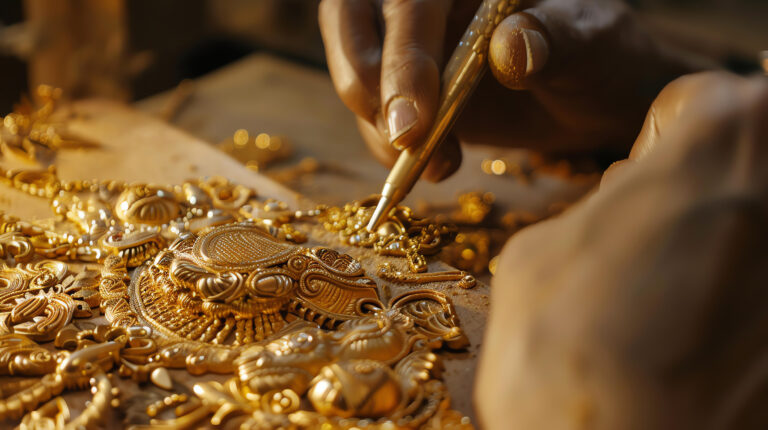
When you’re looking at a personalised gold ring or a pendant, you’re looking at a lot more than just metal and design. It’s the sentiment that really does the heavy lifting. Whether it’s a quiet detail only the wearer “gets” or a bold engraving, these pieces are meant to be proper “forever” items.
How are they made, though? Let’s discuss how this favourite personalised gold jewellery actually comes to life.
1. The Idea: Where It All Begins
The whole process actually starts with a bit of a brainstorm. It could be a classic name piece you’re after or something a bit more abstract that requires some digging. This phase is dedicated to mapping it all out.
You start ticking off the essentials, from the choice of metal to the specific symbols you want included. We get really stuck into the aesthetics here, especially for scripts like Arabic or Hindi, where the flow of the letters is everything.
2. Design Development: Turning Ideas into Visual Form
Once the idea is settled, the whole thing moves over to a digital blueprint. Reputed jewellers tend to use CAD for this, which is a clever way of building a 3D model on a screen so they can see exactly what they’re working with.
For anything bespoke, this stage is a lifesaver for getting the lettering balanced and making sure the piece actually feels right when you wear it. It is much easier to move a line on a screen than it is to fix a mistake once the gold has set.
3. Creating a Physical Model: 3D Printing
Jewellers create a prototype using a 3D printer. This model is made from a wax-like resin and shows off every little detail of your design. While hand-carving is a lovely tradition, this modern method is far more dependable for the fine margins we need in custom work.
The real beauty of it is the sheer precision. It takes the “maybe” out of the equation, making sure your piece is structurally sound and looks exactly right before we move forward.
4. Casting: Transforming Wax into Solid Gold
The next step starts by setting the wax model in a special plaster mould. When the heat is turned up, the wax melts out and leaves behind a hollow space that’s a replica of your design. Molten gold is then poured in to take the wax’s place.
Once the mould is broken away, the gold version is finally revealed. It’s a fantastic way to ensure every bit of your personalisation is captured perfectly. The piece is real gold now, of course, but it’s matte and needs a good deal of refining before it’s ready to wear.
5. Refinement: Hand Finishing and Detailing
Fresh from the mould, the gold is actually quite a plain thing to look at. It’s the hand-finishing that really brings out its soul. Artisans spend a fair bit of time on the detailing, carefully removing any casting marks and refining the overall shape.
Once the structure is just so, it’s time for the final buff. This is when that raw casting finally finds its sparkle, whether you prefer a classic high-polish or a modern, muted finish.
6. Stone Setting: Adding Diamonds or Gemstones
Once the metalwork is looking top-notch, it’s time for the stones to go in, if there are any. This is all done by hand at the bench, where each gem is tucked into its setting and nudged into place with total precision.
It’s a bit of a delicate balancing act; the stone needs to sit perfectly level and be held tight enough to last a lifetime, without being pinched or damaged. There’s a real focus on the “soul” of the materials these days, too. Sustainable jewellers either use ethically mined stones or recycled metals.
7. Hallmarking: Verifying Gold Purity
Before a piece is ready for its new home, it often needs to visit the Assay Office for hallmarking. This is a legal necessity in the UK for gold items above a specific weight, acting as an official “thumbs up” for the metal’s purity.
It’s a fantastic system because it takes the guesswork out of buying jewellery. Having that hallmark means there’s no doubt about the authenticity of the gold. It’s a permanent, physical guarantee of value and craft.
8. Quality Checks: Final Inspection
The very last step in the workshop is a series of careful checks to bring everything together. Every curve and setting is inspected to ensure the quality is consistent from every angle. It’s about making sure the piece feels balanced, the personalisation is perfectly rendered, and the polish has that signature glow.
Because a custom-made item is so special, this final review is never rushed. It’s the last chance to ensure that every tiny detail has been polished to perfection before the jewellery is finally ready for its owner.
9. Packaging: Preparing the Finished Piece
Once your piece is shining and ready to go, it gets a final spruce-up and is settled into its packaging. Reputed jewellers use lovely boxes that are designed to keep the gold safe in the post while still feeling quite grand.
Most people buy these as a surprise for someone special, so the packaging is usually cool enough to hand over without any extra hassle. It’s the final task in the workshop, but it’s the moment the magic starts for the person on the receiving end, so there’s as much care into the box as there is into the piece.
10. Delivery: From Workshop to Wearer
Once the piece is ready to go, it’s a simple matter of getting it into the post. Within the UK, that usually means a wait of just a few days, though international shipping can be a bit more of a hassle depending on where it’s headed.
The truth is, the bulk of the time is actually spent in the workshop and at the Assay Office. From the first sketch to the final legal stamp, you’re looking at a timeline of about a month or so. That’s the reality of handmade custom jewellery in the UK. If a piece is going to be part of your story forever, it deserves that extra bit of time to be finished correctly.
And that’s the whole process. This isn’t a quick, machine-made thing. It’s a slow, careful transformation of gold into a proper heirloom that’s ready to be part of your story for years to come!
