


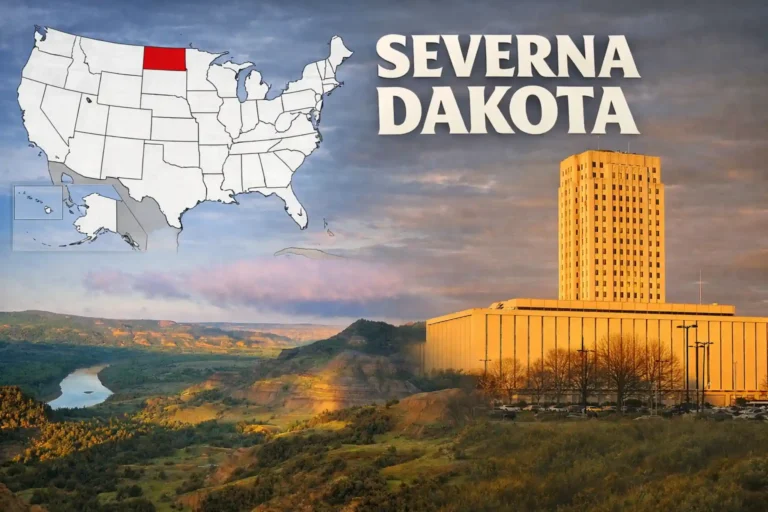
Many people first meet the phrase Severna Dakota online and wonder whether it is a new place, a special region, or even a person. In simple terms, it is a foreign-language version of the name of the U.S. state known in English as North Dakota. In several Slavic languages, including Slovenian and some regional variants used across Central and Eastern Europe, “severna” means “northern,” while “Dakota” is kept in its original form. Put together, the phrase literally translates to “North Dakota.”
Because the phrase belongs to another language family, it often appears in multilingual dictionaries, translation tools, and non-English travel or education sites. English speakers who see “Severna Dakota” in a foreign text or on a translated map sometimes assume it refers to a separate area. In reality, it is simply the same state under a different linguistic label, much like “Italia” for Italy or “Deutschland” for Germany.
Where the Name “Severna Dakota” Comes From
“Severna Dakota” is simply the translation of “North Dakota” in several Slavic languages, including Serbian, Croatian, Bosnian, Bulgarian, and Macedonian. In these languages, the word “severna” means “northern,” while “Dakota” is kept in its original form because it comes from the historic name of the Dakota people and their homeland in North America. Put together, the phrase is a direct and literal match for the English name of the state.
Because this structure is so straightforward, it appears consistently in school atlases, language textbooks, and translation tools across the region. When readers in these countries talk about the U.S. state in their own language, they use “Severna Dakota” in everyday speech and writing, in exactly the same way English speakers use “North Dakota.”
Historical Roots Behind the Dakota Name
The second half of the phrase, “Dakota,” carries a long and important history. It is derived from the Dakota people, a Native American group that forms part of the larger Sioux family. The name Dakota is often translated as “allies” or “friends” and reflects ideas of community and mutual support among the people who carried it. Over time, the term came to label the wider homeland where these communities lived and moved.
During the nineteenth century, this homeland was organized by the U.S. government as Dakota Territory, a vast region that covered land which now lies in multiple modern states. When the territory was eventually divided for political and administrative reasons, it became the two states now known as North Dakota and South Dakota. The word “Dakota” remained in both names, preserving the historical and cultural link even as the land was split on paper.
From Dakota Territory to Modern Severna Dakota
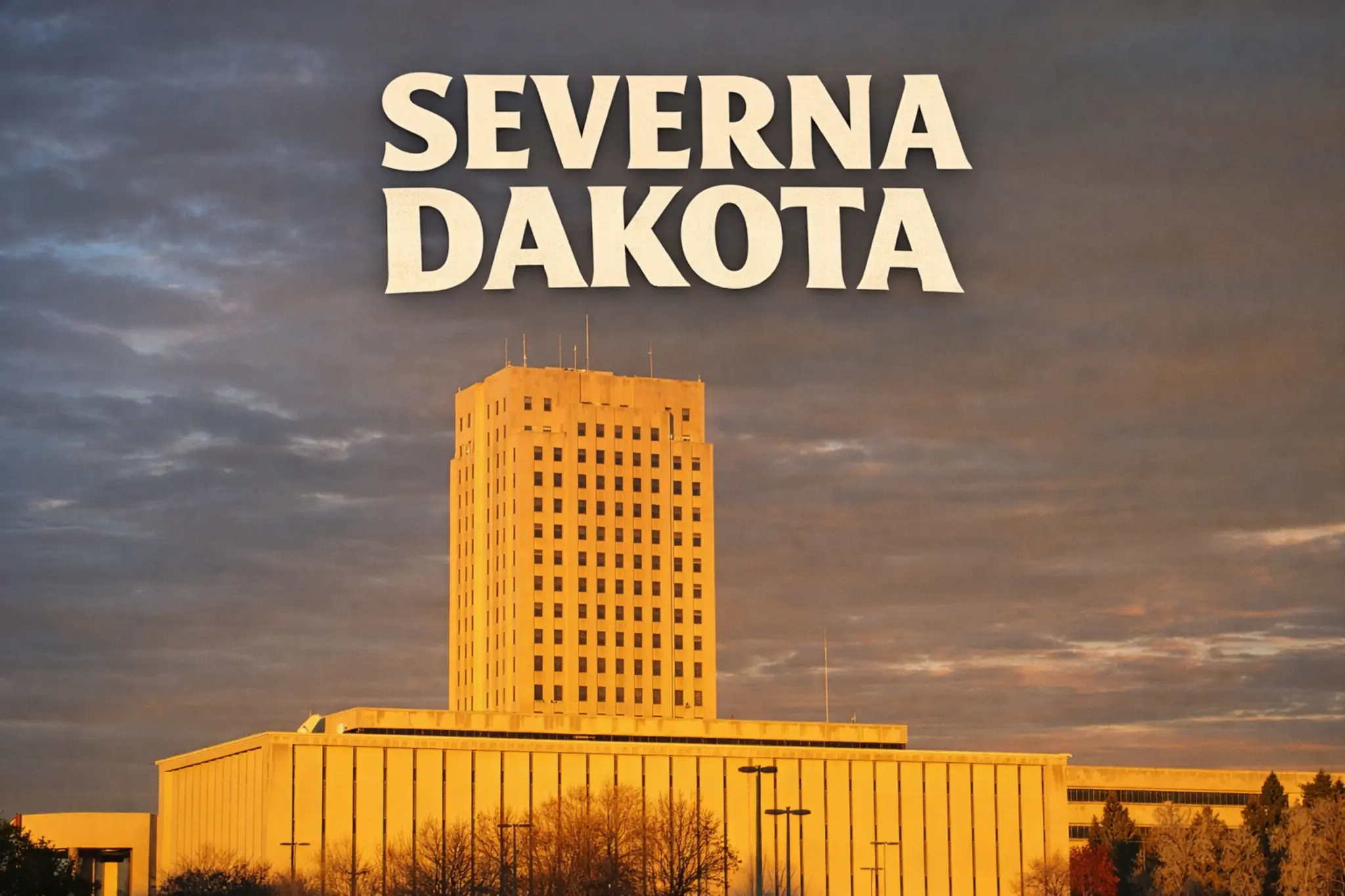
The move from one large territory to two separate states took place in 1889, when both North Dakota and South Dakota joined the Union. At that point the idea of “Northern Dakota” and “Southern Dakota” became official in U.S. law, not just in everyday speech. In English, the forms were written as “North Dakota” and “South Dakota,” but other language communities later adapted them into their own systems of grammar and spelling.
When these names were translated for European audiences, especially in Central and Eastern Europe, the directional part changed to fit local vocabulary while “Dakota” stayed the same. That process produced phrases such as “Severna Dakota” for the northern state. Over time, these versions became standard entries in dictionaries, atlases, and school books, so readers in those countries now see “Severna Dakota” as the normal label in their own language.
Where You See Severna Dakota Used Today
Today, the phrase appears most clearly in bilingual dictionaries, translation websites, and geographical lists that show country and state names in multiple languages. For example, Slovenian language tools and academic works on place names use “Severna Dakota” as the standing term for the state. In such materials, it sits alongside other translated forms of major U.S. states and regions.
You may also find the phrase in local-language versions of encyclopedias, travel guides, and news sites that cover American politics, climate, farming, or energy. When these sources are translated back into English by automatic systems, the foreign-language label is often left in place. That is one reason why some English readers stumble on “Severna Dakota” in mixed-language pages or when they switch between language settings on a website or app.
The Real-World Place Behind the Name
Behind the translated term lies a very real place on the ground. North Dakota is a landlocked state in the north-central United States, sharing a long border with the Canadian provinces of Saskatchewan and Manitoba. To the east it meets Minnesota, to the south South Dakota, and to the west Montana. Much of the landscape is made up of plains and rolling farmland, with wide horizons and big skies that are typical of the northern Great Plains.
The state is known for its strong farming and ranching base, as well as energy production from oil and natural gas fields. Winters are cold and often snowy, while summers bring warm days and long daylight hours. For many people around the world, the state is easier to imagine when they picture open prairies, small rural communities, and long stretches of highway that cross fields and grassland.
Nature, Parks, and Travel Interest
Even though it is sometimes described as one of the least visited U.S. states, North Dakota has a surprising number of attractions for people who enjoy outdoor spaces. The rugged Badlands in the western part of the state are protected inside Theodore Roosevelt National Park, where visitors can hike, watch wildlife, and see colorful rock formations. Long-distance routes such as the Maah Daah Hey Trail give hikers and cyclists a way to cross remote terrain, and new tribally managed parks are adding fresh protected areas to the landscape.
In simple terms, visitors are drawn by a mix of quiet scenery, open roads, and cultural events. A few of the better-known examples include:
-
Scenic driving and hiking in the Badlands and along the Maah Daah Hey Trail, visits to historic small towns and cultural museums, and festivals that highlight Scandinavian and Native American heritage.
This single list already covers most of the main categories that matter to travelers: landscapes, local history, and living culture. For foreign readers curious about “Severna Dakota,” it helps to know that this translated phrase points to a place where outdoor life, agriculture, and tradition all play major roles.
Cultural Background Connected to the Dakota Name
Because the word “Dakota” comes from an Indigenous people, the state that carries this name is closely tied to Native American history and present-day life. Tribal nations in the region maintain reservations, cultural centers, museums, and community events that keep languages, stories, and ceremonies alive. These communities also have a strong voice in land management, education, and efforts to share authentic history with visitors.
For someone reading about “Severna Dakota” in another language, the phrase is a gateway to learning about this deeper cultural layer. It is not only a translation of a political unit on a map; it also hints at centuries of Indigenous presence and at modern life in tribal towns, schools, and cultural programs spread across the state.
Everyday Life and Economy in the State
Everyday life in North Dakota tends to revolve around small and mid-sized cities, farming regions, and energy towns. Agriculture focuses on crops such as wheat, corn, soybeans, and sunflowers, while ranches raise cattle across wide pastures. In recent decades, oil development in certain western counties has brought new jobs, population growth, and rapid changes to some communities.
Outside of the energy boom areas, many parts of the state still keep a quieter rhythm built around local businesses, schools, churches, and community centers. When foreign-language materials talk about “Severna Dakota,” they often mention this blend of long-standing rural traditions and newer economic activity, because it helps readers understand what life is like beyond the basic map outline.
Why People Search for Severna Dakota Online
Online interest in the phrase usually comes from a mix of curiosity and confusion. Some people see “Severna Dakota” on a non-English website, a social-media post, or a translated caption under a photo and want to know whether it refers to a separate country or region. Others are language learners comparing state names across different languages and want to see how “North Dakota” is expressed in a Slavic system.
There is also a small group of searchers who are planning travel, studying geography, or reading news about North Dakota in their local language. They may use “Severna Dakota” in their own searches, and then later switch to English materials about the same place. This back-and-forth between languages explains why search engines sometimes suggest both forms to people who begin typing only one of them.
How Translation Tools and Maps Use the Term
Modern translation tools often pull from large databases of proper names collected from dictionaries, atlases, and public websites. When a user translates “North Dakota” into a supported language, the engine may return “Severna Dakota” as the standard result. Online maps and information panels that adapt to language settings follow the same logic. When the interface is set to English, they show “North Dakota”; when it is set to Slovenian or another regional language, they may instead display “Severna Dakota.”
This automatic switching can be helpful for local readers but surprising for English speakers who are not expecting the foreign-language form. As global tools become more common, the phrase appears more often in mixed-language screenshots, social posts, and auto-translated descriptions, which keeps feeding curiosity and search interest around the term.
How to Read and Pronounce Severna Dakota
For English speakers, the phrase is usually pronounced in a way that keeps “Dakota” familiar while adapting “Severna” only slightly. A simple guide is to say it as “SEH-ver-na da-KOH-ta,” stressing the first syllable in “Severna” and the second in “Dakota.” Local speakers of specific Slavic languages may use slightly different sounds, but this approximation is clear enough for most casual conversations.
When you read the phrase in a sentence, you can treat it exactly as you would “North Dakota.” If a travel article in another language says that something happens “in Severna Dakota,” you can safely understand that the event takes place in the U.S. state already described, not in a separate or hidden region.
Why Understanding the Phrase Matters
At first glance, “Severna Dakota” may look like a small curiosity that matters only to language specialists. In practice, it tells a bigger story about how place names travel between cultures. The phrase reminds us that states, countries, and regions often have more than one accepted form, and that each form is shaped by local speech patterns, alphabets, and historical habits. Knowing this can make it easier to read foreign articles, use translated maps, and follow international news.
It also helps correct misunderstandings. Because the phrase is used in serious reference works and academic texts, it has a stable, clear meaning. When people learn that it simply stands for North Dakota, they can read foreign-language content with greater confidence and avoid assuming that it points to something mysterious or invented.
Final Thoughts: A Simple Name with a Wide Background
In the end, the answer to “What is Severna Dakota?” is straightforward: it is the name North Dakota expressed in certain Slavic languages, built from a local word for “northern” plus the historic name of the Dakota people and their homeland. Behind that simple translation, however, lies a real place shaped by prairies, Badlands, farms, small cities, tribal communities, and changing economic forces. Understanding the phrase opens a window onto that wider picture.
So when you encounter “Severna Dakota” online, you can read it as a reminder that maps and place names are not fixed in just one language. They adapt as they cross borders, even though the land beneath them remains the same. With that in mind, the term becomes more than a puzzle in a search result: it becomes a useful bridge between languages, histories, and ways of seeing one northern state in the heart of North America.
Frequently Asked Questions (FAQs)
What language does the phrase Severna Dakota come from?
It comes from Slavic languages such as Slovenian and related regional forms, where “severna” means “northern” and “Dakota” is kept from the original name.
Does Severna Dakota refer to a different place than North Dakota?
No, it refers to the same U.S. state; it is simply the foreign-language version of the English name North Dakota, not a separate region.
Is Severna Dakota an official name inside the United States?
Inside the United States the official form is North Dakota, while “Severna Dakota” is used mainly in foreign-language materials, translations, and dictionaries.
How do you pronounce Severna Dakota in a simple way?
A clear English approximation is “SEH-ver-na da-KOH-ta,” with the main stress on “SEH” and “KOH.”
Is there a similar form for South Dakota in those languages?
Yes, the southern neighbor is usually expressed with a local word for “southern” plus “Dakota,” mirroring the structure of “Severna Dakota.”
Why do some online maps or tools show Severna Dakota instead of North Dakota?
They adapt place names to the language setting you choose, so when the interface is in a Slavic language they display “Severna Dakota” as the standard form.
What is North Dakota mainly known for in real life?
It is known for wide plains, farming and ranching, energy production, and landscapes like the Badlands and Theodore Roosevelt National Park.
Is North Dakota a good place for outdoor travel?
Yes, it offers hiking, scenic drives, wildlife watching, and long-distance trails in relatively quiet surroundings compared with more crowded states.
How large is the population of North Dakota?
The state has a fairly small population compared with many others in the United States, with people spread across cities, towns, and rural areas.
What is the climate like in Severna Dakota / North Dakota?
It has cold, often snowy winters and warm summers, with big seasonal temperature changes that are typical of the northern Great Plains.
Are there Native American communities in North Dakota?
Yes, several tribal nations maintain reservations and communities in the state, preserving languages, traditions, and cultural programs.
Why are more people searching for Severna Dakota online now?
Rising use of translation tools, multilingual websites, and global travel content means more readers see the foreign-language form and then look it up for clarity.
FOR MORE : INSIDE FAME
