


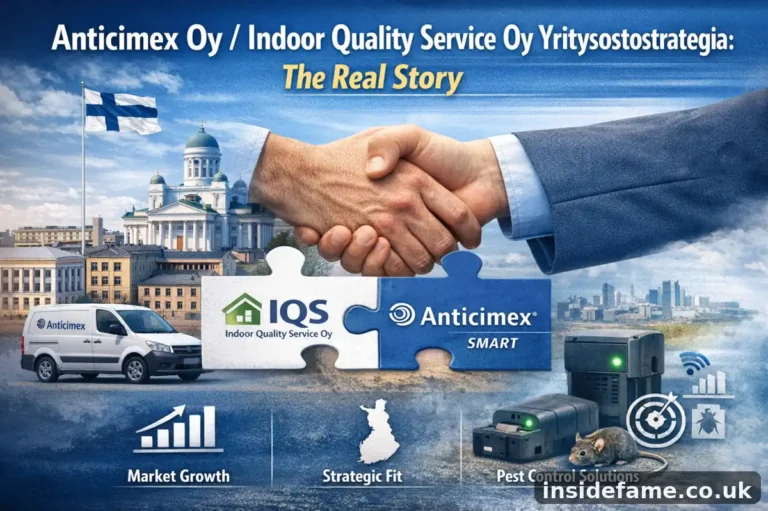
To understand Anticimex Oy / Indoor Quality Service Oy Yritysostostrategia, it helps to look at the real transaction behind it. IQS brought local reputation, customer relationships, indoor air expertise, and a stronger footprint in Southern Finland as Anticimex scaled an acquisition-led model across markets.
The phrase Anticimex Oy / Indoor Quality Service Oy Yritysostostrategia is best understood as a case study in targeted consolidation. Anticimex has publicly said its strategy is built around better service quality and efficiency, stronger pricing, expanded SMART offerings, and continued growth through acquisitions. The IQS transaction fits that framework closely: it was a local deal with practical operating logic, not a flashy headline move.
Acquisition Facts at a Glance
Deal announcement and timing: Anticimex announced the acquisition of Indoor Quality Service Oy on March 1, 2016, framing it as a focused expansion move in Finland rather than a one-off transaction.
Company profile and market position: IQS, founded in 2005, was described by Anticimex as the third-largest pest control company in Finland, with services covering both pest management and indoor air quality investigations.
People and regional impact: The deal brought 10 employees into Anticimex, including CEO Mikko Heini, and strengthened the company’s presence in the Helsinki metropolitan area and Southern Finland.
Strategic significance: The acquisition matched Anticimex’s broader model of decentralized local execution, growth through acquisitions, and expansion in a fragmented market where consolidation remains attractive. Today, Anticimex says it operates in 22 countries with 12,000 employees and reported SEK 16.9 billion in 2024 revenue, while EQT says the group has completed more than 400 acquisitions since 2012.
The company behind the deal
Anticimex started in Sweden in 1934 and has grown from a local bed-bug specialist into a global pest control group with a strong position in preventive services. Its current model shifts away from purely reactive work toward continuous monitoring, earlier intervention, and recurring customer relationships. In a recurring-service business, acquisition logic looks different: the value is not only in trucks, branches, or territory, but in contracts, local trust, operating density, and technician expertise.
The Finnish angle is especially important here. In its local announcement, Anticimex said the IQS purchase reinforced its position as Finland’s largest pest management company. It also noted that, at the time, Anticimex Finland already had 11 regional offices and 85 employees. That tells us the company was not entering Finland through IQS; it was deepening an existing platform, which is how disciplined acquirers usually build long-term market strength.
Who IQS was before the acquisition
Indoor Quality Service Oy was not a random add-on. Anticimex described IQS as a company founded in 2005, active in both pest management and indoor air quality investigations, with a solid customer base in the public sector, among businesses, and in housing company work. That mix made IQS valuable beyond simple revenue scale because it added a broader service profile and relationships in customer segments where trust and repeat business matter.
There is also a regional logic baked into the transaction. Anticimex said the deal complemented its existing operations in the Helsinki metropolitan area and across Southern Finland. In practical terms, that usually means denser route coverage, stronger field capacity, faster response times, and more efficient service planning. In service industries, those practical gains often separate a smart acquisition from an expensive distraction.
Why Anticimex bought IQS
The clearest explanation comes from Anticimex’s own words. The company said IQS was well managed, well regarded, and a strong cultural fit. In the global announcement, Anticimex added that IQS fit well with its geographic footprint. Those two ideas, cultural fit and route or footprint fit, are central to acquisition quality. A buyer can usually fix systems over time, but weak local reputation or mismatched culture are much harder to repair after closing.
Timing also mattered. Anticimex has said the pest control market is fragmented and supported by long-term structural drivers, including urbanization, globalization, climate change, stronger regulation, and rising demand for preventive services. In a market like that, well-run local companies become attractive targets because they give the buyer immediate market access while the industry still has room to consolidate. The IQS deal makes more sense when seen through that lens: it was a way to gain density in a growth market, not just add another company name to a portfolio.
How the deal fits Anticimex’s broader growth model
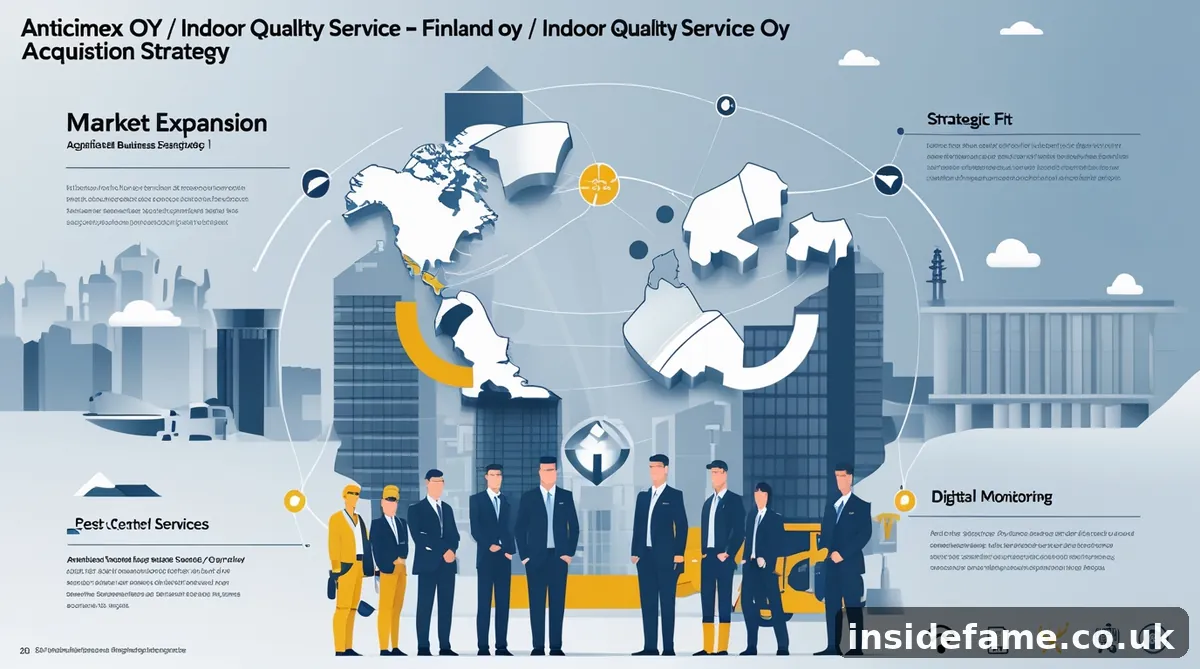
Anticimex openly states that growth through acquisitions is one of its four main strategic pillars. Its broader model is to improve service quality and efficiency, strengthen pricing, grow SMART services, and continue buying companies that fit the platform. EQT’s 2025 case study adds another layer, describing how Anticimex has used M&A to scale quickly, including more than 400 acquisitions since 2012 and an in-house pace of roughly 40 to 50 deals a year. The IQS acquisition was smaller than many of those transactions, but it fits the same template almost perfectly.
The Anticimex model is not framed as central control over every local detail. The company says its branch-based structure is designed around local market knowledge, while headquarters supports complex acquisitions, SMART product development, and best-practice sharing. That means a local acquisition like IQS does not need to lose its practical market intelligence after closing. Instead, the ideal result is that local relationships stay useful while the acquired business gains stronger systems, capital, and brand backing.
The role of people and integration
One revealing detail in the Finnish announcement is that 10 IQS employees, including CEO Mikko Heini, moved to Anticimex as part of the transaction. That detail matters because service-company acquisitions often succeed or fail based on whether people stay, customers stay, and know-how stays. Anticimex’s M&A pages say sellers are often encouraged to remain after completion and that integration is structured around smooth transition, employee onboarding, and retaining value in the acquired business. The IQS move appears consistent with that playbook.
This helps explain why the IQS case is more than a simple market-share story. If Anticimex had wanted growth at any cost, it could have chased scale alone. Instead, its public messaging around the deal emphasized reputation, competence, cultural fit, and better customer service. That is exactly the language you expect when a buyer sees people and customer continuity as the main assets in a transaction. For readers studying Anticimex Oy / Indoor Quality Service Oy Yritysostostrategia, this is one of the clearest signals of how the company thinks about value creation.
SMART, prevention, and the bigger business logic
Anticimex is not just buying companies; it is buying places where its operating model can travel well. The group says its SMART offering is part of its core strategy, and its industry materials describe a broader move from reactive pest control to preventive, digitally enabled service. In that kind of business, acquisitions can become more valuable over time because a larger installed customer base creates more opportunities to roll out upgraded solutions, recurring service models, and better monitoring tools.
That helps explain why the IQS deal was not only about what IQS already was in 2016. It was also about what the customer base and local team could become inside a larger platform. A company with public-sector relationships, commercial customers, and housing company accounts can be a natural base for preventive contracts and broader service adoption. Seen that way, the acquisition reflects both immediate operating logic and longer-term platform thinking.
What the real story is
The real story is that Anticimex Oy / Indoor Quality Service Oy Yritysostostrategia was never mainly about a trendy phrase. It was about a proven acquirer using a focused local deal to strengthen market leadership in Finland. Anticimex bought a known operator, kept its people, expanded density in a key geography, and folded the business into a model already built around local execution, recurring service, and future digital expansion. That is the kind of transaction that often creates durable value.
It is also a reminder that not every important acquisition is huge. Some of the most effective deals are the ones that look modest from the outside but solve practical business problems inside a market. IQS gave Anticimex stronger coverage, more specialist capability, and a better fit in Southern Finland. In acquisition strategy terms, that is often a stronger signal than a headline-grabbing mega-deal, because it shows the buyer knows exactly where and why it wants to grow.
Conclusion
When you strip away the search phrase and look at the evidence, Anticimex Oy / Indoor Quality Service Oy Yritysostostrategia comes down to disciplined expansion. Anticimex’s own strategy stresses service quality, pricing, SMART development, and acquisitions, while its market commentary points to a fragmented industry with room for consolidation. The IQS purchase sits neatly at the intersection of those ideas: it was local, practical, well aligned, and clearly tied to a bigger operating model.
The case is useful because it is concrete. It shows how a global group can expand through smaller, high-fit acquisitions without losing sight of service delivery and local relationships. That is the lasting value of this story, and the clearest takeaway from Anticimex Oy / Indoor Quality Service Oy Yritysostostrategia: The Real Story.
Frequently Asked Questions (FAQs)
What does Anticimex Oy / Indoor Quality Service Oy Yritysostostrategia mean?
It refers to the strategy behind Anticimex’s 2016 purchase of Indoor Quality Service Oy in Finland. In plain terms, it shows how Anticimex used a local acquisition to strengthen coverage and operating scale.
When did Anticimex acquire Indoor Quality Service Oy?
Anticimex announced the acquisition on March 1, 2016. Its Finnish and international communications linked the deal to continued growth in Finland.
Why was IQS an attractive acquisition target?
According to Anticimex, IQS had a strong reputation, a solid customer base, and a good cultural fit. It also strengthened Anticimex’s footprint in the Helsinki area and Southern Finland, a practical advantage in a route-based service business.
What services did Indoor Quality Service Oy provide?
IQS provided pest management services along with indoor air quality investigation services. That mix made it valuable as a provider with complementary expertise and customer relationships.
Did IQS employees remain after the acquisition?
Anticimex said 10 employees, including CEO Mikko Heini, transferred as part of the deal. That fits Anticimex’s broader M&A approach, which emphasizes smooth integration and retaining value in acquired businesses.
Was this acquisition part of a larger Anticimex expansion strategy?
Yes. Anticimex says growth through acquisitions is a core strategic pillar, and EQT has described the group as making more than 400 acquisitions since 2012. The IQS transaction was a Finland-specific example of that wider model.
How does this deal relate to the Finnish pest control market?
Anticimex said the transaction strengthened its position as Finland’s largest pest management company, while IQS was described as the country’s third-largest player. That made the deal a meaningful consolidation move within a fragmented local market.
What is Anticimex’s main business strategy today?
Anticimex says its strategy focuses on improving service quality and efficiency, strengthening pricing, expanding SMART services, and continuing growth through acquisitions. It also ties its long-term outlook to preventive pest control and digital solutions.
What is SMART in the Anticimex model?
SMART is Anticimex’s digitally enabled pest control offering, built around monitoring and preventive intervention. It supports the shift from reactive service toward recurring, data-driven pest management.
Why do small acquisitions like IQS matter?
Smaller acquisitions can improve route density, customer retention, local staffing, and service reach without the disruption of a giant merger. In many service industries, those gains create more lasting value than bigger but less focused deals.
Is there public evidence that Anticimex values cultural fit in acquisitions?
Yes. In the IQS announcements, Anticimex highlighted reputation and cultural fit directly, and its M&A materials say it seeks companies with strong local knowledge and a good fit for the group. That signals a people-first integration philosophy.
What is the biggest takeaway from this case?
The biggest lesson is that Anticimex grows through disciplined, well-matched acquisitions rather than random expansion. The IQS case shows how local market knowledge, retained staff, and complementary services can make a relatively small deal strategically important.
FOR MORE : INSIDE FAME
