


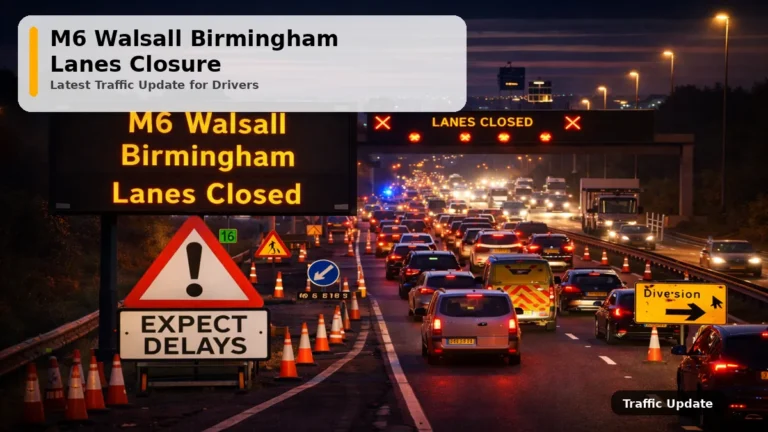
The M6 Walsall Birmingham Lanes Closure is an important traffic issue for anyone who drives through the West Midlands. This part of the motorway carries local drivers, delivery vans, freight traffic, airport trips, and long-distance travelers every day, so even one closed lane can quickly slow everything down. When closures affect the stretch between Walsall and Birmingham, delays often spread far beyond the work area because this route connects with major junctions, busy slip roads, and other heavy-use roads near the city.
Right now, drivers should know that this part of the M6 is seeing a mix of planned overnight work, maintenance activity, and short-notice disruption when incidents happen. Official road updates for early April 2026 show major work around junctions 6 to 7, junctions 10 to 9, and nearby southbound sections, with some closures already scheduled and other northbound changes still subject to confirmation. That means drivers cannot assume a normal trip, especially at night or in the early morning when works may still be affecting the route.
Why This Stretch Causes So Much Delay
The road between Walsall and Birmingham is not a quiet motorway section. It links key points such as junction 10 near Walsall, junction 7 at Great Barr, and junction 6 near Birmingham’s Spaghetti Junction area. These are some of the busiest points in the region because they feed traffic into local roads, business areas, shopping zones, and wider motorway routes. When traffic is already heavy, lane restrictions reduce space for merging and braking, and that makes queues grow fast.
This is also why small disruptions can feel much bigger here than on other roads. A short-term lane closure may lead to slower entry from slip roads, stop-start traffic near interchanges, and longer travel times for drivers who are not even heading directly into Birmingham. The effect often spreads across nearby links because many people use this corridor as a daily commuter route or a key part of freight and service travel across central England.
What the Current Update Means for Drivers
The current picture is not just about one single closure. It is better understood as a wider period of maintenance and traffic management on the M6 corridor near Walsall and Birmingham. Drivers are dealing with bridge joint replacement work, resurfacing work, and other road maintenance that can lead to lane restrictions, full overnight closures, and hard shoulder closures depending on the section and direction of travel.
For drivers using this route in April 2026, one of the most important points is that work between junction 6 and 7 is due to bring full northbound closures from April 7 to April 24, followed by southbound closures from April 27 to May 6, with more northbound work due from May 7 to May 13. There has also been separate bridge joint replacement activity affecting the southbound side near junctions 10 to 9, with work running on weeknights and diversion plans used during full closures. This makes advance planning much more important than usual.
Which Areas Are Most Likely to Be Affected
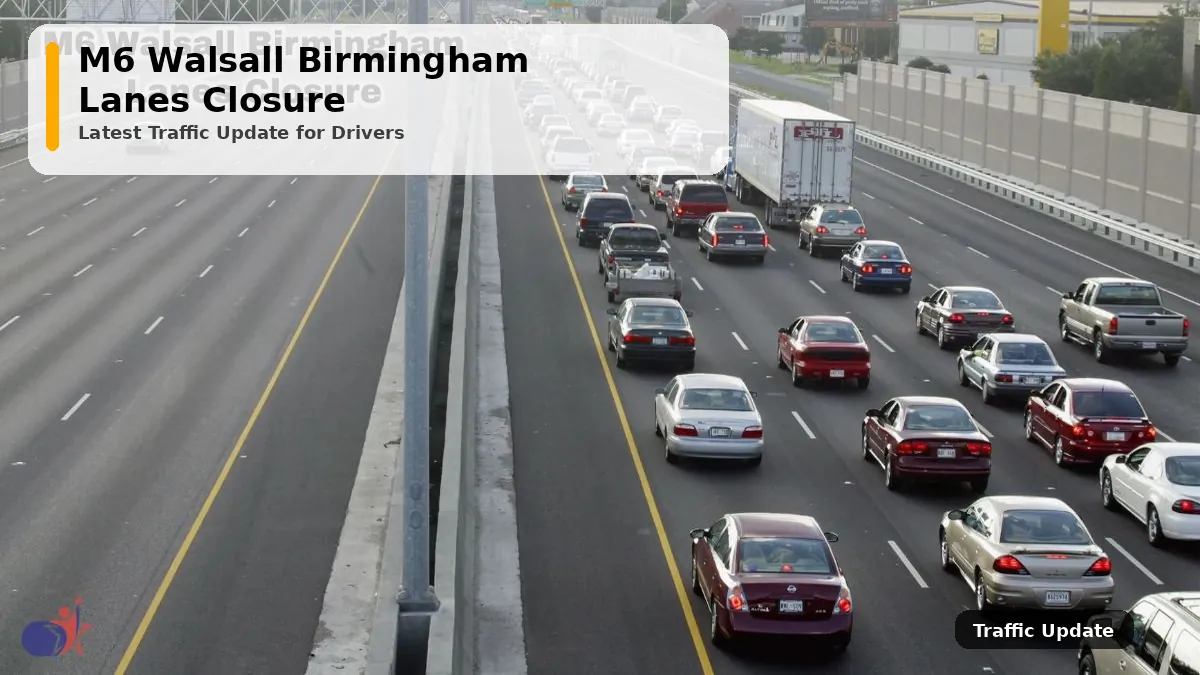
Junction 10 to Junction 7
This is the section many drivers think of first when they hear about the M6 Walsall Birmingham Lanes Closure. It covers a route used by traffic coming from Walsall and moving toward Great Barr and Birmingham. When closures hit here, the result can be long queues because a large number of vehicles are trying to pass through a narrow working area while other drivers join or leave at nearby junctions.
Junction 7 to Junction 6
This part is also very sensitive because it leads toward one of Birmingham’s busiest motorway connection points. If northbound or southbound traffic is reduced here, journey times can rise quickly. Even drivers who avoid the main closure may still face delays on approach roads because traffic starts to stack back from the busiest merging points.
Why These Closures Keep Happening
Many drivers get frustrated when they see cones, reduced lanes, and overnight closures again and again, but road work on this stretch usually has a clear purpose. Bridge joints wear down, road surfaces break up under heavy use, and safety systems need regular upgrades. If those issues are ignored, the road becomes rougher, less safe, and more likely to face emergency repairs later, which are often more disruptive than planned work.
The benefit of planned work is that it gives road crews time to manage traffic, set up diversions, and carry out repairs in a controlled way. In practical terms, that means today’s lane closures are usually meant to prevent worse problems in the future. It does not make the delay pleasant, but it does explain why this route sees repeated work windows, especially overnight when traffic volumes are lower than during the main daytime rush.
How the Closures Affect Everyday Travel
For commuters, the biggest problem is not always a full closure. Often, the worst delays come from reduced capacity during busy periods, when one or two restricted lanes create a long chain reaction. A driver may start the trip thinking the issue is minor, then lose extra time at the next junction, the next merge point, and the next slowdown caused by drivers changing lanes at the last second.
For business traffic, delivery routes, airport runs, and service calls, the impact can be even more serious. Companies often build travel times around normal motorway flow, so even a 20 to 30 minute delay can affect delivery windows and shift start times. Drivers unfamiliar with the West Midlands may also struggle more because this route includes complex interchanges and several nearby alternatives that are not always simple when traffic is heavy across the whole network.
Best Times to Travel and When to Be Most Careful
The safest approach is to treat overnight travel and very early morning trips as higher risk for disruption while these works continue. Planned closures often begin in the evening and may remain in place until early morning, so a route that looked clear at dinner time may be restricted later at night. Drivers leaving before sunrise should also remember that some work zones can still affect the road if crews are finishing or clearing traffic management.
Daytime travel can still be slower than expected even when full closures are not active. That happens because the effects of overnight work can linger, especially if there was heavy congestion earlier or if a separate breakdown or collision occurs nearby. Drivers heading toward Birmingham for work, school runs, appointments, or onward motorway travel should allow more time than they normally would for this route.
Practical Advice Before You Leave
A simple travel check can save a lot of stress on this route. Before using the M6 Walsall Birmingham Lanes Closure section, it helps to do four things:
- check whether the closure is planned or caused by an incident
- look at the direction of travel, because northbound and southbound impacts may be different
- allow extra time if you are traveling near junctions 6, 7, 9, or 10
- prepare a backup route in case traffic worsens after you set off
That small amount of planning matters because closure details can change. A driver who only hears “the M6 is busy” may miss the fact that one direction is flowing better than the other, or that a full closure is limited to overnight hours rather than the whole day.
Alternative Routes and Diversion Thinking
When this part of the M6 is restricted, many drivers try to move onto local roads right away. Sometimes that works, but often it just shifts the problem onto already busy roads around Walsall, Great Barr, and north Birmingham. Local routes can fill up fast, especially when sat-nav systems send large numbers of drivers along the same backup road at the same time.
A better approach is to think in layers. Some drivers may benefit from using a wider motorway alternative if their trip allows it, while others only need a short local detour to avoid the worst queue near one junction. The right choice depends on your destination, the direction of travel, the time of day, and whether the issue is a planned night closure or a live incident. The key point is that not every alternative is truly faster once many drivers begin using it.
What Local Drivers Should Expect in April and May
This is a period when drivers should expect continued change rather than one clean finish date. Early April already includes active and recent maintenance on multiple nearby sections, and the official schedule shows more full closure periods from April into May around junction 6 and 7. Because nearby stretches can also be affected by separate works, delays may feel larger than the map suggests.
For regular users of the route, the smart move is to treat the next several weeks as a rolling traffic management period. Even if one planned closure ends, another may begin in the opposite direction or on a nearby section. That means the best habit is not just checking traffic once, but checking again before any important trip, especially if you are heading toward Birmingham, connecting with the M5, or trying to pass through the area during evening hours.
How This Impacts Freight, Public Services, and Regional Travel
The Walsall to Birmingham stretch matters far beyond local commuting. It supports freight movement, trade traffic, service engineers, and public service vehicles moving across the wider Midlands. When lane space is reduced, large vehicles take longer to merge and accelerate, which can slow overall traffic even more. That is one reason queues can build quickly on this road and stay in place longer than drivers expect.
The wider regional effect also matters for people coming from outside the area. A driver traveling through the West Midlands on a longer north-south trip may assume Birmingham traffic is only a city problem, but this section of the M6 can affect journeys far outside the city itself. Delays here can ripple into later connections, missed delivery slots, and slower onward travel on other routes.
Staying Calm and Driving Safely Through the Closure
Busy motorway works are stressful, but driver behavior makes a real difference. Sudden lane changes, tailgating, and last-second attempts to jump ahead usually make traffic worse and increase the risk of minor collisions. On a road as busy as this one, even a small crash in a live lane can create a second wave of delay on top of the original closure.
A calmer approach works better. Keep a steady gap, move into the correct lane early, follow posted speed limits through work areas, and avoid assuming that every open lane is moving at the same pace. It also helps to accept that the trip may take longer than planned. Drivers who stay patient tend to make better decisions, and that matters a lot on a route with complex merges and heavy stop-start flow.
Final Thoughts
The M6 Walsall Birmingham Lanes Closure is not just a short local inconvenience. It is part of a bigger picture involving road maintenance, safety work, and traffic pressure on one of the West Midlands’ most important motorway corridors. With active and upcoming closure periods around junctions 6, 7, 9, and 10, drivers should expect delays, changing conditions, and the need for smarter trip planning over the coming weeks.
The good news is that a prepared driver can still handle this route well. Leave extra time, check the direction of travel, think carefully about alternatives, and stay alert for changing traffic conditions. If you treat this stretch of the M6 with a little more caution than usual, you are far more likely to avoid major frustration and complete the journey with less stress.
Frequently Asked Questions (FAQs)
What is the M6 Walsall Birmingham lanes closure?
It is a traffic restriction affecting part of the M6 between Walsall and Birmingham, usually because of roadworks, repairs, or an incident. Depending on the update, it may involve one or more closed lanes or a full overnight closure.
Which junctions are most affected?
The most talked-about areas are usually junction 10 near Walsall, junction 7 at Great Barr, and junction 6 near Birmingham. Nearby sections around junction 9 can also be affected when related work is taking place.
Is the closure always in both directions?
No, it often affects only one direction at a time. Northbound and southbound conditions can be very different, which is why drivers should check the latest direction-specific update before leaving.
Are these closures planned or emergency closures?
They can be either. Some are scheduled in advance for bridge work, resurfacing, or maintenance, while others happen suddenly after crashes, vehicle breakdowns, or urgent road safety issues.
When are delays usually worst?
Delays are often worst during evening rush hours, overnight closure periods, and early morning travel when roadworks are still active or traffic is recovering. Busy commuter times can make even a small restriction feel much bigger.
Can daytime drivers still be affected by overnight work?
Yes, they can. Traffic often takes time to settle after overnight closures, and any extra incident during the morning can make delays last longer than drivers expect.
Should I avoid local roads as a backup?
Not always, but do not assume local roads will be clear. Many other drivers make the same choice, so nearby roads in Walsall, Great Barr, and Birmingham can become congested very quickly.
Is this closure likely to affect trips to Birmingham?
Yes, especially if your route uses junction 6 or 7 or connects with major roads near the city. Even if your final stop is not in central Birmingham, traffic near the motorway can still slow your trip.
Why does this route get so congested so quickly?
This stretch handles a very high number of vehicles and includes major merging points. Once lane space is reduced, braking and merging problems spread fast and create long queues.
Are freight and delivery drivers affected more than car drivers?
In many cases, yes. Larger vehicles need more room to move through traffic, and delays can have a bigger effect on delivery schedules, service calls, and regional distribution trips.
What is the best way to prepare before using this route?
Check the latest traffic update, confirm the direction of the closure, and allow extra time before you leave. It also helps to have a second route in mind in case conditions change during the trip.
Will these closures continue for a while?
Drivers should expect more changes through April and into May because this route has multiple planned work periods. Even when one closure ends, nearby works may still affect traffic around the same corridor.
FOR MORE : INSIDE FAME
